
The right forestry helmet combines head protection, hearing protection, and face coverage in one practical setup. Whether you clear storm damage, cut firewood, or work professionally in trees, a well-fitting helmet can make demanding jobs safer and more comfortable.
Our 2026 roundup compares 10 forestry helmets with features such as mesh and clear visors, adjustable suspension systems, ventilation, earmuffs, and integrated accessories. Use the guide below to narrow your choices by work type, fit, and required protection.
Best 10 Forestry Helmets Picks for 2026
Best All-in-One Pick

- Mesh and clear visors included
- Adjustable ear muffs and headgear
- ANSI-rated integrated protection
Best For: Versatile forestry, arborist, and DIY work
Premium Arborist Design
Pfanner Protos Integral Helmet

- Side and rear impact protection
- Adjustable ventilation and controls
- Certified to EN397 and EN12492
Best For: Arborists prioritizing coverage and visibility
Lightweight Value Option

- 2-pound listed weight
- Mesh visor and ear cups included
- Six-point adjustable harness
Best For: Lightweight logging and arboriculture protection
Best Ventilated Fit
- Adjustable rear ventilation
- Ratchet fit with chin strap
- Mesh shield and 22 dB NRR muffs
Best For: Secure, comfortable forestry and arborist work
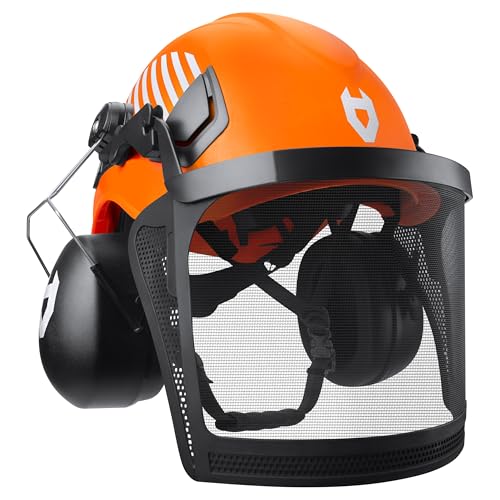
Balanced Forestry Protection

- Hard hat, mesh shield, and NRR 24 dB earmuffs
- 6-point ratchet fit for 20.5–24.8-inch heads
- Ventilation, sweatband, and removable components
Best For: DIY projects and general forestry work
Versatile Job-Site Coverage

- Built-in and tinted visors for layered eye protection
- Earmuffs provide up to NRR 27 dB
- Adjustable 6-point suspension and chinstrap
Best For: Multi-trade work and changing job-site needs
Chainsaw-Ready Visibility
TOOLIOM 5-in-1 Forestry Helmet

- Mesh and clear shields plus anti-fog goggles
- 52–64 cm ratchet adjustment range
- Orange shell with reflective stickers
Best For: Arborists and chainsaw-related outdoor work
Best Connected Protection
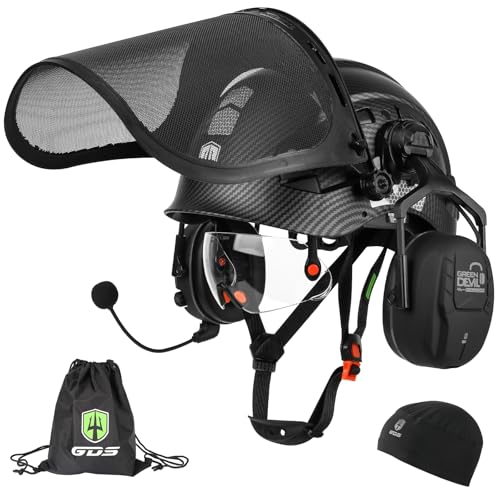
- Bluetooth 5.3 with calls and up to 80-foot range
- Mesh shield, visor, and earmuffs in one system
- 6-point suspension with 53–63 cm adjustable fit
Best For: Workers who want integrated communication with full forestry protection
Best Complete Kit

- Includes shield, goggles, earmuffs, liner, and bag
- 6-point suspension with rear tension adjustment
- Ventilation and cooling liner support longer shifts
Best For: Users seeking a configurable all-in-one forestry safety kit
Best Full-Brim Coverage
Industrial Full-Brim Forestry Helmet

- HDPE full brim adds sun and weather coverage
- Built-in visor, mesh shield, and removable earmuffs
- Adjustable vents and 6-point suspension
Best For: Outdoor forestry work in variable weather conditions
Best All-in-One Pick – NoCry 6-in-1 Forestry Helmet
The NoCry 6-in-1 is a versatile choice for shoppers comparing forestry helmets with integrated face and hearing protection. It includes both mesh and clear visors, adjustable ear muffs, and a customizable fit for forestry, arborist, landscaping, and DIY work.
Best For: Buyers who want one adaptable helmet for changing cutting, clearing, and trimming tasks.
Pros:
- Includes a hard hat, mesh visor, clear polycarbonate shield, and 25.9 dB SNR ear muffs.
- Six configuration options allow visor, headband, and ear-muff adjustments.
- ANSI-rated components include Z89.1 head protection, S3.19 ear muffs, and Z87.1 visors.
- Fits head sizes from 21.2 to 24.4 inches and works over glasses or a mask.
Cons:
- One-size fit may not suit users outside the stated head-size range.
- The multiple components may require more setup than a simpler helmet.
Choose this model when flexibility matters most. Its interchangeable visors and movable ear muffs make it practical for varied forestry and property-maintenance jobs, while the supplied ANSI ratings provide clearly stated protection standards.
Premium Arborist Design – Pfanner Protos Integral Helmet
The Pfanner Protos Integral is a specialized option among forestry helmets, designed around arborist use and integrated side and rear impact protection. Its swept-back profile, adjustable ventilation, and two-finger controls support active work in trees.
Best For: Arborists who prioritize integrated impact coverage, visibility, and quick adjustments.
Pros:
- Certified to EN397 and EN 12492, with ANSI Z133 listed in the specifications.
- Offers side and rear impact protection, a feature identified as unique among arborist helmets in the supplied notes.
- Swept-back design is intended to improve the wearer’s field of view.
- Adjustable vents can be opened or closed for changing conditions.
Cons:
- At 3.9 pounds, it is heavier than the listed Oregon and NoCry alternatives.
- The supplied details do not list included ear muffs or a face visor.
This is the focused choice for arborist work when side and rear coverage are central requirements. Before buying, confirm whether you need separate eye or hearing protection, since those accessories are not identified in the supplied details.
Lightweight Value Option – Oregon Chainsaw Helmet Combo
The Oregon Chainsaw Safety Protective Helmet is a straightforward combo for shoppers seeking practical forestry helmets with a mesh visor and ear cups included. Its six-point harness, ventilation holes, and 2-pound listed weight make it suited to logging and arboriculture tasks.
Best For: Users who want a lightweight helmet-and-visor set with basic adjustability.
Pros:
- Includes a stainless steel mesh visor and articulated cap-mounted ear cups.
- Six ventilation holes support breathability during work.
- Six-point harness provides a snug, adjustable fit.
- Meets ANSI Z89.1-2009 Type I, Class C requirements according to the notes.
Cons:
- The supplied details do not specify a clear face shield option.
- Class C protection is listed, so buyers needing another electrical classification should verify suitability.
Oregon keeps the package simple and relatively light while covering the core helmet, visor, and hearing-protection needs. It is a sensible fit for routine chainsaw, logging, and arboriculture tasks where a mesh visor is preferred.
Best Ventilated Fit – NoCry ForestArmor Pro Helmet
The NoCry ForestArmor Pro combines an ABS shell, six-point suspension, mesh face shield, ear muffs, and adjustable ventilation in a modern forestry helmet. Its ratchet adjustment, chin strap, padding, and reflective details are aimed at stable, comfortable use in demanding outdoor work.
Best For: Forestry and arborist users who want adjustable airflow, secure fit, and integrated noise reduction.
Pros:
- ANSI/ISEA Z89.1 Type I Class C helmet with an impact-resistant ABS shell.
- ANSI/ISEA Z87.1 steel mesh visor includes side guards and will not fog like a clear shield.
- Rear ventilation can be opened or closed, including while wearing gloves.
- Ratchet fit, quick-release chin strap, padding, 22 dB NRR ear muffs, and headlamp holders add practical features.
Cons:
- The mesh visor does not provide the clear-shield style of visibility offered by a transparent visor.
- Its listed 1,150-gram weight is heavier than the Oregon model’s listed 2 pounds.
This model is a strong match for hot, noisy jobs where airflow and a locked-in fit matter. The adjustable rear vent, integrated ear muffs, and reflective details give it a feature-rich setup for forestry and arborist work.
Balanced Forestry Protection – LANON 3-in-1 Safety Helmet
For shoppers comparing forestry helmets, the LANON combines an ANSI-rated hard hat with a metal mesh face shield and removable hearing protection. Its adjustable suspension and ventilated design make it a practical option for chainsaw work, yard projects, and other outdoor tasks.
Best For: DIY users and forestry workers seeking an adjustable, all-in-one helmet system.
Pros:
- Includes a hard hat, adjustable mesh face shield, and NRR 24 dB earmuffs.
- 6-point ratchet suspension fits head circumferences from 20.5 to 24.8 inches.
- Meets stated ANSI, OSHA, and CE-related protection standards.
- Replaceable brow pad and moisture-wicking sweatband support longer wear.
Cons:
- The face shield requires assembly.
- Class C protection does not provide electrical protection.
The LANON is a well-rounded choice when you want basic head, face, and hearing coverage in one forestry helmet. Its orange color and adjustable components add practicality, while the removable parts allow a simpler setup when needed.
Versatile Job-Site Coverage – GREEN DEVIL 6-in-1 Helmet
Among forestry helmets, the GREEN DEVIL stands out for its dual-layer eye and face protection. It pairs a vented ABS hard hat with a built-in visor, tinted visor, and removable earmuffs for users who want flexibility across forestry, construction, and workshop tasks.
Best For: Workers who need adjustable eye, face, head, and hearing coverage for varied job-site conditions.
Pros:
- Includes built-in and tinted visors plus adjustable earmuffs rated up to NRR 27 dB.
- 6-point suspension, soft sweatband, and removable chinstrap support comfort and stability.
- One-size adjustment covers 20.86 to 24.80 inches.
- Listed as meeting ANSI Z89.1 Type I Class C, ANSI Z87.1, and ANSI S3.19 requirements.
Cons:
- At 1.2 kg, it may feel heavier than a basic hard hat.
- The tinted visor may be less suitable when maximum light transmission is needed.
The GREEN DEVIL offers more face and eye-shielding options than a straightforward forestry helmet. Its broad adjustment range and removable hearing protection make it useful for switching between noisy outdoor work and general job-site duties.
Chainsaw-Ready Visibility – TOOLIOM 5-in-1 Forestry Helmet
For chainsaw-focused forestry helmets, the TOOLIOM provides a choice of mesh or plastic face shields, goggles, earmuffs, and a high-visibility orange shell. Its broad adjustment range and reflective stickers are useful for arborists, tree cutting, mowing, and related outdoor work.
Best For: Arborists and outdoor workers who want multiple face-shield options and enhanced visibility.
Pros:
- Includes mesh and clear plastic shields, goggles, earmuffs, chin strap, and reflective stickers.
- Ratchet adjustment fits head circumferences from 52 to 64 cm.
- Rotating shields and 360-degree adjustable earmuffs support customized positioning.
- ANSI Z89.1 helmet, ANSI Z87.1 mesh shield, and ANSI S3.19 earmuff ratings are specified.
Cons:
- Its 1.35 kg weight may be noticeable during extended use.
- The listed earmuff rating is NRR 20 dB, lower than some competing options.
The TOOLIOM is particularly appealing when work conditions vary between debris, dust, and visibility needs. The included goggles and interchangeable shields add versatility, while the orange shell and reflective details support visibility in low-light settings.
Best Connected Protection – Bluetooth Forestry Helmet
For forestry helmets shoppers who want integrated communication as well as job-site protection, the GREEN DEVIL Mervex Forest Combination combines a hard hat, mesh face shield, built-in visor, and Bluetooth hearing protection. Its 6-point suspension and adjustable 53–63 cm fit make it a versatile option for chainsawing, trimming, and related outdoor work.
Best For: Forestry and landscaping workers who want Bluetooth audio and calls built into a full head, face, eye, and hearing protection system.
Pros:
- Bluetooth 5.3 connection with an advertised range of up to 80 feet, plus call support.
- Combines a metal mesh face shield, built-in visor, and Bluetooth earmuffs.
- 6-point suspension, sweatband, chin cup, and one-size adjustable fit support extended wear.
- Listed compliance includes ANSI/ISEA Z89.1-2014 Type I Class C, ANSI S3.19, and ANSI Z87.1-2015/CE EN 1731 components.
Cons:
- At 3.5 pounds, it may feel heavier than simpler hard-hat setups.
- The Bluetooth and multi-shield design may be more equipment than needed for light-duty tasks.
This is a feature-rich choice for buyers prioritizing connectivity and layered protection. It is particularly appealing when hands-free communication and hearing protection matter alongside face and head coverage.
Best Complete Kit – 6-in-1 Chainsaw Helmet
This UM ULTRAMAXX is one of the more complete forestry helmets for buyers who want several protective components in one package. The 6-in-1 kit includes an ABS hard hat, earmuffs, mesh shield, anti-fog eyewear, cooling liner, and storage bag, with removable parts for adapting the setup to different jobs.
Best For: Logging, chainsawing, landscaping, and construction users who want a configurable kit with cooling and storage accessories included.
Pros:
- Includes hard hat, 31 dB SNR earmuffs, mesh face shield, anti-fog eyewear, cooling liner, and drawstring bag.
- 6-point suspension and rear tension knob fit head circumferences from 20.47 to 24.80 inches.
- Ventilation ports and the included liner help improve airflow and sweat management.
- Components can be worn together or removed for lighter-duty work; listed hard-hat and face/eye standards are included.
Cons:
- The medium-size configuration has a narrower stated fit range than some one-size options.
- It does not include Bluetooth communication features.
Choose this model when versatility and included accessories are more important than wireless audio. Its mix-and-match design makes it suitable for users who move between heavier cutting and general outdoor work.
Best Full-Brim Coverage – Industrial Full-Brim Forestry Helmet
For buyers comparing forestry helmets with broader outdoor coverage, the GREEN DEVIL Matrix FB uses a full-brim HDPE design to help shield against sun, rain, wind, and sand as well as overhead impacts. The 4-in-1 system adds removable hearing protection, a mesh face shield, and a built-in anti-fog visor.
Best For: Arborist, logging, and forestry work in changeable outdoor conditions where full-brim weather coverage is useful.
Pros:
- Full-brim HDPE helmet helps provide coverage from falling branches, glare, UV exposure, rain, wind, and sand.
- Combines hard hat, removable earmuffs, mesh shield, and built-in anti-fog visor.
- Sliding vents can be opened or closed, while the 6-point suspension and ratcheting adjustment support fit and airflow.
- Listed compliance includes ANSI/ISEA Z89.1-2014 Type I Class C, ANSI S3.19, and ANSI Z87.1-2015/CE EN 1731 components.
Cons:
- Full-brim construction may be less compact than a standard hard hat.
- It lacks the Bluetooth functionality offered by some competing forestry helmets.
This model stands out for its full-brim profile and adjustable ventilation. It is a practical fit for outdoor professionals who value weather and sun coverage in addition to integrated face, eye, ear, and head protection.
How We Picked These Forestry Helmets
We focused on helmets designed for chainsaw use, arborist work, forestry maintenance, and demanding outdoor jobs. The selection emphasizes stated safety certifications, integrated face and hearing protection, adjustability, ventilation, and the practicality of each system for extended wear. We also included a range of designs, from straightforward helmet-and-visor combinations to feature-rich models with Bluetooth hearing protection.
Certification markings and included accessories should always be checked against the manufacturer’s current specifications. A forestry helmet is one part of a complete safety setup; it does not replace proper chainsaw training, protective trousers or chaps, gloves, boots, and safe work practices.
Quick Comparison
| Best For | Look For |
|---|---|
| General chainsaw work | Certified helmet, visor, and earmuffs |
| Arborist and professional use | Secure fit, low-profile design, comfort, and durable components |
| Hot or demanding conditions | Ventilation, adjustable suspension, and breathable padding |
| Mixed users or shared equipment | Wide adjustment range and easy-to-clean components |
| Communication and entertainment | Bluetooth-enabled hearing protection, if appropriate for the job |
Key Buying Factors for Forestry Helmets
Certification and Intended Use
Start with the applicable safety standard and confirm that the helmet is intended for your work environment. ANSI Z89.1 is commonly referenced for industrial head protection, but local regulations, employer requirements, and professional forestry standards may also apply. A hard hat alone is not necessarily a chainsaw-rated helmet.
Face and Eye Protection
Mesh visors improve airflow and help block chips and larger debris, while clear visors provide more continuous coverage and can be useful in windy or dusty conditions. Check how easily the visor raises, whether it stays securely in position, and whether you can wear safety glasses underneath.
Hearing Protection and Comfort
Chainsaws and other outdoor equipment can produce damaging noise. Look for earmuffs that seal comfortably without excessive pressure. Adjustable suspension, balanced weight, useful ventilation, and washable or replaceable padding matter when you wear the helmet for several hours.
Fit and Maintenance
The helmet should sit level, remain stable when you move, and leave enough room for normal headwear without becoming loose. Inspect the shell, suspension, visor, and earmuffs regularly. Replace damaged or aged components according to the manufacturer’s guidance, and keep the visor clean so visibility is not compromised.
Who Should Buy Which Forestry Helmets?
Choose a simple certified helmet with a visor and earmuffs if you need dependable protection for occasional property maintenance or firewood cutting. Frequent users should prioritize fit, ventilation, low weight, and replacement-part availability over unnecessary extras. Arborists and professionals may prefer a more integrated, secure design that stays balanced during climbing or sustained overhead work. If you work in hot conditions, prioritize airflow and comfortable suspension. Bluetooth models can suit users who need compatible communication features, but never let audio functions distract from alarms, coworkers, machinery, or changing site conditions.
