
If roof space is tight, the right panel can make a big difference. The best compact rigid solar panels deliver strong output without wasting valuable mounting area.
Below, we focus on efficient, durable options that make sense for RVs, vans, boats, and small off-grid builds.
Best 10 Compact Rigid Solar Panels Picks for 2026
High-Efficiency Compact Pick
Renogy 100W N-Type 16BB Solar Panel

- 25% efficiency N-type cells
- 16BB design reduces hot spots
- IP67 build for tough weather
Best For: RV, marine, trailer, and roof installs
Ultra-Slim Dual-Panel Set
ECO-WORTHY 2-Pack 100W N-Type Panels

- 0.2-inch ultra-slim design
- 4.7 lb per panel for easy handling
- 25% efficiency with 18BB N-type cells
Best For: RV owners wanting a lightweight two-panel kit
Shaded-Site Performance Pick

- Anti-shading tech for partial shade
- 25% efficient N-type 16BB cells
- Smaller than comparable PERC panels
Best For: Partially shaded RV and rooftop installs
Bifacial Compact Rigid Option
160W N-Type Bifacial Solar Panel

- 25.4% efficiency with 20BB N-type cells
- Bifacial output on both sides
- IP67 waterproof outdoor build
Best For: Camping, RV, van, and off-grid users
Compact Shading-Friendly Pick
Renogy 120W N-Type ShadowFlux Panel
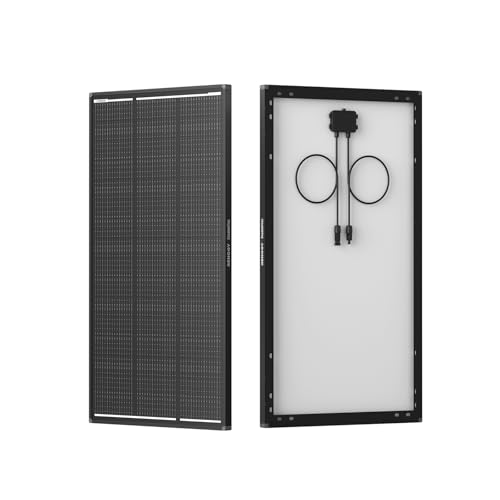
- 10% smaller than PERC panels
- ShadowFlux helps in partial shade
- IP67-rated weather resistance
Best For: Space-limited RV, boat, and off-grid installs with shade
High-Output Bifacial Pair
Callsun 2x210W Bifacial Solar Panels

- 420W total from two rigid panels
- Bifacial gain up to 30%
- Dual-module design supports shaded operation
Best For: Compact roofs, RVs, and cabins needing higher output
Compact Starter Panel
Callsun 100W N-Type Compact Solar Panel

- 15% smaller than traditional panels
- Up to 25% efficiency with N-Type cells
- IP68 waterproof with strong load ratings
Best For: Small RV, boat, cabin, and backup power builds
Shade-Tolerant Compact Choice
Callsun 200W Bifacial Panel for Compact Roofs

- Up to 25.6% efficiency with N-type 16BB cells
- Twin-cell anti-shade design helps under partial shade
- Compact 51.3 x 30.3 x 1.4 in footprint for vans
Best For: Class B vans and small rooftops where shade tolerance is important
Premium Space-Saver
Renogy REGO 200W N-Type Solar Panel
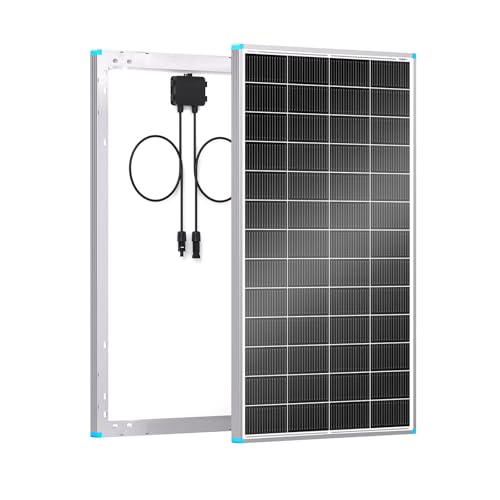
- 25% efficiency with N-type A+ cells and 16BB tech
- Compact size fits space-constrained Class B RV installs
- IP67 rating and 25-year performance commitment
Best For: RV and off-grid buyers wanting a premium compact rigid panel with strong heat performance
High-Efficiency Compact Pick – Renogy 100W N-Type 16BB Solar Panel
If you want compact rigid solar panels with strong output in a smaller footprint, this Renogy 100W option is built for efficient rooftop, RV, marine, and off-grid use. Its 25% efficiency, 16BB N-type cells, and lower temperature loss make it a practical choice when space and summer performance both matter.
Best For: RV, marine, trailer, and roof installs where space-saving efficiency is a priority.
Pros:
- 25% high-efficiency N-type cells for strong power output in a compact rigid panel
- 16BB design helps improve conversion efficiency and reduce hot spots and hidden cracks
- Low temperature coefficient supports better performance in hot conditions
- IP67 protection with tempered glass and corrosion-resistant aluminum frame
Cons:
- Single 100W panel may be too small for users needing larger system output
- Rigid design is less versatile than flexible panel alternatives for curved surfaces
This is a solid pick if you value proven durability and high efficiency in a compact rigid format. The warranty support and low degradation claims also make it appealing for long-term installations.
Ultra-Slim Dual-Panel Set – ECO-WORTHY 2-Pack 100W N-Type Panels
For shoppers comparing compact rigid solar panels for RV roofs and mobile setups, this ECO-WORTHY 2-pack stands out for its ultra-slim profile and very light weight. The panels are designed to cut roof load, reduce wind resistance, and still deliver 25% efficiency with 18BB N-type cell tech.
Best For: RV owners who want a lightweight, low-profile two-panel kit with included mounting hardware.
Pros:
- Ultra-slim 0.2-inch profile helps reduce wind noise and visual bulk
- Very lightweight at 4.7 lb per panel for easier one-person installation
- 25% efficiency with 18BB N-type cells and strong low-light response
- IP68 waterproofing and included mounting hardware simplify setup
Cons:
- Each panel is only 100W, so total output may still be modest for larger power needs
- Best fit is mostly RV and mobile use rather than heavier-duty fixed applications
If low profile and easy handling are top priorities, this kit is one of the more installation-friendly options in the compact rigid category. The two-panel bundle also gives you a more flexible starting point for roof-based systems.
Shaded-Site Performance Pick – Renogy 200W ShadowFlux Panel
If your compact rigid solar panels need to keep producing when shade is unavoidable, this Renogy 200W ShadowFlux model is built for that job. It combines anti-shading technology with 25% efficiency and a smaller footprint than PERC panels, making it a strong fit for tighter rooftop layouts.
Best For: Partially shaded RV, marine, rooftop, and off-grid installations.
Pros:
- ShadowFlux anti-shading technology helps improve output in partially shaded conditions
- 25% efficient N-type 16BB cells support strong performance and reduced hot spots
- 7% smaller and 10% more compact than PERC panels
- IP67-rated construction for weather resistance and long-term outdoor use
Cons:
- At 200W, it is larger and heavier than 100W compact options
- Best value depends on whether shade is a real issue in your setup
This panel makes the most sense when space is limited and shading is part of the installation environment. If you need one rigid panel that is more forgiving around trees, buildings, or roof obstructions, it is a compelling choice.
Bifacial Compact Rigid Option – 160W N-Type Bifacial Solar Panel
Among compact rigid solar panels, this 160W bifacial model is designed for users who want a balance of portability, weather resistance, and higher cell efficiency. It uses 20BB N-type monocrystalline cells with 25.4% conversion efficiency and adds anti-shading support plus bifacial power generation for more versatile outdoor use.
Best For: Camping, RV, van, and off-grid users who want a durable 160W rigid panel with bifacial output.
Pros:
- 25.4% conversion efficiency with 20BB N-type cells
- Bifacial design supports energy absorption from both sides
- Anti-shading technology helps maintain output in less-than-ideal conditions
- IP67 waterproof rating and reinforced mounting features for outdoor use
Cons:
- Its footprint is larger than 100W compact panels
- Listed as flexible/portable in features, so buyers should verify fit for truly rigid-only installs
This is a smart middle-ground option if you want more output than a 100W panel without jumping to a much larger module. The bifacial and anti-shading features make it especially interesting for variable outdoor setups.
Compact Shading-Friendly Pick – Renogy 120W N-Type ShadowFlux Panel
If you want compact rigid solar panels for a space-limited setup, this Renogy 120W model stands out for its smaller footprint and shading-tolerant design. It pairs N-Type 16BB cells with ShadowFlux anti-shading tech to help maintain output when part of the panel is blocked, while the rigid build is made for long-term outdoor use.
Best For: RVs, boats, and other installs where space is tight and partial shade is a concern.
Pros:
- 10% smaller and 10% more compact than PERC panels for easier fitment.
- ShadowFlux anti-shading technology helps reduce power loss in shaded areas.
- N-Type cells with 16BB design and up to 25% efficiency.
- IP67-rated for snow, rain, and small hail exposure.
Cons:
- 120W output may be modest if you need higher daily harvest.
- Best value depends on whether shading is a real issue in your setup.
Overall, this is a strong pick if your priority is a compact rigid solar panel that can handle awkward lighting conditions. The mix of smaller size, weather resistance, and high-efficiency cells makes it practical for challenging mounts.
High-Output Bifacial Pair – Callsun 2x210W Bifacial Solar Panels
For buyers comparing compact rigid solar panels, this 2-panel Callsun kit is aimed at squeezing more power into a limited footprint. Each 210W panel uses N-Type bifacial technology, dual-module parallel shading protection, and a 34.2V operating voltage, making it a versatile fit for a range of off-grid and mobile systems.
Best For: RVs, boats, cabins, and compact roofs that need more output without adding much space.
Pros:
- Two 210W panels provide a combined 420W output.
- Bifacial design can add 7% to 30% energy gain from reflected light.
- Dual-module parallel layout helps one shaded half keep producing.
- Supports 12V-48V systems with compatible MPPT controller wiring.
Cons:
- System compatibility depends on your controller and wiring plan.
- Bifacial gains vary with surface reflectivity and install conditions.
This kit makes sense if you want a compact rigid solar panel setup with more flexibility than a single small module can offer. The combination of bifacial gain and shade resilience is especially useful where mounting space is limited but power needs are not.
Compact Starter Panel – Callsun 100W N-Type Compact Solar Panel
If you need compact rigid solar panels for a small system, this Callsun 100W option is built around space savings and straightforward installation. It uses N-Type 16BB cells, a slim 31.1 x 22.7 x 1.1 inch footprint, and weather-resistant construction to suit RV, boat, cabin, and backup power setups.
Best For: Small off-grid builds and backup systems where a lighter, easier-to-mount panel is preferred.
Pros:
- 15% smaller than traditional panels for tighter mounting spaces.
- Up to 25% efficiency with N-Type monocrystalline cells.
- Pre-drilled holes make installation simpler.
- IP68 waterproof protection and strong wind/snow load ratings.
Cons:
- 100W output is better for smaller loads than full household use.
- Single-panel capacity may require expansion for larger energy needs.
As a compact rigid solar panel, this model is best when size, weight, and easy mounting matter more than raw wattage. Its efficiency and durability features make it a practical entry point for small solar projects.
High-Efficiency Bifacial Pick – BougeRV 200W N-Type Solar Panel for RV Roofs
If you want compact rigid solar panels with strong output in a relatively small footprint, this BougeRV 200W model is worth a close look. It uses N-type 16BB cells, a bifacial backsheet, and a slim rigid frame, making it a practical option for RV roofs, boats, and off-grid setups where space and efficiency matter.
Best For: RV owners and off-grid users who want a compact, high-efficiency rigid panel with bifacial gain potential.
Pros:
- N-type cell design is rated for up to 25% conversion efficiency.
- Bifacial construction can increase output by up to 30% by using reflected and diffuse light.
- 16BB cell layout is designed to improve current collection and reduce covered area by 26%.
- Pre-drilled holes and corrosion-resistant aluminum make mounting simpler for outdoor use.
Cons:
- Real-world output will vary with sunlight, angle, and temperature.
- At 51.57 x 30.2 inches, it is still a full-size rigid panel, not a mini panel.
Overall, this is a strong fit if you want a compact rigid solar panel that prioritizes efficiency and long-term use over absolute lowest cost. The bifacial design and N-type cells are the standout features, especially for installations where every watt counts.
Shade-Tolerant Compact Choice – Callsun 200W Bifacial Panel for Compact Roofs
For shoppers comparing compact rigid solar panels, this Callsun 200W panel stands out for its anti-shade design and space-efficient footprint. It combines N-type 16BB cells, bifacial construction, and a twin-cell parallel layout, which is useful when rooftop space is tight and partial shading is a concern.
Best For: Class B vans and compact rooftop installs where shading tolerance matters.
Pros:
- N-type 16BB cells are rated up to 25.6% conversion efficiency.
- Twin-cell anti-shade design keeps one half generating if the other half is shaded.
- Bifacial backsheet can capture direct, reflected, and diffuse sunlight.
- Compact size and 23.8 lb weight make it practical for tight rooftops.
Cons:
- It is still a rigid 200W panel, so larger systems will need multiple units.
- Actual output will depend on heat, shading, and mounting conditions.
In practice, this is a smart pick if you want compact rigid solar panels that are designed to handle real-world rooftop obstacles better than standard panels. The anti-shade layout is the most useful feature here, especially for vans and mixed-light conditions.
Premium Space-Saver – Renogy REGO 200W N-Type Solar Panel
If your priority is a premium rigid option in the compact rigid solar panels category, the Renogy REGO 200W is built for high efficiency and a tidy footprint. Its N-type A+ cells, 16BB design, and low temperature coefficient make it a strong fit for efficient 12V/24V systems, especially where rooftop space is limited.
Best For: Buyers who want a compact, high-efficiency rigid panel for RV or off-grid power systems.
Pros:
- Rated at 25% efficiency with N-type A+ cells and 16BB technology.
- Compact dimensions help it fit in space-constrained Class B RV setups.
- -0.29%/°C temperature coefficient helps reduce power loss in heat.
- IP67 waterproof rating and a 25-year performance commitment add peace of mind.
Cons:
- The listing highlights 24V compatibility, so system matching matters.
- It does not include bifacial output claims like some competing panels.
This panel makes sense if you want a refined, compact rigid solar panel from a major brand and value heat performance plus long-term support. It is a practical choice when efficient power production is more important than chasing the lowest upfront price.
How We Picked the Best Compact Rigid Solar Panels
For Compact Rigid Solar Panels, we prioritized real-world value over headline wattage alone. That means high efficiency, strong build quality, practical dimensions, and good compatibility with common 12V and off-grid systems. We also looked at features that matter in tight installs, such as bifacial designs, anti-shade performance, and N-type cell technology.
Quick Comparison
If you want the simplest way to narrow the list, start with three questions: How much roof or rack space do you have? What charging voltage and controller setup are you using? And do you need maximum wattage in a single panel or the flexibility of smaller modules? Higher-efficiency Compact Rigid Solar Panels are best when space is limited, while larger bifacial panels can work well if your mount area can handle them.
Key Buying Factors for Compact Rigid Solar Panels
Efficiency and Cell Type
Efficiency matters most when you need more power from less surface area. N-type and 16BB or 18BB designs are often a smart pick because they can improve output and help reduce losses from shading and resistance.
Panel Size and Layout
Measure your available space before you buy. A panel that looks ideal on paper may be awkward around roof vents, AC units, rails, or storage boxes. For compact builds, dimensions can matter more than raw watt rating.
Shade Tolerance
Partial shade from vents, racks, trees, or antennas can cut performance quickly. Anti-shade or bifacial designs may help, but they are not a substitute for good placement.
System Compatibility
Match the panel to your battery bank, charge controller, and series/parallel plan. Some Compact Rigid Solar Panels are better suited to 12V battery systems, while others work better in higher-voltage arrays or paired configurations.
Who Should Buy Which Compact Rigid Solar Panels?
Choose smaller 100W-class panels if you are building a flexible system, adding incremental charging, or working with a limited roof layout. Step up to 120W to 200W panels if you want fewer panels, cleaner wiring, and better power density. Bifacial models are a strong fit for reflective surfaces, open racks, or ground mounts, while single-panel options can be easier for tight RV and van roofs.
In short, the best choice is the panel that fits your available space, electrical setup, and charging goals. For Compact Rigid Solar Panels, smart sizing and efficiency usually matter more than chasing the biggest wattage number.
