
If you’re on the hunt for a compact bike computer, you’re in the right place. Whether you’re a beginner or a seasoned cyclist, there’s a model out there that fits your needs perfectly. From basic functions to advanced GPS features, each option has its strengths. But how do you choose the right one? Let’s explore the top contenders and what makes them stand out.
CATEYE Wired Bike Computer for Beginner Cyclists

If you’re a beginner cyclist looking to track your rides without the complexity of advanced features, the CATEYE Wired Bike Computer, model Velo 7, is the perfect choice for you. This compact device serves as an entry-level speedometer and odometer, offering essential stats like current speed, maximum speed, average speed, and distance. With its auto start/stop feature, it seamlessly tracks your ride without hassle. The reliable wired sensor guarantees accurate measurements, while the long-lasting three-year battery means you won’t have to worry about frequent replacements. Lightweight and easy to mount on your handlebar, it’s user-friendly for any cyclist.
Best For: Beginner cyclists who want a simple and reliable device to track their riding statistics without advanced features.
Pros:
- Easy setup and user-friendly interface suitable for various bike types.
- Accurate measurements with a dependable wired sensor.
- Long battery life of up to three years, reducing the need for frequent replacements.
Cons:
- Wired connectivity may limit mounting options compared to wireless models.
- Lacks advanced features found in higher-end cycling computers.
- Limited display size may not accommodate all desired statistics at once.
Garmin Edge 540 GPS Cycling Computer

The Garmin Edge 540 GPS Cycling Computer stands out as an exceptional choice for serious cyclists who demand precise performance tracking and advanced navigation features. You’ll appreciate its button controls and superior connectivity, making it user-friendly. With a battery lasting up to 26 hours, or 42 hours in power-saving mode, you can ride longer without worry. The multi-band GNSS technology enhances navigation, while the ClimbPro ascent planner helps you tackle climbs efficiently. Plus, personalized coaching and stamina insights keep your training on track. The Edge 540 is designed to elevate your cycling experience, ensuring you perform at your best.
Best For: Serious cyclists seeking advanced performance tracking and navigation features for their rides.
Pros:
- Exceptional battery life of up to 26 hours, or 42 hours in power-saving mode, allowing for extended rides.
- Multi-band GNSS technology provides enhanced positioning accuracy for reliable navigation.
- Personalized coaching and training prompts help optimize performance and maintain training consistency.
Cons:
- May be considered expensive compared to basic cycling computers.
- Requires pairing with compatible devices for full coaching features, which may add to the overall cost.
- Some users may prefer touch screen controls over button controls for ease of use.
Garmin Edge 840 GPS Cycling Computer
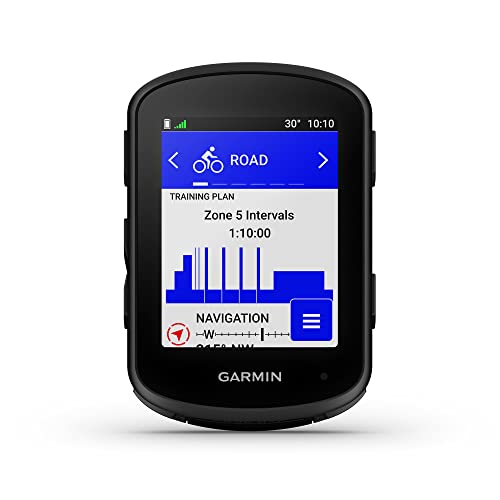
For cyclists seeking a compact yet powerful device, the Garmin Edge 840 GPS cycling computer stands out with its advanced navigation and performance tracking features. Weighing just 2.8 ounces, it boasts a touchscreen and button control for easy access. With up to 26 hours of battery life, and multi-band GNSS technology, you’ll stay on course even in challenging conditions. The ClimbPro ascent planner and daily suggested workouts help tailor your training. Plus, smart connectivity via Bluetooth and Wi-Fi keeps you in touch. With an impressive 4.5-star customer rating, this device is perfect for any cyclist looking to enhance their rides.
Best For: Cyclists looking for a compact, feature-rich GPS device to enhance navigation and performance tracking during their rides.
Pros:
- Advanced navigation features with multi-band GNSS technology for accurate positioning.
- Extensive battery life of up to 26 hours, perfect for long rides.
- Smart connectivity options (Bluetooth and Wi-Fi) for easy data sync and updates.
Cons:
- Some features require additional compatible devices, such as a power meter and heart rate monitor.
- The touchscreen may be less responsive in wet conditions compared to button controls.
- Size may be too compact for users who prefer larger displays for easier reading.
COROS DURA Solar GPS Bike Computer

Cyclists seeking an all-in-one solution for navigation and fitness tracking will find the COROS DURA Solar GPS Bike Computer an exceptional choice. Weighing just 102 grams, its durable design features a 2.7-inch customizable touchscreen and an IP67 rating for water resistance. With an incredible 120 hours of battery life in full GPS mode, plus solar charging extending ride time, it’s perfect for long outings. Enjoy turn-by-turn navigation powered by Google Maps and sync data quickly with the COROS app. Pair it with COROS watches for in-depth fitness insights, making this bike computer a top pick for serious cyclists.
Best For: Cyclists who require a reliable and feature-rich GPS bike computer for navigation and fitness tracking during long rides.
Pros:
- Best-in-class battery life of 120 hours in full GPS mode, with additional solar charging capabilities.
- Customizable 2.7-inch touchscreen with adaptive backlight for easy use in varying lighting conditions.
- Turn-by-turn navigation powered by Google Maps and compatibility with popular route planning apps.
Cons:
- Weight of 102 grams may be considered heavy by some competitive cyclists focused on minimizing bike weight.
- Limited app compatibility compared to some other bike computers on the market.
- Price point may be higher than basic models, making it less accessible for casual cyclists.
Garmin Edge 1050 Premium Cycling Computer

Packed with advanced features, the Garmin Edge 1050 Premium Cycling Computer stands out as the ultimate choice for serious cyclists seeking thorough navigation and training tools. Its vivid color touchscreen allows you to create courses directly on the device and view road surface types for enhanced awareness. With a battery life of up to 20 hours and advanced power guide features, it adapts to your stamina in real-time. Stay connected during group rides with in-ride messaging and live locations, while personalized coaching helps you reach your goals. Plus, Garmin Pay lets you make purchases on the go—convenience at your fingertips!
Best For: Serious cyclists who seek advanced navigation, training tools, and connectivity features in a cycling computer.
Pros:
- Vivid color touchscreen display allows for easy navigation and course creation directly on the device.
- Up to 60 hours battery life in battery saver mode, ensuring long rides without worrying about power.
- Personalized coaching adapts to training loads and recovery, helping users achieve their fitness goals.
Cons:
- May be considered pricey compared to basic cycling computers, which could deter casual riders.
- Complex features might have a learning curve for users who are not tech-savvy.
- Requires compatible power meter and heart rate monitor for full functionality, which may involve additional costs.
CATEYE Urban Wireless Bike Computer

The CATEYE Urban Wireless Bike Computer stands out with its intuitive auto start/stop feature, making it a fantastic choice for urban riders maneuvering through traffic. You’ll appreciate how it tracks your current, max, and average speeds, along with total and trip distances. It even monitors calories burned, helping you stay on top of your health goals. The FlexTight™ Mount guarantees easy setup and relocation, minimizing hassle when switching bikes. Plus, with the option to manually set the odometer, you won’t lose your mileage during battery changes. This compact device offers everything you need for an efficient ride in the city.
Best For: Urban cyclists looking for a reliable and easy-to-use bike computer to track their performance and health metrics.
Pros:
- User-friendly auto start/stop feature simplifies tracking during stops, enhancing ease of use in city traffic.
- Comprehensive data display includes current speed, max speed, average speed, total distance, trip distance, elapsed time, calorie consumption, and clock.
- FlexTight™ Mount allows for quick and easy installation and adjustment, making it versatile for different bikes.
Cons:
- Limited features for advanced cyclists who may seek more complex metrics or GPS functionality.
- Battery changes may require manual odometer reset if not set properly, potentially causing loss of mileage records.
- Compact design may lack some durability when exposed to harsh outdoor conditions over time.
CYCPLUS GPS Wireless Bike Computer

For those seeking a reliable and efficient way to track their cycling metrics, the CYCPLUS GPS Wireless Bike Computer stands out with its dynamic GPS positioning. You’ll appreciate its high sensitivity and accuracy, allowing for effective route tracking and essential metric displays. The glare-free backlit screen guarantees visibility, even in bright sunlight, while the durable tempered glass protects against scratches. With a remarkable 1200 mAh battery, it offers over 55 hours of operation, automatically conserving power during inactivity. Plus, its IPX6 waterproof rating means you can ride confidently in rainy conditions, backed by a two-year warranty for peace of mind.
Best For: Cyclists looking for a reliable and feature-rich bike computer to enhance their riding experience.
Pros:
- Dynamic GPS positioning with high sensitivity for accurate route tracking.
- Glare-free backlit screen for excellent visibility in various lighting conditions.
- Long-lasting battery life of over 55 hours with automatic power conservation features.
Cons:
- The device may take time to sync with GPS upon initial use.
- Limited compatibility with some third-party cycling apps.
- The size may be larger than some riders prefer for minimalistic setups.
Garmin Edge 850 GPS Cycling Computer
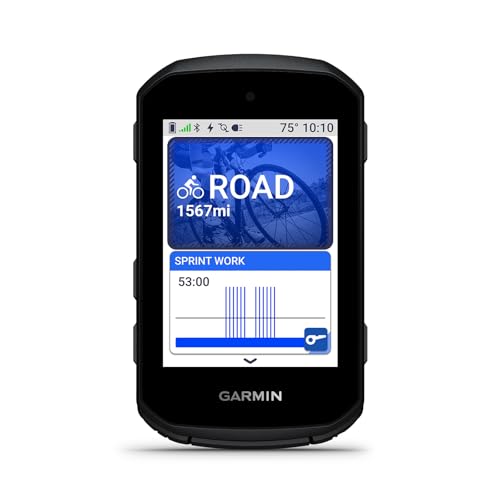
Offering advanced navigation and performance tracking, the Garmin Edge 850 GPS Cycling Computer is ideal for cyclists who demand precision and insight on every ride. Its vivid color touchscreen and robust button controls make navigation seamless. With preloaded maps for various terrains and multi-band GPS, you’ll always stay on course. Plus, smart fueling alerts and weather monitoring enhance your training experience. Enjoy up to 36 hours of battery life in saver mode, and stay connected with in-ride messaging and incident detection. With features like Garmin Pay and built-in alerts, this device elevates your cycling adventures.
Best For: The Garmin Edge 850 GPS Cycling Computer is best for serious cyclists seeking advanced navigation, performance tracking, and smart connectivity during their rides.
Pros:
- Vivid color touchscreen display and button controls enhance usability and navigation.
- Smart fueling alerts and weather monitoring provide valuable insights for optimizing performance.
- Long battery life of up to 36 hours in battery saver mode allows for extended rides without worrying about power.
Cons:
- Higher price point compared to basic cycling computers may not be suitable for casual cyclists.
- Complex features may require a learning curve for new users unfamiliar with advanced cycling technology.
- Dependence on smartphone connectivity for some features may limit functionality during rides without a phone.
GEOID CC600 Wireless Color Screen Bike Computer

Cyclists seeking a reliable and user-friendly device will appreciate the GEOID CC600 Wireless Color Screen Bike Computer, thanks to its vibrant 2.4” display and intuitive three-button design. You’ll enjoy colorful route navigation with helpful turn reminders and notifications. The GPS technology supports multiple systems for quick location acquisition, ensuring accurate tracking on your rides. With 10 customizable data pages and 29 layout options, you can tailor your experience to fit your needs. Plus, WiFi and Bluetooth connectivity allow seamless syncing with apps like STRAVA. The GEOID CC600 truly enhances your cycling experience, making it a perfect companion for every ride.
Best For: Cyclists looking for a versatile and user-friendly bike computer with advanced navigation and data management features.
Pros:
- Easy-to-navigate 2.4” colorful screen with intuitive three-button design.
- Supports multiple GPS systems for accurate tracking and quick location acquisition.
- Customizable data pages and layouts, compatible with popular fitness apps like STRAVA.
Cons:
- Limited battery life may require frequent recharging during long rides.
- Some users may find the initial setup and syncing process complex.
- The screen size may not be suitable for those who prefer larger displays for easier visibility.
Wahoo RPM Cycling Cadence Sensor for Bikes
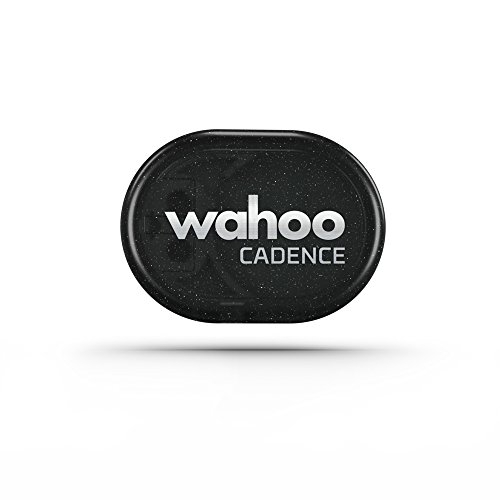
The Wahoo RPM Cycling Cadence Sensor is perfect for those who want to enhance their cycling experience, whether on outdoor trails or stationary bikes. With real-time tracking of your cycling speed and cadence, it helps you improve your efficiency for longer, faster rides. Thanks to its dual-band technology, you can easily connect it to your smartphone, tablet, or bike computer via ANT+ or Bluetooth. Installation is a breeze, fitting most bikes without magnets, and the sleek design mounts on your crank arm or shoe. Two LED lights give instant feedback, ensuring you’re always in tune with your performance.
Best For: Cyclists looking to improve their performance and efficiency on outdoor, spin, or stationary bikes.
Pros:
- Dual-band technology allows for seamless connectivity to multiple devices via ANT+ and Bluetooth.
- Easy installation with a sleek design that fits most bikes without the need for magnets.
- Real-time tracking of cycling speed and cadence, enhancing overall cycling efficiency.
Cons:
- May not be compatible with all bike models or specific training apps.
- Requires a compatible device for full functionality, which might not be available to all users.
- Battery life and replacement may be a concern for users who prefer long-term use without interruptions.
Factors to Consider When Choosing Compact Bike Computers
When you’re choosing a compact bike computer, you should think about several key factors. Display size and clarity can make a big difference when you’re on the road, while battery life is essential for longer rides. Don’t forget to take into account navigation capabilities, sensor technology, and connectivity options to guarantee you get the most out of your device.
Display Size and Clarity
Compact bike computers are essential tools for tracking your performance, and display size and clarity play a crucial role in their effectiveness. Typically ranging from 1.5 to 3 inches, larger screens enhance visibility for critical data during your rides. Higher resolution LCD displays improve readability, especially in varying lighting conditions. If you often ride at night or in shaded areas, look for backlit displays to easily view your metrics. Touchscreen models can streamline navigation, but some cyclists prefer reliable button controls. Additionally, anti-glare technology is a game changer, reducing sunlight reflections and ensuring your data remains visible even on bright days. Choosing the right display can make all the difference in your cycling experience.
Battery Life Considerations
Battery life is essential for ensuring your compact bike computer keeps up with your rides. With battery durations varying from just a few hours to over 120 hours, choosing the right one is vital. Consider devices that offer power-saving modes, as these can greatly extend battery life, sometimes even doubling it. The type of battery matters, too; alkaline batteries are easy to replace, while rechargeable lithium-ion options can be more convenient but may require frequent charging. Keep in mind that advanced features like GPS tracking may drain the battery faster, so think about how often you’ll use them. Assess your riding habits and charging frequency to find a bike computer that balances performance and convenience for your needs.
Navigation Capabilities
For cyclists seeking adventure, having reliable navigation capabilities in a bike computer can make all the difference in exploring new routes or tackling unfamiliar terrain. Look for models that utilize multi-band GNSS technology, enhancing positioning accuracy in challenging environments like dense cities or hilly areas. Devices with turn-by-turn navigation and smart rerouting features help you stay on track during long rides. Make sure the bike computer allows for route creation and uploading GPX files for a customized experience. Preloaded maps showcasing popular roads and trails can greatly improve your ride planning. Finally, features like ClimbPro ascent planners that display remaining ascent and grade during climbs can enhance route management and performance tracking, making your rides more enjoyable and efficient.
Sensor Technology Used
When choosing a bike computer, understanding the sensor technology used is crucial, as it directly impacts your ride experience. Wired sensors offer reliable, interference-free performance for accurate speed measurements. On the other hand, wireless sensors leverage ANT+ and Bluetooth technologies, providing seamless data transfer without the clutter of cables. If you prioritize navigation, look for models featuring high-sensitivity GPS positioning, which guarantees precise location tracking. Advanced options may include multi-band GNSS technology, enhancing accuracy in tricky environments like urban areas or dense forests. Don’t forget about battery life—long-lasting power management is critical for extended rides, making sure you won’t need to recharge frequently. Choose wisely to enhance your cycling adventures!
Connectivity Options Available
While selecting a compact bike computer, considering the connectivity options is essential for enhancing your cycling experience. Look for devices that feature Bluetooth and ANT+ connectivity, as they allow seamless syncing with your smartphone, tablet, and various cycling sensors. This integration enables better tracking and performance analysis. Some models even support Wi-Fi connectivity, letting you automatically sync ride data to cloud services and training apps without cables. Real-time data transfer facilitates live tracking and notifications during your rides. Additionally, check for compatibility with third-party apps to upload routes and analyze performance metrics. Integration with smart trainers and power meters can also personalize your training, ensuring a thorough cycling experience tailored to your needs.
