
Camping power stations make it easier to keep phones, lights, cameras, and small appliances running when you are off the grid.
Below, we focus on the most practical options for different trip lengths, power needs, and budgets.
Best 10 Camping Power Stations Picks for 2026
Premium All-Rounder

- 1,070Wh capacity with 1,500W output
- 23.8 lb build with foldable handle
- Fast charging and long-life LFP battery
Best For: Campers and RV users needing higher-output portable power
Ultra-Light Solar Bundle
Jackery Explorer 300 + 40W Panel

- Only 7.5 lbs with an integrated handle
- Includes a 40W solar panel
- 300W output with LFP battery longevity
Best For: Hikers and campers needing a light solar charging kit
Compact Power Lift

- 288Wh capacity in a 9.4 lb body
- 600W output with 1500W lifting mode
- Charges fast and includes UPS backup
Best For: Campers wanting a small, powerful, fast-charging backup unit
Budget Solar Starter

- Includes a 60W solar panel
- 300W limit suits small devices
- Built-in flashlight and safety protections
Best For: Budget campers needing a simple solar charging setup
Compact Pocketable Option
Daran Portable Power Station 89.6Wh LiFePO4

- 2.54-pound compact design with soft handle
- 89.6Wh LiFePO4 battery with 3,500+ cycles
- Fast AC, USB-C, car, and solar charging
Best For: Light camping backup for phones, laptops, and small electronics
Reliable Mid-Size Pick
EnginStar 300W Solar Generator

- 296Wh capacity with 300W output
- Two pure sine wave AC outlets
- Wall, solar, and car recharge options
Best For: Camping and road trips that need AC outlets and multiple charging ports
Fast-Charging Portable Choice

- 288Wh capacity with 300W output
- Two 140W two-way USB-C ports
- 30% smaller design with 3-year guarantee
Best For: Tech-focused camping trips that need fast USB-C charging
Reliable Mid-Range Choice
ALLWEI 300W LiFePO4 Power Station
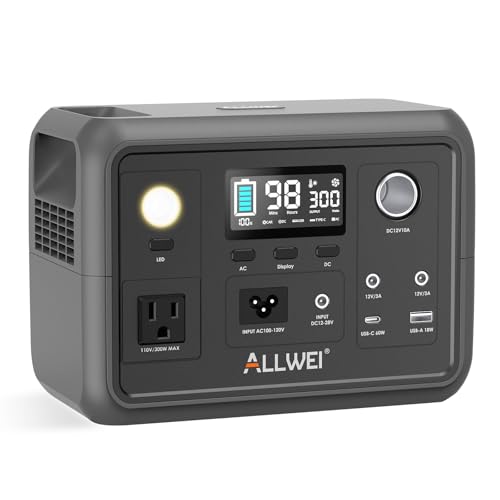
- 256Wh capacity with 300W continuous / 600W surge output.
- LiFePO4 battery is rated for 3000 cycles.
- Pass-through charging and 6 output ports add flexibility.
Best For: Frequent campers needing dependable power for essentials
Flexible Camping Backup
MARBERO 237Wh 300W Power Station

- 237Wh capacity with 300W continuous output.
- Light 4.6 lb build stays easy to pack and carry.
- Two AC outlets plus USB-C, USB-A, and DC outputs.
Best For: Campers wanting a compact step-up for mixed charging needs
Premium All-Rounder – Jackery Explorer 1000 v2
If you want camping power stations that can handle more than just phones and lights, the Jackery Explorer 1000 v2 is built for bigger campsite loads. Its 1,070Wh capacity, 1,500W AC output, and 3,000W surge make it a strong choice for powering appliances like fridges, AC units, and electric pots while still staying relatively portable at 23.8 lbs.
Best For: Campers, RV users, and emergency prep buyers who want higher output in a compact, lightweight package.
Pros:
- 1,500W output with 3,000W surge for more demanding gear
- 1,070Wh battery in a 23.8 lb body with a foldable handle
- Fast charging can reach 100% in about one hour with emergency mode
- LFP battery is rated for 4,000 cycles and long service life
Cons:
- Fastest charge requires using the Jackery app and emergency charging mode
- Solar charging works only with Jackery solar panels
This is one of the more capable camping power stations in the lineup if you need real appliance support without jumping to a much heavier unit. It fits best for users who value output, longevity, and smart charging controls over ultra-minimal size.
Ultra-Light Solar Bundle – Jackery Explorer 300 + 40W Panel
For camping power stations that prioritize easy carry and basic off-grid charging, this Jackery bundle keeps things simple. The Explorer 300 weighs only 7.5 lbs and pairs with a 40W solar panel, making it a practical pick for short trips, hikes, and light device charging where portability matters most.
Best For: Hikers and campers who want a lightweight solar-ready setup for small electronics.
Pros:
- Very light at 7.5 lbs with an integrated handle
- Includes a 40W solar panel for off-grid charging
- 300W rated output with 600W peak surge
- LFP battery is rated for 4,000+ cycles and long service life
Cons:
- 300W output is best suited to smaller devices
- Solar charging speed is slower with the included 40W panel than with a larger panel
This bundle makes sense if you need a dependable lightweight option rather than a high-capacity power hub. It is especially appealing for users who want an easy carry, solar convenience, and enough output for everyday campsite electronics.
Compact Power Lift – BLUETTI Elite 30 V2
If you’re comparing camping power stations for small trips, the BLUETTI Elite 30 V2 stands out for giving a compact battery pack more usable output than many entry-level models. At 288Wh and 9.4 lbs, it is easy to carry, yet it offers 600W continuous power and a 1500W surge via Power Lifting Mode for gear like lights, laptops, car fridges, and CPAP machines.
Best For: Campers and storm prep buyers who want a compact unit with strong output for its size.
Pros:
- Lightweight 9.4 lb design for easy travel
- 600W continuous output with 1500W surge in lifting mode
- Fast charging can reach 0-100% in about 70 minutes
- 10ms UPS mode helps keep sensitive devices powered through outages
Cons:
- 288Wh capacity is better for shorter runtimes and smaller setups
- Power lifting is for select higher-draw loads, not full-size appliances
This is a smart pick if you want compact camping power stations with more flexibility than the size suggests. It balances portability, fast recharge, and backup-ready features well for everyday outdoor use and emergency support.
Budget Solar Starter – ZeroKor 300W with 60W Panel
Among budget camping power stations, this ZeroKor bundle focuses on small-device charging and simple solar recharging. With a 300W limit, built-in flashlight modes, and an included 60W panel, it is designed for tents, short outdoor stays, and basic electronics rather than high-watt appliances.
Best For: Budget-minded campers who need a basic solar generator for phones, tablets, and laptops.
Pros:
- Includes a 60W solar panel in the box
- Multiple outputs for AC, DC, USB, and quick-charge USB use
- Built-in flashlight with reading and SOS modes
- Protective BMS with short-circuit, overload, and overheating safeguards
Cons:
- 300W max output limits it to small devices only
- Not suitable for heat-heavy appliances like hair dryers or coffee makers
This bundle works as a starter choice when you want solar convenience without paying for a larger station. It is best for light camping, backup charging, and users who value a complete, easy-to-understand package.
Compact Pocketable Option – Daran Portable Power Station 89.6Wh LiFePO4
If you want camping power stations that are easy to pack and simple to carry, this Daran unit is built for small-device backup and light outdoor use. Its compact size, fanless operation, and fast charging make it a practical pick for keeping phones, tablets, laptops, and other low-wattage gear powered without adding bulk to your kit.
Best For: Campers and travelers who need a very portable backup power source for small electronics and emergency charging.
Pros:
- Very compact and lightweight at 2.54 pounds, with a soft handle for easy carry.
- LiFePO4 battery with 3,500+ life cycles and 12 safety protections.
- Fast charging options, including AC, USB-C PD, car, and solar input.
- Quiet, fanless design with a built-in 4-level LED flashlight for emergencies.
Cons:
- Limited to devices within 100W, so it is not meant for larger appliances.
- Solar panel and cable are not included.
- Smaller 89.6Wh capacity is better for short trips than extended off-grid power needs.
Overall, this is a smart choice if portability matters more than output. It fits the role of a grab-and-go camping power station for phones, laptops, cameras, and other essentials, especially when you want silent operation and quick recharging.
Reliable Mid-Size Pick – EnginStar 300W Solar Generator
Among camping power stations in the mid-range class, this EnginStar model stands out for balancing capacity, port variety, and straightforward recharging. With 296Wh of storage, pure sine wave AC outlets, and multiple output types, it works well when you need a dependable portable battery for a campsite, road trip, or blackout backup.
Best For: Campers and road trippers who want a compact power station with AC outlets and broad device compatibility.
Pros:
- 296Wh capacity with 300W output for everyday camping essentials.
- Two pure sine wave AC outlets for cleaner, more stable power.
- Eight total outputs, including USB-C, car port, DC, and multiple USB ports.
- Recharge options include wall power, solar panel input, and car charging.
Cons:
- Not suitable for high-draw appliances like heaters, microwaves, or induction cookers.
- Solar panel is sold separately.
- Larger than pocket-sized units, so it is less minimalist for ultralight packing.
For buyers who want a practical middle ground, this power station offers a good mix of portability and usable capacity. It is especially appealing if you need AC power at camp but still want a unit that is easy to carry and recharge.
Fast-Charging Portable Choice – Anker SOLIX C300 DC 288Wh
If fast recharging and modern USB-C power matter most, this Anker option is one of the more travel-friendly camping power stations to consider. It delivers 288Wh and 300W in a smaller form factor, with high-watt USB-C ports, a car socket, and support for solar or car charging, making it a strong fit for tech-heavy outings.
Best For: Campers who prioritize USB-C fast charging and a compact, easy-to-carry power station for devices like laptops.
Pros:
- 288Wh capacity with 300W output in a 30% smaller design than similar units.
- Two 140W two-way USB-C ports for fast device charging.
- Seven charging ports, including a car socket and multiple USB options.
- LiFePO4 battery with smart temperature control and a 3-year guarantee.
Cons:
- Requires an 18W or higher USB-C charger for first activation.
- Shoulder strap is sold separately.
- Solar compatibility is limited to select Anker solar panels, not all panel types.
This is a strong pick if your camping setup relies on USB-C gear and you want quicker top-ups between stops. It is compact, durable, and easy to recharge, which makes it especially convenient for mobile work or weekend trips.
Compact Backup Power Pick – MARBERO 88Wh Portable Power Station
If you want a small, easy-to-carry option in the camping power stations category, the MARBERO 88Wh model is built for basic campsite and road-trip charging. It emphasizes quick recharge times, a lightweight body, and enough output flexibility for phones, tablets, small devices, and a few low-demand appliances.
Best For: Short camping trips, emergency lighting, and charging phones, tablets, and small electronics.
Pros:
- Compact 6.5 x 4.6 x 3.1-inch design and 3.2 lb weight make it easy to pack.
- 8 output ports let you run multiple devices at the same time.
- Charges from 0 to 80% in about 2 hours with the included adapter.
- Built-in LED light includes SOS mode for emergencies and tent use.
Cons:
- 88Wh capacity is best suited to smaller devices and lighter power needs.
- The notes focus on solar compatibility with MARBERO’s dedicated 30W or 60W panel, which is sold separately.
Overall, this is a practical grab-and-go power station when portability matters more than runtime. It fits well for campers who need backup light and simple device charging without carrying a heavier unit.
Reliable Mid-Range Choice – ALLWEI 300W LiFePO4 Power Station
For campers who want more room for everyday essentials, this ALLWEI unit sits in a useful middle ground among camping power stations. Its 256Wh capacity, LiFePO4 battery, and 300W continuous output make it a stronger fit for laptops, mini fridges, CPAP machines, and other sensitive gear than smaller travel-first models.
Best For: Campers and travelers who need dependable mid-size backup power for electronics and small appliances.
Pros:
- 256Wh capacity with 300W continuous output and 600W peak surge.
- LiFePO4 cells are rated for 3000 charge-discharge cycles.
- Pass-through charging lets you power devices while recharging the station.
- Multiple output options include AC, USB-A fast charge, USB-C PD, DC, and car outlet.
Cons:
- At 6.4 lbs, it is portable but not as ultra-light as smaller backup units.
- Solar panel is sold separately.
This is a balanced choice if you want one power station that can handle both campsite convenience and emergency home backup. The long-cycle LiFePO4 battery is the standout feature for buyers who plan to use it often.
Flexible Camping Backup – MARBERO 237Wh 300W Power Station
This MARBERO M823 model is a practical step up for buyers comparing camping power stations and wanting more capacity without giving up portability. With 237Wh of storage, 300W continuous output, and a compact 4.6 lb build, it is designed to handle phones, laptops, tablets, cameras, and other common outdoor and emergency devices.
Best For: Campers who want a compact but more capable backup power option for mixed device charging.
Pros:
- 237Wh capacity and 300W output provide more room than smaller mini units.
- Compact 8.15 x 5.83 x 3.90-inch size and 4.6 lb weight make it easy to carry.
- Includes two AC outlets plus multiple USB and DC ports for device variety.
- Built-in LED flashlights offer brightness levels, steady/twinkle/SOS modes, and campsite utility.
Cons:
- Solar charging requires a compatible panel that is not included.
- Recharge times are slower than some smaller quick-charge models, at about 6 hours from wall power.
For campers who need a bit more capacity and output flexibility, this model strikes a solid balance between portability and usefulness. The dual lantern setup also makes it especially handy during night use or power outages.
How We Picked the Best Camping Power Stations
We focused on real camping needs first: usable capacity, inverter output, battery chemistry, weight, charging options, and how well each unit fits common campsite gear. For Camping Power Stations, the best models balance portability with enough reserve power for the devices you actually bring.
We also prioritized safety features, solar compatibility, and practical outlet selection so you can choose a station that works for weekend trips, car camping, or backup power.
Quick Comparison: What Matters Most
Think in three layers: capacity in watt-hours determines how long a unit runs; output in watts determines what it can power; and battery type affects lifespan and performance. Smaller units are easier to carry and fine for phones, lights, and tablets, while larger Camping Power Stations are better for coolers, CPAP devices, laptops, and more demanding gear.
If you plan to recharge with solar, check both panel compatibility and input limits. A higher-capacity unit is only useful if you can realistically recharge it on your schedule.
Key Buying Factors for Camping Power Stations
Capacity and Runtime
Match capacity to your device list, not just your budget. A compact unit may be enough for one-night trips, but multi-day camping usually benefits from a higher-capacity station.
Output and Surge Handling
Make sure the inverter can handle your highest-wattage device, especially if you want to run appliances with startup surges. Pure sine wave output is a strong plus for sensitive electronics.
Battery Chemistry
LiFePO4 batteries generally offer better cycle life and long-term value, while other lithium batteries can be lighter or less expensive depending on the design.
Ports and Charging Speed
Look for the mix of AC outlets, USB-C, USB-A, and DC ports that fits your gear. Fast recharging matters if you are using your station every day or pairing it with solar panels.
Portability
If you are carrying the unit from car to campsite, weight and handle design matter as much as raw power. Smaller Camping Power Stations are easier to move but naturally trade away runtime.
Who Should Buy Which Camping Power Stations?
Choose a compact model if you mainly need power for phones, headlamps, speakers, and tablets. Pick a mid-size 300W-class unit if you want a better all-around camping setup with more flexibility for laptops and small appliances. Go larger if you need longer runtimes, higher output, or backup power beyond camping.
If you camp frequently, a LiFePO4 option usually offers the best long-term value. If you only need occasional weekend power, a smaller and more affordable unit may be the smarter buy.
