
The right charger can keep an electric bike ready for commuting, errands, and weekend rides without overspending. But voltage, connector type, amperage, and certification all matter more than a low sticker price.
We’ve selected 10 budget bike battery chargers covering common 36V and 48V lithium battery systems, including multi-plug replacements and models designed for popular e-bike and scooter brands. Use the guide below to narrow the list safely and quickly.
Best 10 Budget Bike Battery Chargers Picks for 2026
Best Connector Variety
Fancy Buying 7-in-1 54.6V Charger

- Seven interchangeable connector heads
- Long 8.2-foot charging cable
- Multiple safety protections for 48V systems
Best For: 48V users who need connector flexibility and extra cable length
Best 36V Option
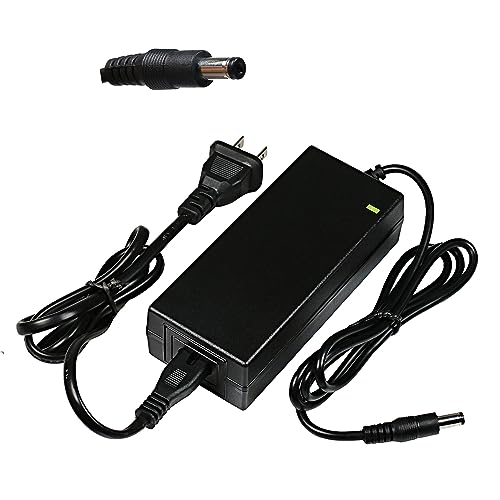
- Designed for 36V lithium batteries
- 42V/2A output with status LEDs
- Overvoltage and short-circuit protection
Best For: 36V lithium e-bike owners seeking a basic replacement charger
Best Lightweight Value
Norward 54.6V 2A Five-Plug Charger

- Five plug options for supported battery systems
- 54.6V, 2A output with charging-status indicator
- Listed for Razor, Jetson, Voyage, Gotrax, and Ninebot systems
Best For: Compatible 48V lithium battery replacement needs
Best 48V Replacement
54.6V 2A Rad and Lectric Charger

- 54.6V, 2A output for 48V lithium batteries
- Compatible with many listed e-bike brands
- Fixed 5.5mm x 2.1mm plug and 12-month warranty
Best For: Compatible Rad, Lectric, Himiway, Aventon, and other 48V e-bikes
Best Universal Option
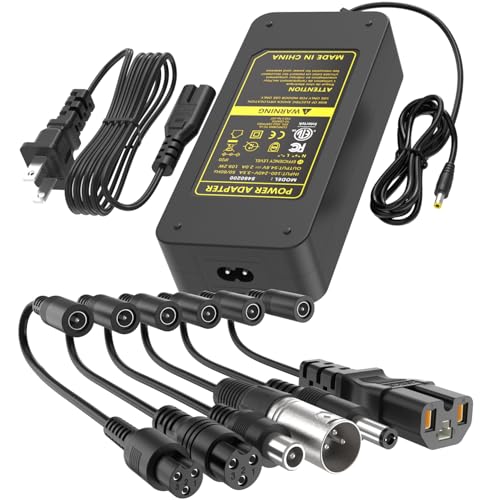
- 54.6V, 2A charging for 48V lithium batteries
- Seven interchangeable connector types
- ETL certified with multiple safety protections
Best For: Homes with multiple compatible 48V e-bikes, scooters, or hoverboards
Top Pick – Hyleton 48V 2A UL-Certified Charger
For shoppers comparing budget bike battery chargers, this Hyleton model is a strong 48V lithium-battery option. It delivers 54.6V/2A output, includes three connector options, and has UL certification plus several built-in safety protections. Confirm both your battery voltage and charging port before ordering.
Best For: 48V lithium e-bike owners who want a faster, multi-connector replacement charger.
Pros:
- 54.6V/2A output is described as charging 30% faster than a 1.5A charger.
- UL certified with overvoltage, overcurrent, short-circuit, and overheating protection.
- Includes 5.5×2.5mm/2.1mm, 12mm 3-pin, and 18mm XLR connectors.
- Wide 100–240V input and an included storage bag add convenience.
Cons:
- Only suitable for 48V lithium batteries, not other voltages or lead-acid packs.
- Connector compatibility still needs to be checked before purchase.
This is a practical budget choice when you need broad connector coverage and a 2A charging rate. Its main limitation is that it is not a universal charger for every e-bike battery system.
Best Connector Variety – Fancy Buying 7-in-1 54.6V Charger
Among budget bike battery chargers, the Fancy Buying 7-in-1 model stands out for its interchangeable connector heads and long 8.2-foot cable. It is designed for 48V, 13S lithium batteries and provides 54.6V/2A output, but it is not intended for 36V systems or lead-acid batteries.
Best For: 48V e-bike owners who need multiple connector formats or extra cable reach.
Pros:
- Seven interchangeable heads support several listed 48V battery and e-bike formats.
- 8.2-foot cable can make outlet placement more convenient.
- Includes overvoltage, overcurrent, temperature, and short-circuit protection.
- Aviation-aluminum plugs and high-density wires are designed for repeated use.
Cons:
- Not compatible with 36V–42V batteries or lead-acid batteries.
- The cooling fan produces operational noise.
- Green at startup indicates a fault according to the supplied guidance.
The seven-head design offers useful flexibility for households with different 48V connector styles. Buyers should identify their exact plug and battery specifications first, since the extra adapters do not make it compatible with every battery voltage.
Best for Fast Charging – EVAPLUS 54.6V UL-Certified Charger
This EVAPLUS model is a straightforward option in the budget bike battery chargers category for compatible 48V lithium batteries. It uses a 5.5mm × 2.5mm/2.1mm DC connector, offers automatic shutoff, and is advertised to charge most 48V 13S batteries in about four to six hours. Verify the port size and battery type before buying.
Best For: 48V 13S lithium-battery users who prioritize simple status monitoring and relatively quick charging.
Pros:
- Advertised 0–100% charging time is approximately four to six hours for most compatible batteries.
- UL certified with overvoltage, overcurrent, and short-circuit protection.
- Automatically shuts off when the battery is fully charged.
- 100–240V AC input supports use in different countries.
Cons:
- Uses a specific DC connector, so port size must be confirmed.
- Supplied specifications contain differing current details, so buyers should verify the listing before purchase.
With a simple red/green indicator and a claimed four-to-six-hour charging window, this is a sensible pick for routine 48V charging. Its narrower connector format makes compatibility checking especially important.
Best 36V Option – Jucuwe 42V 2A E-Bike Charger
For owners of 36V systems, this Jucuwe unit is a budget bike battery charger with 42V/2A output and a 5.5mm × 2.1mm/2.5mm barrel connector. It is designed for 36V electric-bike lithium batteries only, so it should not be used with 24V, 25.2V, 25.6V, 25.9V, lead-acid, or incompatible scooter batteries.
Best For: 36V lithium e-bike owners needing a basic 2A replacement charger.
Pros:
- 42V/2A output is designed specifically for 36V lithium batteries.
- 100–240V AC input supports a broad input range.
- Red and green indicators show charging and full-charge status.
- Includes short-circuit, overvoltage, and overcurrent protection.
Cons:
- Not suitable for 24V, 25.2V, 25.6V, 25.9V, lead-acid, or Razor scooter batteries.
- The 5.5mm × 2.1mm/2.5mm connector size must be matched to the battery port.
This is the appropriate choice in this roundup for a compatible 36V lithium setup, rather than a general-purpose charger. Match the battery voltage and connector carefully, and disconnect the charger when the battery is full or unattended.
Best Multi-Connector Pick – WUKUR 54.6V 2A 48V Ebike Charger
For shoppers comparing budget bike battery chargers, the WUKUR stands out for its five connector options and broad compatibility with 48V lithium-ion batteries. It provides a 54.6V, 2A output and includes several built-in safety protections for everyday charging.
Best For: Riders who need one charger for compatible 48V e-bikes or scooters with different connector types.
Pros:
- Includes five connector types, including DC barrel, aviation, Mini 3-prong, Cannon, and Xiaomi RCA 8mm.
- Compatible with listed Lectric, Ecotric, Evercross, and other 48V lithium-ion models.
- Offers over-voltage, over-current, short-circuit, over-temperature, reverse-connection, and fuse protection.
- ETL, CE, FCC, and RoHS approved, with an 18-month warranty.
Cons:
- Designed only for 48V lithium-ion batteries, not lead-acid batteries or other voltages.
- The 2A output is intended for standard charging rather than higher-current charging.
The WUKUR is a practical budget choice when connector flexibility matters. Confirm your battery chemistry, voltage, and plug before ordering.
Best Lightweight Value – Norward 54.6V 2A Five-Plug Charger
This Norward model is a straightforward option among budget bike battery chargers, with a 54.6V, 2A output and five plug configurations. Its indicator light and broad listed compatibility make it useful as a replacement charger for supported lithium battery systems.
Best For: Owners of compatible 48V lithium battery systems who want a multi-plug replacement charger.
Pros:
- Includes DC5.5×2.2mm, Xiaomi 8mm, 12mm aviation, and 18mm Cannon/XLR plug options.
- Provides a 54.6V, 2A output from a 120VAC input.
- Red and green indicator lights show charging and full or disconnected status.
- Listed compatibility includes Razor, Jetson, Voyage, Gotrax, and Ninebot systems.
Cons:
- It should not be used when the battery voltage is below 35.7V, according to the supplied guidance.
- Compatibility depends on matching the battery and connector specifications.
- The notes do not specify a certification or warranty.
This charger offers useful plug flexibility at a budget-oriented price point. Verify the required connector and battery condition carefully, especially before charging a deeply discharged battery.
Best Certified Option – Brokeir UL-Certified 54.6V 2A Charger
For buyers prioritizing certification, this Brokeir charger is a strong candidate among budget bike battery chargers. It is UL certified, uses a CC-CV charging mode, and includes five universal connectors for compatible 48V lithium e-bike and scooter batteries.
Best For: Riders seeking a certified 54.6V charger with multiple connectors and automatic full-charge stopping.
Pros:
- UL-certified model JY-546200 for the stated safety and reliability requirements.
- Five universal connectors support a range of compatible e-bike and scooter connections.
- CC-CV charging mode automatically stops charging when the battery is full.
- Includes over-voltage, over-current, short-circuit, over-temperature, reverse-connection, and fuse protection.
Cons:
- Suitable only for 48V lithium batteries, not lead-acid batteries.
- The supplied details list a 2A output, so it is not a high-current replacement.
- Connector details are broad, so buyers should confirm the exact plug fit before purchase.
The Brokeir combines multi-connector convenience with UL certification and automatic charge management. It is a sensible pick when documented safety features are more important than maximum charging speed.
Best 48V Replacement – 54.6V 2A Rad and Lectric Charger
For shoppers comparing budget bike battery chargers, this 54.6V, 2A model is a practical replacement for compatible 48V lithium-ion battery systems. Its 5.5mm x 2.1mm DC plug fits a broad range of listed e-bike brands, but buyers should verify both voltage and connector size before ordering.
Best For: Owners of compatible 48V e-bikes from brands such as Rad Power, Lectric, Himiway, Aventon, Ecotric, Sondors, and Hiboy.
Pros:
- Provides 54.6V output at 2A for 48V lithium batteries.
- Supports numerous listed e-bike brands and models.
- Uses high-temperature-resistant ABS+PC materials and includes a 12-month warranty.
Cons:
- Only compatible with 48V lithium batteries; it is not for 36V, 24V, or lead-acid batteries.
- Has one fixed 5.5mm x 2.1mm DC connector rather than interchangeable plugs.
- The supplied notes warn against use when battery voltage is below 35.7V.
This is a straightforward, brand-focused option when your battery uses the specified connector. Its 2A output and wide stated compatibility make it a strong budget replacement, provided the electrical specifications match exactly.
Best Universal Option – ETL 7-in-1 48V Bike Charger
Among budget bike battery chargers, this ETL-certified model stands out for its seven interchangeable plugs. It delivers 54.6V at 2A for 48V lithium batteries and is designed to cover a wide range of e-bikes, scooters, and hoverboards, assuming one of the included connectors matches your device.
Best For: Households or riders who need one charger for multiple compatible 48V lithium-powered devices.
Pros:
- Includes seven plug types, including 5.5mm x 2.1mm, 5.5mm x 2.5mm, RCA, XLR, and IEC options.
- ETL certified with over-voltage, over-current, short-circuit, and temperature protection.
- Works with listed brands such as Razor, Gotrax, Xiaomi, Jetson, and Ninebot.
Cons:
- Designed only for 48V/13S lithium-ion batteries.
- Not suitable for 24V, 25V, 36V, 42V, or lead-acid battery packs.
- Connector compatibility still needs to be confirmed before purchase.
The interchangeable plug set gives this charger more flexibility than a single-connector replacement. Its 2A output and safety certification make it a useful value pick for compatible 48V devices, especially when connector requirements vary.
Best Travel Pick – Compact 1.6A 5-in-1 Charger
This compact 5-in-1 model is a convenient choice among budget bike battery chargers for riders who want a lightweight spare. It is rated at 54.6V and 1.6A for 48V lithium batteries, with several plug options and a small travel-friendly design.
Best For: Commuters and riders seeking a portable backup charger for compatible 48V scooters, e-bikes, hoverboards, or mobility devices.
Pros:
- Includes five plug types: 5.5mm x 2.5mm, 8mm and 12mm 3-prong, XLR, and 8mm coaxial.
- Compact and lightweight at approximately 140 x 59.5 x 34mm and 0.35kg.
- Offers six protection features and carries CE, FCC, and UL certifications.
Cons:
- Its 1.6A output may charge more slowly than the 2A alternatives.
- Only intended for compatible 48V/13S lithium battery systems.
- The included plug set does not list a 5.5mm x 2.1mm connector.
This charger prioritizes portability and connector versatility over maximum charging speed. It is a sensible backup for compatible devices, but verify the required plug and battery voltage carefully before relying on it as a primary charger.
How We Picked the Best Budget Bike Battery Chargers
We focused on chargers that offer practical value without overlooking compatibility or safety. The selection includes common 42V chargers for 36V batteries and 54.6V chargers for 48V lithium battery packs, along with options offering multiple interchangeable plugs. We also considered listed safety certifications, output current, brand and model compatibility, connector flexibility, and whether the charger is suitable as a replacement or backup.
Product listings can vary by seller, so always confirm the specifications on the charger label and your bike’s original charger before ordering. A similar-looking plug does not guarantee electrical compatibility.
Quick Comparison
- Best for common 48V systems: A 54.6V, 2A charger is the typical match for a 48V nominal 13-series lithium battery.
- Best for 36V systems: Choose a 42V, 2A charger designed for a 36V lithium battery.
- Best for connector flexibility: Multi-plug 5-in-1 or 7-in-1 chargers can support several devices, provided the correct tip and polarity are used.
- Best for certification-conscious buyers: Look for clearly stated UL or ETL certification and verify that the certification applies to the charger model.
- Best for faster routine charging: Most options here deliver 2A; lower-amperage models may charge more slowly but can suit certain systems.
Key Buying Factors for Budget Bike Battery Chargers
Match the Battery Voltage
Voltage is the first check. A 48V nominal lithium battery generally requires a 54.6V charger, while a 36V battery generally requires 42V. Never substitute a charger based only on the bike’s brand or the connector’s appearance.
Check the Connector and Polarity
Measure or identify the barrel connector, then confirm its diameter, center polarity, and plug shape. Multi-connector kits improve convenience but do not eliminate the need to select the correct tip. Incorrect polarity can damage the battery or charger.
Consider Output Current
A 2A charger is a common balance of charging time and battery-system compatibility. A 1.6A option may take longer, while a higher-current charger should only be used when the battery manufacturer permits it.
Look for Real Safety Information
UL or ETL certification, overcharge protection, short-circuit protection, overcurrent protection, and thermal safeguards are useful indicators. Treat vague claims carefully, especially when the listing does not identify the tested model.
Who Should Buy Which Budget Bike Battery Chargers?
Choose a basic single-plug 54.6V charger if you own one 48V e-bike and want an inexpensive replacement. A multi-plug charger makes more sense for households with several scooters or bikes, or for riders who want a versatile travel backup. Pick a brand-compatible model when your bike uses a less common connector or the listing specifically names your model, such as a Lectric, Ecotric, Rad Power, Himiway, or Aventon system. For a 36V battery, skip the 54.6V options and choose the correctly rated 42V charger instead.
