
Choosing the right hub can make a big difference in how your bike feels, fits, and holds up over time. If you’re building or upgrading around modern axle standards, boost mountain bike hubs are one of the most important parts to get right.
Below, we focus on the key compatibility details and buying factors that matter most, so you can quickly narrow down the best option for your wheel build and riding style.
Best 10 Boost Mountain Bike Hubs Picks for 2026
Lightweight Boost Front
SRAM 900 Front Hub, 15x110mm, 6-Bolt

- 15x110mm Boost front spacing
- Sealed cartridge bearings
- 6-bolt disc brake compatibility
Best For: A boost front hub for riders wanting a lightweight, low-maintenance option.
Rear Boost Drive Hub
Spank HEX J-Type Boost 32H Rear Hub

- Boost R148 rear spacing
- HG freehub compatibility
- 32-hole rear wheel build
Best For: A rear Boost hub for riders wanting common HG drivetrain compatibility.
Ultra-Light Boost Hub Set
BestParts XM490 PRO Replacement Hub Set
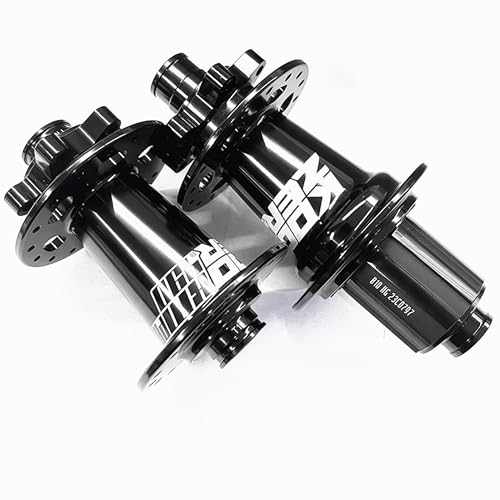
- Lightweight 6061/7075 aluminum
- HG compatibility for Shimano and SRAM
- 32-hole, 6-bolt MTB setup
Best For: A replacement boost hub set for riders needing broad drivetrain compatibility.
Gravity Boost Front
Spank HEX J-Type Boost F15/20 Front Hub

- Oversized bearings for durability
- Compatible with up to 20mm thru-axles
- CNC forged alloy construction
Best For: A durable Boost front hub for gravity-oriented riders needing axle flexibility.
XD Boost Rear Hub

- 12x148mm boost rear hub with XD freehub
- Tool-free endcaps and freehub converter kits
- 6-pawl / 72HD engagement system
Best For: XD-equipped riders who want a boost rear hub for hard off-road or e-bike use
Microspline QR Boost Hub

- 5x141mm quick-release rear hub with 32 holes
- Shimano Microspline 12-speed compatibility
- All-aluminum CNC body with 6-pawl / 72HD system
Best For: Quick-release riders needing a lightweight Microspline boost rear hub
HG Thru-Axle Boost Hub

- 12x148mm boost thru-axle rear hub
- HG freehub for 7-11 speed cassettes
- Five sealed bearings and AL7075 shell
Best For: HG-drivetrain riders wanting a sealed-bearing boost rear hub
Boost Hub Pair
XM450 32H J-Bend HG Boost Hub Set

- 15x110mm front and 12x148mm rear Boost sizing
- HG freehub supports Shimano 8-11 and SRAM 8-10 speed
- Aluminum 6061/7075 build with 6-pawl 120HD system
Best For: Boost replacement on heavy off-road or e-MTB builds
Boost Front Hub Option
XM490 Pro 32H 72HD Boost Disc Hub

- 32-hole, 6-bolt alloy disc hub design
- CNC aluminum alloy construction for low weight
- 72HD freehub with Shimano and SRAM compatibility
Best For: Lightweight Boost-style front hub replacement
Boost Rear Hub Upgrade

- 12x148mm Boost rear spacing with 32-hole J-bend design
- Choose XD or MS freehub body for drivetrain matching
- Lightweight 6061/7075 aluminum with 120HD engagement
Best For: Boost rear hub replacement for Shimano 11-12 speed builds
Lightweight Boost Front – SRAM 900 Front Hub, 15x110mm, 6-Bolt
If you’re building a boost mountain bike hubs setup for a front wheel, this SRAM 900 hub is aimed at riders who want a stiff, low-maintenance boost front end. Its 15x110mm spacing, 6-bolt rotor compatibility, and sealed cartridge bearings make it a practical choice for trail and aggressive riding where smooth rotation matters.
Best For: Riders who need a lightweight 15x110mm Boost front hub with simple 6-bolt disc compatibility.
Pros:
- 15x110mm Boost spacing supports modern MTB fork standards.
- Sealed cartridge bearings help reduce maintenance and improve all-weather smoothness.
- 6-bolt disc brake interface keeps rotor setup straightforward.
- Angled flange and J-bend spoke interface are designed to support strong wheel building.
Cons:
- Front hub only, so it does not cover a complete wheelset.
- Included axle end caps may require checking compatibility with your fork standard.
This is a solid match for riders prioritizing reliability and easy service in a boost front hub. The tool-free swap end caps add flexibility, but the main appeal is the combination of stiffness, sealed bearings, and common 6-bolt rotor compatibility.
Rear Boost Drive Hub – Spank HEX J-Type Boost 32H Rear Hub
This Spank HEX J-Type Boost rear hub is a straightforward pick for a boost mountain bike hubs build that needs a rear drive-side component with HG compatibility. It’s a 32-hole rear hub in Boost R148 format, which makes it relevant for riders focused on modern MTB rear spacing and a simple setup.
Best For: Riders needing a Boost R148 rear hub with HG freehub compatibility.
Pros:
- Boost R148 rear spacing fits modern MTB rear-end standards.
- HG size supports common drivetrain compatibility.
- 32-hole drilling works with standard wheel builds.
- Rear hub design is focused on a simple, no-fuss replacement.
Cons:
- Limited product details make it harder to compare bearing or sealing specs.
- Listed as drive rear hub only, so it is not a full hub set.
Overall, this is a practical rear hub for riders who already know they need Boost R148 and HG compatibility. Its appeal is mostly in matching a common rear standard without extra complexity.
Ultra-Light Boost Hub Set – BestParts XM490 PRO Replacement Hub Set
For riders shopping boost mountain bike hubs on a budget, this BestParts replacement set is geared toward the KOOZER XM490 PRO format and uses lightweight aluminum construction. The listing notes both front and rear options, 32-hole drilling, and 6-bolt disc brake compatibility, making it a flexible choice if you need a replacement rather than a premium upgrade.
Best For: Buyers looking for a lightweight replacement boost hub set with HG compatibility.
Pros:
- Aluminum 6061 and 7075 construction keeps weight low.
- 32-hole and 6-bolt design matches common MTB wheel setups.
- HG compatibility supports Shimano 8-11S and SRAM 8-12S drivetrains.
- Available as front hub, rear hub, or boost hub set depending on need.
Cons:
- The listing gives mixed size notes, so fitment must be checked carefully before ordering.
- It is a replacement product, which may not suit riders seeking a brand-new premium hub design.
This is best treated as a compatibility-first option for riders replacing an existing hub rather than building from scratch. Verify the exact size and configuration carefully, but the lightweight aluminum build and broad drivetrain support are clear strengths.
Gravity Boost Front – Spank HEX J-Type Boost F15/20 Front Hub
The Spank HEX J-Type Boost F15/20 front hub is aimed at riders who want a gravity-focused component in a boost mountain bike hubs build. With oversized bearings, a CNC optimized forged alloy body, and a seal system designed for durability, it is built to handle tough riding while staying compatible with 15mm to 20mm thru-axle setups.
Best For: Riders who want a durable Boost front hub with oversized bearings and axle versatility.
Pros:
- Oversized bearings are designed for strength and smooth performance.
- Fits up to 20mm thru-axles, adding setup flexibility.
- Flange design helps reduce dish requirements and spoke tension differences.
- CNC optimized forged alloy construction with a matte anodized finish.
Cons:
- Front hub only, so it does not solve a complete wheel build on its own.
- Compatibility is specific to F15/20 Boost and 32H setups.
For riders who value durability and wheel stability, this hub offers a strong mix of features. Its standout traits are the oversized bearings, adaptable axle support, and flange design that should appeal to aggressive MTB builds.
XD Boost Rear Hub – 12x148mm 32H Rear Hub
If you are looking for boost mountain bike hubs for a 12x148mm rear end, this BestParts XM390 PRO is built around an XD freehub and a 32-hole boost layout. It is aimed at heavy off-road and e-bike use, with a classic 6-pawl / 72HD design that focuses on quick engagement and a strong, lively feel on the trail.
Best For: Riders who need a boost rear hub for XD cassettes and want an easy-to-service option with tool-free conversion parts.
Pros:
- 12x148mm boost rear hub with XD freehub support
- Tool-free endcaps and freehub converter kits for easy swapping
- 6-pawl / 72HD system for efficient power transfer and loud engagement
- High-end TPI bearings made in Taiwan
Cons:
- Rear hub only, so it is not a full wheelset solution
- Designed around XD in the supplied configuration, so drivetrain compatibility matters
This hub makes sense if you want a boost rear upgrade with practical swap options and a durable build for harder riding. The feature set is straightforward and focused on real-world drivetrain compatibility rather than extras.
Microspline QR Boost Hub – 5x141mm 32H QR Rear Hub
This BestParts boost mountain bike hub is a rear 32-hole option built for 5x141mm quick-release frames and Shimano Microspline 12-speed compatibility. It uses an all-aluminum CNC body and the same 6-pawl / 72HD hub system, so it is aimed at riders who want a lightweight, simple rear hub replacement with a familiar fast-engagement feel.
Best For: Riders with 5x141mm boost-style quick-release setups who need a Microspline rear hub for Shimano 12-speed.
Pros:
- Fits 5x141mm rear spacing with quick-release hardware included
- Microspline compatibility for Shimano 12-speed
- All-aluminum CNC construction keeps weight down
- 6-pawl / 72HD system for efficient engagement
Cons:
- Rear hub only, not a front hub or full wheel build
- QR setup may not suit riders who specifically want a thru-axle hub
For a Microspline-compatible boost rear hub, this model keeps the spec sheet focused and practical. It is best suited to riders replacing a compatible rear hub rather than those building around modern thru-axle standards.
HG Thru-Axle Boost Hub – 12x148mm 28/32H Rear Hub
For riders shopping boost mountain bike hubs with a standard HG freehub, this rear hub offers 12x148mm thru-axle spacing and support for 7-11 speed cassettes. It pairs an AL7075 aluminum shell with five sealed bearings and a 6-pawl, 180-click design, making it a straightforward choice for a durable rear replacement.
Best For: Riders who want a 12x148mm boost rear hub with HG compatibility and a sealed-bearing build.
Pros:
- 12x148mm boost thru-axle rear hub
- HG freehub works with 7-11 speed cassettes
- Five sealed bearings for added support
- AL7075 aluminum alloy shell with CNC processing
Cons:
- Rear hub only, so it is not a full wheel or front hub solution
- Listed compatibility is limited to HG-style 7-11 speed use
This is a practical pick if you want a boost rear hub that stays close to common HG drivetrain standards. The combination of sealed bearings and a CNC aluminum shell makes it a sensible replacement-focused option.
Boost Hub Pair – XM450 32H J-Bend HG Boost Hub Set
If you’re shopping for boost mountain bike hubs, the BestParts XM450 is a straightforward 32-hole J-bend option built around a 15x110mm front and 12x148mm rear setup. It uses an HG freehub body, aluminum 6061/7075 construction, and a 6-pawl, 3-tooth 120HD system, making it a practical replacement choice for riders who want a simple Boost-compatible hub setup.
Best For: Riders needing a Boost hub replacement for Shimano 8-11 speed or SRAM 8-10 speed drivetrains, especially on heavy off-road or e-mountain bikes.
Pros:
- Boost sizing covers 15x110mm front and 12x148mm rear.
- HG freehub fits Shimano 8-11 speed and SRAM 8-10 speed.
- Aluminum 6061 + 7075 build for lightweight durability.
- 6-pawl, 3-tooth 120HD system is aimed at demanding riding.
Cons:
- Sold as either front or rear hub depending on selection, not a full set.
- J-bend design may not suit riders wanting straight-pull compatibility.
This XM450 makes sense if you want a conventional Boost hub with broad drivetrain compatibility and a heavy-duty leaning spec sheet. It’s best viewed as a replacement hub for riders who already know their axle and cassette standards.
Boost Front Hub Option – XM490 Pro 32H 72HD Boost Disc Hub
For riders comparing boost mountain bike hubs, the BestParts XM490 Pro is a 32-hole, 6-bolt alloy disc hub with a 72HD freehub system and J-hook construction. The supplied notes describe it as a Boost mountain bike front hub replacement with CNC aluminum alloy construction and compatibility for Shimano 8-11 speed and SRAM 8-10 speed use.
Best For: Riders who want a lightweight Boost-style front hub option with a classic 6-pawl, 72HD feel for street or off-road riding.
Pros:
- 32-hole, 6-bolt design is a common fit for disc brake builds.
- All-aluminum alloy CNC construction keeps it light and durable.
- 72HD freehub system is built for efficient engagement and sound.
- Compatible with Shimano 8-11 speed and SRAM 8-10 speed.
Cons:
- Package notes indicate only the front hub is included.
- Size details in the notes are not as complete as a full hub set listing.
The XM490 Pro is a solid pick if you want a simple, lightweight hub with Boost-style positioning and a proven 6-pawl layout. It’s most useful for buyers focused on front hub replacement rather than a complete wheelset build.
Boost Rear Hub Upgrade – XM450 12x148mm Rear Boost Hub
If you need a rear-focused option among boost mountain bike hubs, the BestParts XM450 rear hub is built around the 12x148mm Boost thru-axle standard and comes in 32-hole J-bend form. The notes also highlight a lightweight 6061/7075 aluminum construction, a 6-pawl 3-tooth 120HD system, and cassette options that include XD or MS freehub bodies depending on your choice.
Best For: Riders needing a Boost rear hub replacement for Shimano 11-12 speed or Shimano 12 speed setups, depending on the freehub body selected.
Pros:
- 12x148mm Boost rear spacing fits modern MTB frames.
- Choice of XD or MS freehub body adds drivetrain flexibility.
- Lightweight aluminum 6061 + 7075 construction.
- 6-pawl, 3-tooth 120HD system is built for dependable engagement.
Cons:
- Rear hub only, so it won’t solve a full front-and-rear replacement need.
- You need to choose the correct freehub body for your cassette.
This XM450 rear hub is a practical replacement if your frame uses Boost spacing and you want drivetrain-specific flexibility. It’s especially useful for buyers who already know whether they need XD or MS compatibility before ordering.
How We Picked the Best Boost Mountain Bike Hubs
We focused on Boost Mountain Bike Hubs that match the most common modern standards, including 15×110 front and 12×148 rear spacing, plus the freehub and rotor interfaces buyers most often need. We also looked at axle type, spoke count, disc mount style, and drivetrain compatibility so the shortlist makes sense for real-world wheel builds.
Durability, material quality, and serviceability mattered as well. A hub should fit correctly, support the cassette system you plan to use, and offer a solid balance of weight and strength for trail, all-mountain, and enduro riding.
Quick Comparison
Not all boost hubs serve the same role. Front hubs are usually chosen for spacing, brake mount, and spoke-count compatibility, while rear hubs add the extra decisions of freehub body type and drivetrain range. Some riders need a 6-bolt rotor interface, while others need a hub that works with HG, XD, or MS driver bodies. If you are replacing a rear wheel hub, confirm whether your frame uses thru-axle 12×148 or a quick-release setup before buying.
Key Buying Factors for Boost Mountain Bike Hubs
Axle and Spacing
Make sure the hub matches your frame and fork exactly. Common boost dimensions are 15×110 for the front and 12×148 for the rear, but some builds use different standards. A mismatch here means the hub will not install properly.
Rotor Mount and Freehub Type
For disc brakes, check whether you need a 6-bolt rotor mount or a Center Lock style. On the rear hub, confirm cassette compatibility before ordering. HG works for many Shimano and SRAM setups, while XD and MS are used for specific drivetrains.
Spoke Count and Lacing
Most riders will want a 32-hole hub, since it gives plenty of wheel-building options and broad rim compatibility. If you are reusing an existing rim, your spoke count must match.
Riding Style and Strength
Light trail riders may prioritize weight and smooth rolling, while harder charging riders should favor stronger shells, reliable bearings, and a proven driver mechanism. For Boost Mountain Bike Hubs, that balance is often more important than chasing the lightest number on the spec sheet.
Who Should Buy Which Boost Mountain Bike Hubs?
Choose a front hub if you are upgrading only the fork end of the bike or rebuilding a front wheel. Choose a rear boost hub if you need cassette compatibility, better engagement, or a full wheel rebuild. Riders on Shimano-based drivetrains should look closely at HG-compatible options, while riders using SRAM or specialty drivetrains should verify XD or MS support before purchase.
If you want the safest all-around choice, prioritize exact spacing, the correct brake mount, and a 32-hole layout that matches your rim. That combination gives you the best chance of a trouble-free build and long-term value.
