
A bikepacking seat pack adds luggage space without a rear rack, but the right one depends on more than its stated capacity. Clearance, attachment stability, and weather protection can make a bigger difference once you start riding.
These 10 picks span compact bags for lighter loads and expandable options for longer trips. Use the guide below to narrow down the size and features that suit your bike.
Best 10 Bikepacking Seat Pack Picks for 2026
Balanced 10L Pick

- 10L rack-free storage
- Removable 10,000 mm-rated dry bag
- Compression straps help reduce sway
Best For: Long days and lighter touring loads
Quick-Access Harness

- Removable bag, stay-on harness
- 11L adjustable roll-top capacity
- Welded seams and daisy-chain loops
Best For: Frequent stops and flexible packing
Expandable 14L Option
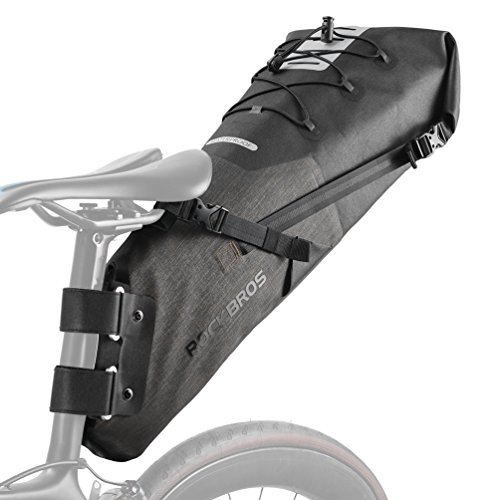
- Up to 14L adjustable capacity
- Waterproof, wipe-clean exterior
- Tool-free straps and reflective details
Best For: Larger variable loads in muddy conditions
High-Capacity Tourer
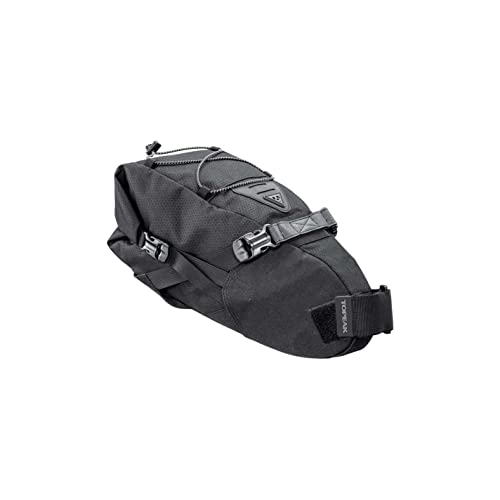
- 15L rack-free storage
- Removable 10,000 mm-rated liner
- Compression straps reduce sway
Best For: Bulkier gear on longer trips
Best for Extra Gear
Rhinowalk 10L Waterproof Saddle Bag
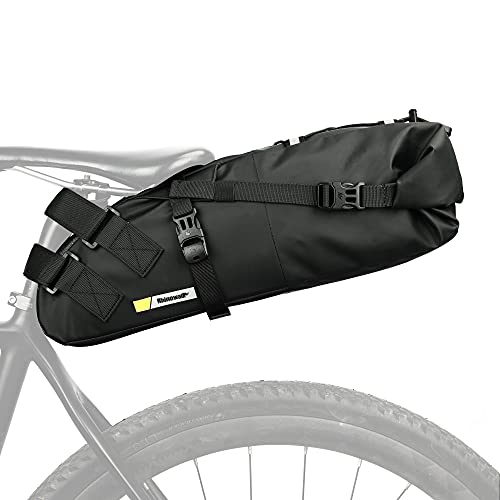
- 10L main compartment
- 3,000 mm-rated waterproof inner fabric
- Top elastic cord and tail-light hook
Best For: Roomier packing on medium- to long-distance rides
Best Compact Dry Liner

- 6L capacity for selective packing
- 10,000 mm-rated waterproof inner bag
- Air-release button and light clip
Best For: Smaller loads with a dedicated waterproof liner
Best Adjustable Capacity

- Roll-style 3–10L capacity
- 600D nylon with water-repellent TPU film
- Top bungee and reflective rear stripes
Best For: Commuting and touring with changing gear loads
Best for Compressible Storage

- 13–15L expandable capacity
- Air-release compression valve
- Reflective panels and light mount
Best For: Larger loads on tours or wet-weather commutes
Best for Light Loads

- About 3L of adjustable storage
- Exterior elastic gear cords
- Three straps and PP support board
Best For: Compact essentials with room to stash gloves or sleeves
Best for Muddy Rides

- Adjustable roll-top capacity up to 15L
- Extended flap helps reduce mud spray
- Steel frame supports bag shape
Best For: Larger loads on wet or muddy rides
Balanced 10L Pick – Topeak BackLoader 10L
The Topeak BackLoader 10L is a bikepacking seat pack for riders who want rack-free storage for clothing, food, and tools without moving up to a larger bag. Its removable dry bag has a 10,000 mm waterproof rating, while compression straps help limit sway.
Best For: Riders packing for long days or lighter touring loads who want a removable waterproof liner.
Pros:
- 10L size offers room for gear without a rear rack.
- Removable waterproof dry bag protects contents from rain, mud, and grit.
- Compression straps and a reinforced saddle mount help keep the load stable.
Cons:
- 5 kg stated load limit may constrain heavier packing.
- Single main compartment offers little built-in organization.
Choose this size when 10L meets your packing needs; the included liner and stability features make it a practical middle-ground option.
The Blackburn Outpost is a bikepacking seat pack built around an outer harness and removable inner bag. You can take the bag off without unstrapping the harness from your bike, a useful setup when you stop frequently or want flexibility for oversized items.
Best For: Riders who value quick bag removal and a harness that can carry different loads.
Pros:
- Removable inner bag leaves the harness mounted between stops.
- 11L capacity and roll-top closure let you adjust the packed size.
- Welded seams and daisy-chain loops add weather resistance and external attachment points.
Cons:
- Listed as water-resistant rather than waterproof.
- Harness-and-bag setup has more pieces than a one-piece seat pack.
This is the most adaptable mounting setup here, but use extra protection for items that must stay dry in sustained rain.
The ROCKBROS bikepacking seat pack provides up to 14L of adjustable storage with a roll-top closure. Its waterproof three-layer construction and wipe-clean exterior suit riders expecting muddy or wet conditions.
Best For: Riders who want a large, adjustable-capacity bag with a waterproof exterior.
Pros:
- Roll-top design adjusts the bag’s length to suit the load.
- Waterproof three-layer material wipes clean after muddy rides.
- Tool-free strap mounting and reflective straps add convenience and visibility.
Cons:
- Single compartment offers no built-in gear separation.
- Large maximum size may be more than needed for minimal loads.
Its adjustable volume is the main draw: roll it down for smaller loads or use the full stated 14L when you need more space.
The Topeak BackLoader 15L is a bikepacking seat pack for longer trips that call for more rack-free storage. It includes a removable 10,000 mm-rated waterproof liner, plus compression straps and an upgraded saddle mount intended to reduce sway.
Best For: Riders carrying bulkier clothing and equipment on longer bikepacking trips.
Pros:
- 15L capacity carries more gear without a rear rack.
- Removable waterproof liner helps keep packed items dry.
- Compression straps help stabilize the load on rough terrain.
Cons:
- 5 kg stated carrying limit still applies despite the larger volume.
- Outer bag is listed as water-resistant; rely on the liner for waterproof protection.
Pick this over the 10L BackLoader when bulk is the limiting factor, while keeping the packed weight within its stated limit.
Best for Extra Gear – Rhinowalk 10L Waterproof Saddle Bag
The Rhinowalk 10L bikepacking seat pack offers room for longer rides, plus a top elastic cord for carrying items such as a pump or wet clothing outside the main compartment.
Best For: Riders who want a roomy seat-mounted bag for medium- to long-distance trips.
Pros:
- 10L capacity provides space for trip essentials.
- Waterproof inner fabric is rated to 3,000 mm, with waterproof tape at the seams.
- Four-strap mounting, reflective details, and a tail-light hook add practical utility.
Cons:
- The four-strap setup takes more attachment points to secure.
- Its single compartment offers limited built-in organization.
Choose this bag if capacity and external carry space matter most; pack smaller items together if you prefer an organized load.
Best Compact Dry Liner – Topeak BackLoader 6L
The Topeak BackLoader 6L bikepacking seat pack pairs a water-repellent outer bag with a waterproof inner bag rated to 10,000 mm. Its smaller capacity suits riders who pack selectively.
Best For: Riders who want a 6L seat bag with a dedicated waterproof liner.
Pros:
- Included 10,000 mm-rated inner bag adds protection for packed gear.
- Hook-and-loop fasteners allow straightforward mounting and removal.
- Air-release button and safety-light clip are useful finishing details.
Cons:
- 6L capacity leaves less room than the 10L options in this roundup.
- The outer material is described as water-repellent; the waterproof rating applies to the inner bag.
This is the pick for a more compact load when keeping contents dry is a priority. Check that your packing list fits within its 6L capacity.
Best Adjustable Capacity – ROCKBROS 10L Seat Bag
The ROCKBROS bikepacking seat pack adjusts from about 3L to 10L using its roll-style closure, making it practical when your load changes between commutes and touring days. Its 600D nylon construction has a water-repellent TPU film.
Best For: Riders who want one seat bag for varying gear loads.
Pros:
- Roll-style closure lets you pack the bag smaller or expand it up to 10L.
- Top bungee cord provides extra carry space.
- Reflective rear stripes and a tail-light attachment point support nighttime visibility.
Cons:
- At 1.8 pounds, the listed weight may matter to riders minimizing bag weight.
- Its single compartment provides little built-in separation for small items.
The adjustable volume is its main advantage: roll it down for a lighter daily load, or use the extra space for clothing and tools on longer rides.
Best for Compressible Storage – KEMIMOTO 13–15L Seat Pack
The KEMIMOTO bikepacking seat pack offers 13–15L of expandable storage, with an air-release valve that helps you squeeze out excess air before rolling it closed. Its 500D PVC-coated fabric, welded seams, and roll-top closure are designed to keep water and mud away from your gear.
Best For: Riders who want a larger, compressible seat pack for touring or wet-weather commutes.
Pros:
- Air-release valve helps reduce bulk after packing.
- Non-slip base and reinforced straps help limit movement.
- Reflective panels, a rear-light mount, and a carry handle add everyday utility.
Cons:
- Rear light is not included.
- At 0.6 kg, the bag itself adds noticeable weight.
This is a practical choice when you need substantial capacity but want to cinch the load down. The carry handle also makes it easier to take the bag with you at stops.
Best for Light Loads – ROCKBROS 3L Saddle Bag
If your bikepacking seat pack only needs to hold a few essentials, this ROCKBROS bag provides about 3L of adjustable storage. Its water-repellent 600D fabric with TPU and welded joints offers weather protection, while exterior elastic cords give you a spot to stow gloves or sleeves.
Best For: Riders carrying a compact kit who want exterior storage for small clothing items.
Pros:
- Three-strap mounting and a PP support board help the bag hold its shape.
- Elastic cords add accessible storage outside the main compartment.
- Reflective details and a rear taillight attachment point aid visibility.
Cons:
- About 3L of capacity limits what you can pack for longer trips.
- Water-repellent construction is not a guarantee that contents will stay dry in prolonged rain.
Choose this over a larger seat pack when keeping the load small matters most. The supported shape and three-point attachment are useful features for carrying that compact load.
Best for Muddy Rides – 15L Seat Bag with Rear Flap
This 15L bikepacking seat pack pairs an adjustable roll-top closure with an extended rear flap designed to reduce mud spray on your back. Its three-layer waterproof fabric has a wipe-clean surface, making it a practical option for rides that leave your gear dirty.
Best For: Riders who want substantial seat-pack storage and a flap that helps block mud spray.
Pros:
- Roll-top closure adjusts the bag’s capacity up to 15L.
- Built-in steel support frame helps maintain its shape.
- Tool-free straps, reflective markings, and a taillight belt add useful ride features.
Cons:
- At 0.7 kg, it is a relatively substantial bag before packing.
- The rear flap helps with spray but does not replace a full fender.
Its combination of capacity, structured support, and easy-clean fabric suits riders expecting wet, messy conditions. Roll it down when you are carrying less to keep the load more compact.
How We Picked the Best Bikepacking Seat Pack
We focused on practical buying considerations across the 10 selected listings: stated capacity, attachment design, weather-protection claims, and suitability for different trip lengths. The selection includes compact 6L options, mid-size 10L bags, and expandable or larger bags around 13–15L. We did not treat a “waterproof” label as proof that every seam, zipper, or closure will keep contents dry in sustained rain; check the specific construction and use a dry bag for critical gear.
Quick Comparison: Which Size Fits Your Ride?
- 6L: A starting point for a spare layer, tools, and other small essentials when you want to keep the load light.
- 10L: A middle ground for longer day rides or minimalist overnights, depending on the size of your kit.
- 13–15L: More room for clothing or sleep gear, but more reason to check clearance and pack tightly.
Listed volume is a guide, not a packing guarantee. A bulky sleeping bag may fit poorly even when its nominal volume seems right. Measure your gear before choosing a size.
Key Buying Factors for a Bikepacking Seat Pack
Bike Clearance and Fit
Measure the space from your saddle rails to the rear tire, especially if you ride a small frame, use a dropper post, or have substantial rear suspension travel. Check the manufacturer’s fit guidance for your seatpost, saddle rails, and required tire clearance. A bag that brushes the tire when you sit on the bike is not a workable fit.
Attachment and Stability
Look at how the bag anchors to both the saddle rails and seatpost. Firm straps and a well-compressed load help limit side-to-side sway, particularly when climbing out of the saddle. Put dense items closest to the seatpost and avoid overfilling the tapered end.
Weather Protection and Access
Consider whether the bag uses a roll-top closure, a separate waterproof liner, or another closure system. A removable liner can make packing and unloading easier, while an integrated bag may mean carrying everything inside when you stop. For wet trips, protect electronics and sleeping layers separately even if the outer bag is advertised as waterproof.
Capacity Versus Handling
Bigger is useful only if the bag clears your tire and the load stays secure. Pack your intended kit at home, mount the bag, and take a short test ride before a longer trip. Recheck strap tension after the contents settle.
Who Should Buy Which Bikepacking Seat Pack?
Choose a compact pack if you travel light, have limited saddle clearance, or mainly need extra space on day rides. A 10L bag is a sensible place to start if your kit is modest but you want flexibility for an overnight. Consider a 13–15L or expandable model when you need to carry bulkier soft goods and your bike has room for it. If you routinely need more space, spread the load between a seat pack, handlebar bag, and frame bag rather than forcing everything behind the saddle.
