
A reliable truing stand can turn uneven, rubbing wheels into smooth-rolling assemblies without the cost or delay of a shop visit. The best bike wheel truing stands make spoke adjustments easier to monitor while supporting a useful range of wheel sizes and tire widths.
This roundup compares 10 options for home mechanics, commuters, mountain bikers, and workshop users, with attention to fit, stability, adjustment range, portability, and included tools.
Best 10 Bike Wheel Truing Stands Picks for 2026
Best Overall Adjustable Stand
Carbon Steel 16–29-Inch Wheel Truing Stand

- Fits 16–29-inch wheels with 90–150 mm rim widths
- Includes brake-disc detector and axle wrench
- Detachable 7.3-pound carbon steel design
Best For: Home mechanics seeking broad adjustability and disc inspection
Best for Quick-Release Wheels
16–27.5-Inch and 700C Wheel Truing Stand

- Made for 16–27.5-inch and 700C quick-release wheels
- Checks rims and 5.51–7.09-inch brake discs
- Disassembles for compact storage
Best For: DIY riders maintaining quick-release MTB and road wheels
Best for Wide Rim Adjustment
Professional Aluminum Wheel Truing Stand Set

- Fits 10–29-inch wheelsets
- Adjusts to 50–200 mm rim widths
- 7075 aluminum alloy with three testing functions
Best For: Mechanics working on varied MTB, road, and BMX wheel builds
Best for Flexible Mounting
Mimoke 16–29-Inch Wheel Truing Stand

- Fits 16–29-inch wheels and 95–150 mm widths
- Works on a workstation or mounts to a bench or vice
- Lightweight 3.4 kg design with a three-year guarantee
Best For: Home workshops needing portable or fixed mounting options
Compact Home Workshop Pick
Portable Folding Wheel Truing Stand

- Foldable, space-saving design
- Scratch-resistant plastic measuring parts
- Front and rear wheel notches
Best For: Home mechanics and small workshops
Precision Gauge Choice
Adjustable 10-29-Inch Wheel Truing Stand

- Three precision measurement gauges
- Fits 26, 27.5, 700C, and 29-inch wheels
- Foldable with a heavy-duty stable base
Best For: Mechanics needing broad wheel and axle compatibility
Heavy-Duty Professional Option
Foldable Wheel Truing Stand for 29-Inch Wheels

- Three gauges with precision bearings
- Supports varied bikes and wheel sizes
- Widened base with pre-drilled holes
Best For: Repair shops and mechanics servicing multiple bike types
Best Portable Pick

- Compact folded size under 10 inches
- Includes spoke wrench
- Supports front and rear wheel adjustments
Best For: Portable, occasional home wheel maintenance
Best Budget Stand

- Fits 16- to 29-inch and 700C wheels
- Folds for storage or transport
- Includes rim-observation ruler and thimble
Best For: Occasional home or race-day wheel maintenance
Best Heavy-Duty Choice
CyclingDeal Wide-Compatibility Stand
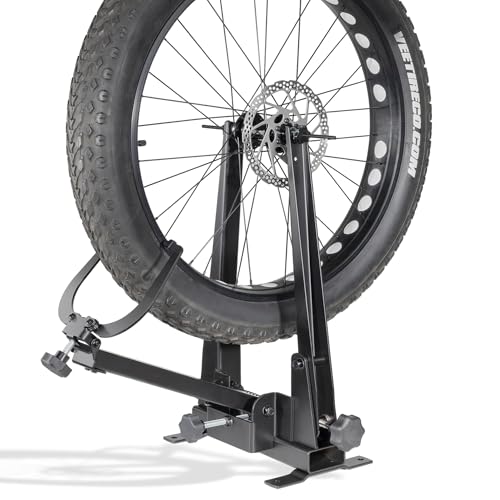
- Fits wheels up to 29 inches and tires up to 5 inches
- Supports hubs up to 250 mm
- Works with multiple axle types
Best For: Frequent maintenance across varied wheel setups
Best Overall Adjustable Stand – Carbon Steel 16–29-Inch Wheel Truing Stand
This bike wheel truing stand is a versatile option for riders maintaining front and rear wheels from 16 to 29 inches. Its adjustable 90–150 mm rim width, metal construction, and built-in brake-disc detection device make it useful for routine MTB and road-bike wheel alignment.
Best For: Home mechanics who want a portable, adjustable stand with rim and brake-disc checking capability.
Pros:
- Fits 16–29-inch wheels and 90–150 mm rim widths.
- High-strength carbon steel construction is designed for durability.
- Includes a brake-disc detection device and axle wrench.
- Detachable 7.3-pound design is easier to store and carry.
Cons:
- Not compatible with thru-axles without a separate adapter.
- Tires must be removed to adjust the hub width.
Choose this model if broad wheel-size coverage and a dedicated disc-checking feature matter most. Thru-axle users should budget for an adapter and confirm compatibility before buying.
Best for Quick-Release Wheels – 16–27.5-Inch and 700C Wheel Truing Stand
Designed specifically for quick-release wheelsets, this bike wheel truing stand provides a freestanding setup for checking rim movement on 16–27.5-inch and 700C wheels. Adjustable width, spring-loaded rim measurement, and brake-disc checking support routine garage maintenance.
Best For: DIY MTB and road-bike owners working primarily with quick-release wheels.
Pros:
- Supports 16–27.5-inch and 700C quick-release wheels.
- Adjustable 3.74–5.12-inch base width accommodates different hubs.
- Checks rim runout and 5.51–7.09-inch brake discs.
- Disassembles for compact storage and weighs 7.6 pounds.
Cons:
- Designed for quick-release wheels rather than thru-axle systems.
- Its 7.6-pound steel construction is less lightweight than some compact stands.
This is a practical choice for riders who want a dedicated, freestanding repair station without bulky shop equipment. Confirm that your wheel type falls within the listed quick-release fit range.
Best for Wide Rim Adjustment – Professional Aluminum Wheel Truing Stand Set
This professional-style bike wheel truing stand is built for a wide range of wheel sizes, from 10 to 29 inches, and rim widths from 50 to 200 mm. Its 7075 aluminum alloy construction, CNC-finished base, and three testing functions suit detailed rim, runout, and brake-disc adjustment.
Best For: Mechanics who need unusually broad rim-width adjustment for MTB, road, or BMX wheels.
Pros:
- Accommodates 10–29-inch wheelsets.
- Adjustable for 50–200 mm rim widths.
- Uses 7075 aluminum alloy with anodized surface hardening.
- Includes a roller measuring head for rim-brake wheels and three testing functions.
Cons:
- The supplied notes do not specify thru-axle compatibility.
- Its broad adjustment range may be more than casual users need.
The standout feature is its exceptionally wide rim-width range, making it a strong fit for varied wheel builds. It is worth considering when a standard narrow adjustment range would limit your projects.
Best for Flexible Mounting – Mimoke 16–29-Inch Wheel Truing Stand
The Mimoke is a flexible bike wheel truing stand for 16–29-inch wheels and 95–150 mm widths. Its lightweight, multi-joint carbon steel design can sit on a workstation, mount to a bench, or fit in a vice, giving home mechanics several ways to create a stable repair setup.
Best For: Home workshops that need a portable stand with bench- or vice-mounting flexibility.
Pros:
- Supports 16–29-inch wheels and 95–150 mm widths.
- Can be bench mounted, installed in a vice, or used on a workstation.
- Quick-disassembly design weighs 3.4 kg for easier handling.
- Includes a three-year product guarantee.
Cons:
- Mounting screws are not included.
- The supplied notes do not specify thru-axle compatibility.
This model makes the most sense when mounting flexibility is as important as wheel adjustment. Plan to supply suitable screws if you want to secure it to a bench or vice.
Compact Home Workshop Pick – Portable Folding Wheel Truing Stand
This portable option is a practical choice for cyclists seeking bike wheel truing stands for routine maintenance at home or in a small workshop. Its foldable frame, stable base, and adjustable measuring tools support straightforward rim alignment while taking up little storage space.
Best For: Home mechanics, compact garages, and standard front or rear bicycle wheels.
Pros:
- Foldable design saves storage space.
- Stable alloy-steel frame supports regular maintenance.
- Plastic measuring parts help reduce rim scratches.
- Includes an adjustable knob, ruler, and thimble for alignment checks.
Cons:
- The notes specify compatibility with most standard bicycle wheels rather than a detailed wheel-size range.
- Its 3.5-pound weight may provide less heft than heavier professional stands.
This stand emphasizes convenience and compact storage over specialized shop features. It is a sensible fit when you need an accessible truing setup for occasional or routine bicycle maintenance.
Precision Gauge Choice – Adjustable 10-29-Inch Wheel Truing Stand
For shoppers comparing bike wheel truing stands with broader adjustment and measurement capability, this model offers three precision gauges for checking rim runout, deflection, and brake-disc flatness. Its widened base and foldable construction balance workshop stability with easier storage.
Best For: Road, MTB, and other bicycle wheelsets from 26 to 29 inches, including 700C setups.
Pros:
- Three gauges target rim runout, deflection, and brake-disc flatness.
- Adjusts from 2.36 to 7.68 inches for broad rim compatibility.
- Supports barrel-shaft and quick-release axles.
- Widened, thickened base includes pre-drilled holes for added stability.
Cons:
- The supplied notes do not include a listed item weight.
- The wide adjustment range may be more capability than needed for basic occasional truing.
With its gauge system, anodized aluminum-alloy and steel construction, and broad wheel compatibility, this is a versatile option for mechanics who want more measurement coverage than a basic alignment stand.
Heavy-Duty Professional Option – Foldable Wheel Truing Stand for 29-Inch Wheels
This professional-oriented model is among the more substantial bike wheel truing stands in the group, combining a widened base, precision bearings, and three gauges. Its adjustable width supports wheelsets up to 29 inches, while the foldable frame helps conserve workspace when the stand is stored.
Best For: Home mechanics, bike repair shops, and technicians servicing varied bicycle types.
Pros:
- Three gauges check rim runout, deflection, and brake-disc flatness.
- Supports 10- to 29-inch wheelsets and 2.36- to 7.68-inch rim widths.
- Fits kids bikes, road bikes, mountain bikes, BMX, folding bikes, and e-bikes.
- Widened base, pre-drilled holes, and precision bearings support stable adjustments.
Cons:
- Rims are not included.
- The fixing rod is intended for barrel-axle hubs; quick-release hubs do not require it.
- Its professional feature set may be unnecessary for very occasional basic maintenance.
This stand is a strong fit when wheel variety and adjustment precision matter. The included assembly accessories and English manual may also help users get it ready for regular repair work, though the larger feature set comes with a more workshop-focused design.
Best Portable Pick – Mini Wheel Truing Tool
Portable Bicycle Wheel Truing Stand Bike Mini Rims Adjustment Repair Mount Tools Spoke Wrench Black
Check Price On AmazonFor cyclists who need a compact option among bike wheel truing stands, this portable tool provides a simple way to make millimetre-level adjustments. Its precise screw design works with the included spoke wrench, while the adaptive mounting setup supports front and rear wheels.
Best For: Home cyclists seeking a lightweight, portable tool for occasional wheel adjustments.
Pros:
- Compact folded size under 10 inches for convenient storage.
- Includes both the wheel truing tool and a spoke wrench.
- Works with various bike rims, including MTB wheels.
- Silicone rubber bands help secure the setup during use.
Cons:
- Its mini design may be less suitable for intensive workshop use.
- The supplied notes do not specify a wheel-size range.
This is a practical, space-saving choice for basic wheel maintenance. Choose it when portability and straightforward adjustments matter more than a full-size workshop stand.
Best Budget Stand – GOTOTOP Folding Truing Stand
This folding option is a practical entry in bike wheel truing stands for home mechanics who service common wheel sizes. It supports 16- to 29-inch wheels, uses separate upper and lower notches for front and rear wheels, and includes a ruler and thimble to help observe rim movement.
Best For: Home or team mechanics who need an economical stand for occasional wheel truing.
Pros:
- Accommodates most 16- to 29-inch wheels, including 700C.
- Folding design is convenient for storage and race-day transport.
- Plastic measuring components help protect rims from scratches.
- Designed for front and rear wheels with 100 mm and 135 mm hub spacing.
Cons:
- It is specifically positioned for light use rather than professional-level work.
- The measuring part is plastic rather than metal.
With its broad wheel-size compatibility and foldable format, this stand suits riders who true wheels once or twice a year. More demanding workshop users may want a heavier-duty alternative.
Best Heavy-Duty Choice – CyclingDeal Wide-Compatibility Stand
For demanding wheel work, this heavy-duty entry among bike wheel truing stands supports wheels up to 29 inches, tires up to 5 inches wide, and hubs up to 250 mm. Its powder-coated steel construction and included thru-axle adaptor are designed to provide a stable, adaptable platform for different wheel setups.
Best For: Riders and mechanics working on varied wheel, tire, axle, and hub configurations.
Pros:
- Supports rims up to 29 inches with or without tires.
- Handles tire widths up to 5 inches and hub widths up to 250 mm.
- Compatible with quick-release, solid-axle, and different thru-axle hubs.
- Heavy-gauge powder-coated steel construction is built for stability.
Cons:
- At 10.93 kg package weight, it is less convenient to move than compact stands.
- The supplied details list a two-year manufacturer warranty, while the feature notes mention a lifetime warranty; buyers should verify the applicable coverage.
This is the most versatile choice of the three for wide tires and nonstandard hub setups. Its robust construction makes it better suited to frequent maintenance than a small portable tool.
How We Picked These Bike Wheel Truing Stands
We focused on the features that most affect real-world wheel work: supported wheel diameters, axle or hub compatibility, adjustable stand width, base stability, portability, and ease of use. We also considered whether each stand is better suited to occasional maintenance, frequent home repairs, or heavier workshop use.
Because product specifications and included accessories can vary, confirm the current listing before buying—especially if you use thru-axle hubs, unusually wide rims, fat-bike tires, or wheels outside the common 26-inch, 27.5-inch, 29-inch, and 700C ranges.
Quick Comparison
| What to Compare | Best For | Why It Matters |
|---|---|---|
| Wheel-size range | Mixed-wheel households | Determines whether the stand fits your current and future bikes. |
| Hub and axle support | Modern mountain and road bikes | Prevents compatibility problems during mounting. |
| Base and frame strength | Frequent repairs | Reduces movement while you adjust spoke tension. |
| Folding or compact design | Small workspaces | Makes storage and transport easier. |
| Wide-rim clearance | Fat bikes and plus tires | Provides enough room for wider wheel assemblies. |
Key Buying Factors for Bike Wheel Truing Stands
Compatibility and Adjustment Range
Start with wheel diameter, hub width, axle style, and rim clearance. A stand advertised for broad wheel-size coverage may still need adapters or a specific mounting method for quick-release, solid-axle, or thru-axle wheels. Check measurements rather than relying only on general labels.
Stability and Measurement Accuracy
A rigid frame and weighted or wide base help keep the wheel centered as you work. Adjustable calipers or guides should move smoothly and hold their position. For occasional repairs, a basic indicator may be sufficient; frequent builders may prefer finer adjustment and a more rigid professional-style frame.
Portability and Storage
Folding stands are useful for apartments, mobile repairs, and cyclists who do not keep a permanent workshop. Compact models save space but may sacrifice some rigidity. If you plan to true wheels regularly, prioritize a stable setup over the smallest folded footprint.
Included Accessories
A spoke wrench, dish-checking capability, adapters, or calibration hardware can improve value. However, included tools should complement—not replace—a correctly sized spoke wrench and a reliable tension-checking process.
Who Should Buy Which Bike Wheel Truing Stands?
Choose a compact folding stand if you have limited storage or perform occasional roadside and home maintenance. Choose a heavy-duty adjustable stand if you build or repair wheels often and want better resistance to movement. Choose a wide-clearance model for fat-bike or unusually wide rims, after verifying its maximum capacity. Choose a broad compatibility stand if your household includes multiple bikes with different wheel sizes and axle formats.
Whichever of these Bike Wheel Truing Stands you choose, pair it with a suitable spoke wrench, good lighting, and a methodical quarter-turn adjustment routine. Small, even corrections are generally easier to control than large spoke changes.
