
A saddle that feels fine around the block can become uncomfortable hours into a ride. The right choice depends on how you sit, where you ride, and whether the saddle supports your sit bones without creating pressure elsewhere.
These 10 options span road, mountain, triathlon, and more upright riding. Use the guide below to narrow them by fit and riding position—not padding alone.
Best 10 Bike Saddles for Long Distance Cycling Picks for 2026
Adjustable-Width Pick

- Three widths: 7.08, 7.87, and 8.66 inches
- Memory-foam padding
- Spring-steel support
Best For: Riders who want adjustable sit-bone support
Noseless Comfort Pick

- 13.6-inch-wide seating surface
- Noseless pressure-relief design
- Includes two universal adapters
Best For: Riders who prefer a broad, noseless seat
Ventilated Touring Pick
FIFTY-FIFTY Mountain Bike Seat

- Gel and memory-foam cushioning
- Central airflow vent
- Narrow front for thigh clearance
Best For: Riders wanting padded, ventilated touring comfort
Road Endurance Pick
Selle Italia Novus SuperFlow Endurance TM

- Anatomical cutout with gel layer
- Extra long-distance padding
- 310 g stated weight
Best For: Road riders seeking cutout and gel comfort
Women's Pressure Relief
Terry Butterfly Century Saddle

- Women-focused, narrower profile
- Wide Butterfly-line cutaway
- Foam, gel, and Poron XRD layers
Best For: Women seeking layered cushioning and a large cutaway
Short-Nose Road Pick
Selle Italia SLR TM Boost Superflow

- Short nose for thigh clearance
- Superflow central cutout
- 218 g listed weight
Best For: Road riders seeking a short nose and open center
Aero-Distance Pick
Fizik Transiro Aeris Long Distance R5
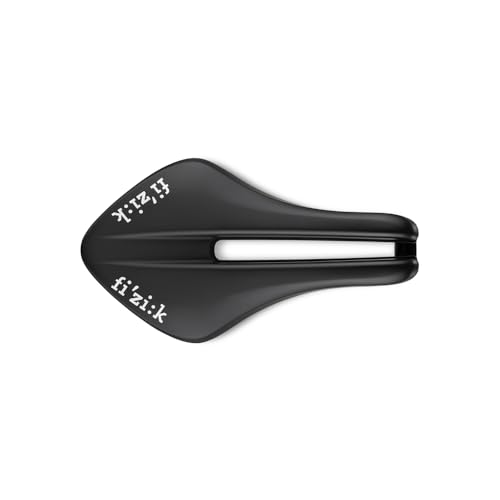
- Split nose for aero-position pressure relief
- Carbon-reinforced nylon shell
- Optional rear bottle-cage link
Best For: Triathletes riding long stretches in an aero position
Gel-Padded Pick

- Flow cutout with front gel layer
- Extra padding for longer rides
- Durable Duro-Tek cover
Best For: Riders seeking padding and soft-tissue relief
Endurance Road Pick
Fizik Tempo Argo R5 Road Saddle

- Short nose with ischial support
- Flexible Wingflex shell edges
- Progressive Type 2 foam
Best For: Road cyclists prioritizing stability and posture
Pressure-Relief MTB Pick
Selle Italia X-Bow Superflow Saddle

- Large perineal-relief opening
- Rear-fixed rail design
- Extra rail adjustment travel
Best For: MTB riders seeking pressure relief and fit adjustment
Adjustable-Width Pick – Width Adjustable Bike Seat
Among bike saddles for long distance cycling, this model stands out for its three width settings: 7.08, 7.87, and 8.66 inches. That gives riders a way to adjust the seat width to better match their sit bones.
Best For: Riders who want to fine-tune saddle width on a city, mountain, road, or stationary bike.
Pros:
- Three selectable widths offer more fit flexibility than a fixed-width seat.
- Memory-foam padding and a curved seat surface are designed to support comfortable riding.
- Spring-steel hardware and a horizontal rear support add structure for rougher surfaces.
Cons:
- At 0.83 kg, it may not suit riders prioritizing a light saddle.
- Its minimum 7.08-inch width may be too broad for riders seeking a narrow profile.
The adjustable shape is the main reason to consider it. Choose based on your riding position and preferred seat width rather than assuming more padding alone will solve fit issues.
Noseless Comfort Pick – 13.6-Inch Oversized Bike Seat
If you prefer a broad, noseless shape when comparing bike saddles for long distance cycling, this 13.6-inch-wide seat is worth a look. Its design removes the traditional saddle nose, while memory-foam padding adds cushioning.
Best For: Riders seeking a wide, noseless seat for a cruiser or stationary bike.
Pros:
- Noseless design is intended to reduce pressure on sensitive areas.
- 13.6-inch width provides a large seating surface.
- Includes two universal adapters.
Cons:
- The extra-wide profile may not appeal to riders who prefer a narrow saddle.
- Its 90-day stated warranty is shorter than those listed for some other products here.
This is a shape-first option: consider it if avoiding a saddle nose matters more to you than maintaining a conventional seat profile. Check that its width suits your bike and riding position.
Ventilated Touring Pick – FIFTY-FIFTY Mountain Bike Seat
For riders weighing bike saddles for long distance cycling, the FIFTY-FIFTY TOURING model combines gel and memory foam with a central airflow vent. Its narrow front is designed to leave room for thigh movement while pedaling.
Best For: MTB, road, or city-bike riders who want padding and a ventilated saddle design.
Pros:
- Gel and memory-foam layers provide cushioning and support.
- Central vent is designed to improve airflow and heat distribution.
- Waterproof construction and a narrow front add practical touring features.
Cons:
- At 0.49 kg, it is heavier than the 310 g Selle Italia saddle in this roundup.
- The brand offers three riding-position models, so buyers should check that the TOURING version matches their needs.
This is a practical choice if ventilation, cushioning, and thigh clearance are priorities. Pay attention to the specific model when ordering, since the range includes versions for different riding positions.
Road Endurance Pick – Selle Italia Novus SuperFlow Endurance TM
The Selle Italia Novus SuperFlow Endurance TM takes a road-focused approach to bike saddles for long distance cycling. It pairs an anatomical cutout with a gel layer and extra padding, aiming to support comfort during extended rides.
Best For: Road riders who want a cutout saddle with gel cushioning and steel-alloy rails.
Pros:
- SuperFlow cutout and gel layer target soft-tissue comfort.
- Extra padding is intended for long-distance riding positions.
- 7 mm cromoly and manganese alloy rails provide a flexible, high-strength mounting structure.
Cons:
- Its 100 kg stated maximum capacity may not suit every rider.
- Steel-alloy rails may not appeal to buyers specifically seeking nonmetal rails.
At a stated 310 g, this is a more compact alternative to the oversized seats above. Its cutout and padding make the most sense if its road-saddle shape fits your riding position.
Women's Pressure Relief – Terry Butterfly Century Saddle
Among bike saddles for long distance cycling, the Terry Butterfly Century is a women-focused option with a narrower profile and the widest cutaway in Terry’s Butterfly line. Its foam, thin gel layer, and Poron XRD shock-absorbing layer offer several approaches to managing pressure and road vibration.
Best For: Women seeking a cutaway road-bike saddle with layered cushioning for longer rides.
Pros:
- Wide cutaway is designed for pressure relief.
- Foam, gel, and Poron XRD provide layered padding and shock absorption.
- Seamless Fibra-Tek cover and Ti-316 rails.
Cons:
- Its narrower profile may not suit riders who prefer a wider seating surface.
- Layered cushioning may not appeal to riders seeking a minimally padded saddle.
At 262 × 152 mm, this is worth considering if a substantial cutaway matters more to you than an especially broad saddle. Saddle fit remains personal, so check the dimensions against your current setup.
Short-Nose Road Pick – Selle Italia SLR TM Boost Superflow
If you’re comparing bike saddles for long distance cycling on a road bike, the Selle Italia SLR TM Boost Superflow pairs a short nose with a Superflow cutout. The short-nose design is intended to improve thigh clearance, while its listed weight is 218 g.
Best For: Road riders who want a short-nose saddle with a large central cutout.
Pros:
- Boost short nose is designed to improve thigh clearance.
- Superflow cutout provides an open center.
- Listed at 218 g, with tubular manganese rails.
Cons:
- Short-nose shape may not suit riders who prefer more room to shift forward and back.
- The cutout design may not match every rider’s fit or pressure preferences.
This is a fit-focused road option rather than a promise of universal comfort. Consider whether a shorter nose and open center match the position you maintain on longer rides.
Aero-Distance Pick – Fizik Transiro Aeris Long Distance R5
Fizik Transiro Aeris Long Distance R5,Triathlon Lightweight Carbon Saddle, Black, 135mm
Check Price On AmazonFor triathletes shopping for bike saddles for long distance cycling, the Fizik Transiro Aeris Long Distance R5 is built around sustained aero-position riding. Its split nose is designed to relieve pressure while maintaining firm support and balance during long hours of pedaling.
Best For: Triathlon riders who spend long stretches in an aero position and want a split-nose saddle.
Pros:
- Split nose is designed for pressure relief in an aero position.
- Carbon-reinforced nylon shell is described as ride-compliant.
- Optional link can integrate a rear water-bottle cage.
Cons:
- Triathlon-specific shape may be less relevant to riders who rarely use an aero position.
- Rear bottle-cage integration requires the optional link.
The split-nose layout and optional hydration mount make this the most triathlon-specific choice here. Prioritize it if your long-distance rides involve sustained aero positioning rather than a conventional road-bike posture.
Gel-Padded Pick – Selle Italia Sport Gel Flow
Among bike saddles for long distance cycling, the Selle Italia Sport Gel Flow is worth considering if you want extra padding and a pressure-relieving cutout. Its gel layer adds flexibility at the front, while the Duro-Tek cover is designed for durability.
Best For: Riders who prefer a padded saddle with front-end soft-tissue relief.
Pros:
- Flow cutout and gel layer target soft-tissue comfort.
- Extra padding is intended for long rides.
- 7 mm carbon-iron steel alloy rails fit nearly any bike.
Cons:
- Extra padding may not suit riders who prefer a firmer saddle.
- Steel rails may not appeal to riders seeking a non-steel rail option.
This is the padding-focused choice of the three: prioritize it if a cushioned feel and a front cutout matter more to you than a firmer, low-profile design.
Endurance Road Pick – Fizik Tempo Argo R5 Road Saddle
The Fizik Tempo Argo R5 takes a posture-focused approach to bike saddles for long distance cycling. Its short-nose shape and generous ischial support are designed to encourage stability on endurance road rides.
Best For: Road cyclists who want a stable, short-nose saddle with progressive cushioning.
Pros:
- Short-nose design and generous ischial support promote a stable position.
- Wingflex shell edges adapt to inner-leg movement.
- Type 2 foam provides progressive cushioning.
Cons:
- Short-nose shape may not suit riders who prefer a longer saddle nose.
- Its endurance-road focus may be less relevant to riders shopping specifically for an MTB saddle.
Choose this model if support and riding position are your main priorities. Its carbon-reinforced nylon shell and S-Alloy rails round out a purpose-built road saddle.
Pressure-Relief MTB Pick – Selle Italia X-Bow Superflow Saddle
If your search for bike saddles for long distance cycling centers on perineal pressure relief, consider the Selle Italia X-Bow Superflow. Its large central opening and rear-fixed rail design are intended to reduce pressure where the sit bones and perineal area rest.
Best For: Mountain bike riders who prioritize a central cutout and saddle-position adjustment.
Pros:
- Superflow central opening is designed to relieve perineal pressure.
- Rear-fixed rail design frees the saddle’s main contact area.
- Extended rail offers more than 10 mm of additional adjustment travel.
Cons:
- Listed at 12.32 ounces, it may not suit riders prioritizing a lighter saddle.
- Its mountain-bike designation may not match a road-specific setup.
The X-Bow stands out for its cutout and rail layout rather than extra gel padding. Its 155 mm stated width is another fit detail to check against your preferences.
How We Picked the Best Bike Saddles for Long Distance Cycling
We selected a range of shapes and intended uses rather than treating one saddle style as universally comfortable. The lineup includes endurance and performance road designs, a triathlon saddle, a women-specific option, mountain-bike saddles, and wider seats for more upright riding. We considered stated features such as width, padding, pressure-relief openings, and intended riding position. Comfort remains individual: a product description cannot establish how a saddle will fit your body.
Quick Comparison: Start with Your Riding Position
For a lower, forward-leaning road position, start with the Selle Italia Novus SuperFlow Endurance TM, SLR TM Boost Superflow, Fizik Tempo Argo R5, or Selle Italia Sport Gel Flow. The Fizik Transiro Aeris Long Distance is the triathlon-specific choice. Mountain riders can compare the FIFTY-FIFTY and Selle Italia X-Bow Superflow. The Terry Butterfly Century is a women-specific long-distance option. For upright city or exercise-bike riding, consider the width-adjustable seat or the oversized noseless cushion. These are starting points, not interchangeable recommendations: a very wide seat can interfere with pedaling in a forward position.
Key Buying Factors for Bike Saddles for Long Distance Cycling
Width and Sit-Bone Support
Your sit bones should land on the saddle’s supportive area. Too narrow can concentrate pressure; too wide may cause inner-thigh rubbing. If possible, measure your sit-bone spacing and check the maker’s sizing guidance, accounting for your riding posture. An adjustable-width model may help you explore fit, but it does not replace an on-bike test.
Shape, Cutouts, and Padding
A central cutout or channel may reduce pressure for some riders, while its edges may bother others. Noseless designs change how weight is supported and may feel less stable when you move around the bike. More foam or gel is not automatically better for long rides: excessive cushioning can compress, shift pressure, or increase friction. Look for support first, then enough padding for your preference.
Bike Fit and Break-In Testing
Before replacing a saddle, check its height, tilt, and fore-aft position. Small adjustments can change pressure considerably; avoid using an extreme tilt to compensate for poor fit. Test a new saddle over several rides in your usual shorts and riding position, increasing duration gradually. Persistent numbness or pain is a reason to reassess fit rather than push through it.
Who Should Buy Which Bike Saddles for Long Distance Cycling?
Choose an endurance-oriented road saddle if you spend hours pedaling from a moderately forward position; consider a shorter, performance-oriented shape if you ride more aggressively. Triathletes should prioritize a saddle designed for their aero position. Mountain riders should look for a shape that permits shifting weight on technical terrain. Upright commuters and stationary-bike riders may prefer a broader platform, provided it does not rub as they pedal. Riders seeking a women-specific design can start with the Terry option, but should still choose by personal fit. Among Bike Saddles for Long Distance Cycling, the best purchase is the one you can test and adjust—not simply the softest one on the shelf.
