
A bike computer can make rides easier to track without putting your phone on the handlebars. Under $100, choices range from straightforward wired speedometers to GPS units with route guidance and sensor support.
The right pick depends on what you want to see while riding—and how much setup, charging, and connectivity you’re willing to manage.
Best 10 Bike Computers Under 100 Picks for 2026
Best for Color Navigation

- 2.4-inch color display
- GPX routes with rerouting
- ANT+, Bluetooth, and Wi-Fi
Best For: Riders seeking route guidance and indoor training features
Best Large Color Screen

- 2.8-inch color display
- GPX navigation with rerouting
- Wi-Fi plus ANT+/Bluetooth
Best For: Riders who want a larger screen for routes and ride data
Best for Rainy Rides

- Auto-backlit 2.4-inch screen
- IP67 water resistance
- ANT+ sensor support
Best For: Riders seeking readability in variable light and rain
Best for Long Rides

- Up to 40-hour battery life
- 2.6-inch anti-glare display
- ANT+ and Bluetooth 5.0
Best For: Riders prioritizing battery life and ride metrics
Best for Beginners
CATEYE Velo 7 Wired Bike Computer

- Tracks core speed, distance, and time stats
- Auto-pauses when you stop
- Up to three years of battery life
Best For: New riders seeking simple, wired ride tracking
Best for Route Navigation
iGPSPORT BSC200S GPS Bike Computer

- App routes and Back to Start guidance
- 2.4-inch color display with customizable data
- Up to 25 hours of battery life
Best For: Cyclists who want navigation and detailed ride data
Best for Long Battery Life
CYCPLUS G1 Wireless GPS Bike Computer

- Wireless GPS ride tracking
- Listed 50-hour battery life
- Auto-backlit, IPX6-rated display
Best For: Riders wanting basic GPS stats and fewer charges
Best for Sensor Pairing
COOSPO BC107 GPS Bike Computer
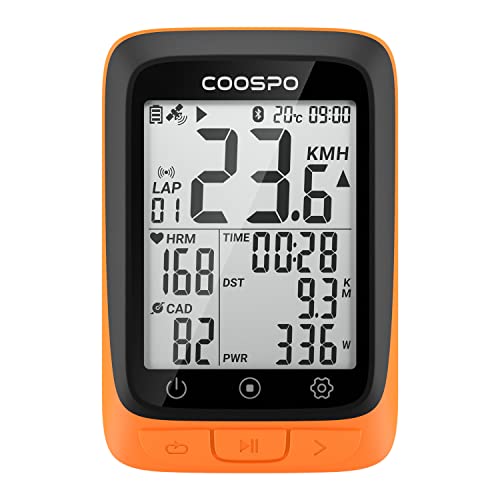
- GPS and GPS/BeiDou modes
- Pairs with compatible ANT+ sensors
- App-based Strava syncing
Best For: Riders using ANT+ cycling sensors
Best for Simple Ride Stats

- No wheel sensor required
- Shows altitude and gradient
- Up to 28 hours of claimed runtime
Best For: Standalone GPS stats and climbing data
Best for Navigation Features
COOSPO CS600 Color GPS Bike Computer

- Color touchscreen with route guidance
- Strava and TrainingPeaks app syncing
- Up to 36 hours of claimed runtime
Best For: Route-following and connected accessories
Best for Color Navigation – GEOID CC600
Among bike computers under 100, the GEOID CC600 is worth considering if you want color route guidance and detailed ride data. Its 2.4-inch display shows turn reminders, while uploaded GPX routes support automatic rerouting when you go off course.
Best For: Riders who want route guidance, sensor support, and indoor training features in one device.
Pros:
- Color navigation includes turn alerts and automatic rerouting.
- ANT+ and Bluetooth connect compatible sensors and smart trainers.
- Wi-Fi supports ride syncing, firmware updates, and assisted GPS data.
Cons:
- Routes must be uploaded through the phone app as GPX files.
- The advertised five-second GPS positioning depends on current assisted-GPS data and suitable conditions.
The CC600 offers more navigation and training options than a basic speed-and-distance display, but expect some app setup to make the most of it.
Best Large Color Screen – GEOID CC700
If you are comparing bike computers under 100 and prefer a larger navigation display, the GEOID CC700 has a 2.8-inch color screen. It pairs turn reminders and GPX-route rerouting with customizable ride-data pages.
Best For: Riders who prioritize a larger screen for following routes and reading data fields.
Pros:
- 2.8-inch color display provides more screen space than the CC600’s 2.4-inch display.
- GPX navigation offers turn alerts and automatic rerouting.
- Wi-Fi syncing and ANT+/Bluetooth sensor connectivity broaden its uses.
Cons:
- Adding external GPX routes requires the phone app.
- The claimed five-second positioning requires recently synced assisted-GPS data and favorable conditions.
Choose the CC700 over a smaller-screen option if display size matters most; its indoor-training support also makes it useful beyond outdoor rides.
Best for Rainy Rides – COOSPO BC107
For riders shopping bike computers under 100, the COOSPO BC107 combines a 2.4-inch sunlight-readable screen with automatic backlighting and IP67 water resistance. It records GPS rides and connects to compatible heart-rate, speed, cadence, and power sensors through ANT+.
Best For: Riders who want a readable GPS computer for changing light and wet conditions.
Pros:
- Auto backlight adjusts to surrounding light.
- IP67 rating supports use in rainy conditions.
- The CoospoRide app can sync recorded activities to Strava.
Cons:
- Initial GPS positioning can take three to five minutes outdoors.
- An out-front mount costs extra; sensor inclusion depends on the option purchased.
This is a practical pick if visibility and weather resistance outrank color mapping. Check the selected package carefully if you need sensors or an out-front mount.
Best for Long Rides – iGPSPORT BSC100S
The iGPSPORT BSC100S stands out among bike computers under 100 for its stated 40-hour battery life and 2.6-inch anti-glare screen. It tracks more than 40 ride metrics and supports five satellite systems for positioning.
Best For: Riders who want long battery life and core ride data without a color navigation screen.
Pros:
- Rated for up to 40 hours of use per charge.
- Anti-glare display and IPX7 rating suit outdoor rides.
- ANT+ and Bluetooth 5.0 support compatible sensors and devices.
Cons:
- The supplied feature list does not describe on-device route navigation.
- A USB-C charging cable is not included.
Pick the BSC100S for battery endurance and straightforward data tracking; look to a route-focused model if turn-by-turn guidance is essential.
Best for Beginners – CATEYE Velo 7 Wired Bike Computer
If you’re comparing bike computers under 100 and mainly want dependable ride basics, the CATEYE Velo 7 keeps things simple. Its wired speed sensor tracks current, maximum, and average speed alongside distance, elapsed time, and a clock.
Best For: New cyclists who want straightforward ride stats without GPS or app setup.
Pros:
- Automatically pauses elapsed time and average-speed calculations when you stop.
- Displays trip and total distance, plus a pace arrow.
- Battery life is rated for up to three years; bracket, sensor, and magnet are included.
Cons:
- Wired installation requires mounting a sensor and magnet.
- No GPS navigation or wireless connectivity is listed.
This is the uncomplicated pick for riders who value readable essentials and infrequent battery changes over connected features.
Best for Route Navigation – iGPSPORT BSC200S GPS Bike Computer
Among bike computers under 100, the iGPSPORT BSC200S is worth considering if route guidance matters more than a stripped-down speed readout. It offers a 2.4-inch color display, app-based route creation or imports, and Bluetooth and ANT+ connectivity.
Best For: Riders who want on-device route guidance and customizable ride-data screens.
Pros:
- Supports imported routes, Back to Start, and turn and off-route reminders.
- Offers more than 100 ride-data fields and app-customizable display pages.
- Rated for up to 25 hours of battery life and IPX7 water resistance.
Cons:
- Route setup and display customization rely on the iGPSPORT app.
- A USB-C charging cable is not included.
Choose it if you’ll use its navigation and connected features; otherwise, a simpler computer may be easier to live with.
Best for Long Battery Life – CYCPLUS G1 Wireless GPS Bike Computer
For riders browsing bike computers under 100 who want wireless GPS tracking without a long feature list, the CYCPLUS G1 focuses on ride time, distance, total mileage, and altitude. Its 2-inch display has an automatic backlight for changing light conditions.
Best For: Riders who prioritize long battery life and basic GPS ride metrics.
Pros:
- GPS tracking removes the need for a wired wheel sensor.
- Battery life is listed at 50 hours in the product details.
- IPX6 water resistance and an automatically backlit screen suit varied riding conditions.
Cons:
- The supplied features do not list turn-by-turn navigation.
- Bluetooth or ANT+ sensor pairing is not specified.
The G1 makes sense when a tidy handlebar setup and fewer charging stops matter more than route guidance or extensive connectivity.
Best for Sensor Pairing – COOSPO BC107 GPS Bike Computer
If you’re comparing bike computers under 100 and want to use your existing cycling sensors, the COOSPO BC107 is worth a look. Its compact 2.4-inch LCD head unit records GPS ride data and pairs with compatible ANT+ accessories.
Best For: Riders who want GPS tracking plus ANT+ heart rate, speed, cadence, or power-sensor compatibility.
Pros:
- GPS and GPS/BeiDou positioning modes, with an option to turn GPS off for indoor rides.
- Supports compatible ANT+ sensors, including power meters.
- CoospoRide app supports setup, ride analysis, and Strava syncing; IP67-rated housing adds weather protection.
Cons:
- Bluetooth pairs with the app, not cycling sensors.
- Extension long front mount is sold separately, and USB-transferred .fit files cannot be uploaded directly to Strava as described.
The BC107 makes the most sense if sensor support matters more to you than a color screen or on-device navigation. Check which mount you need before ordering.
Best for Simple Ride Stats – BKV310A-BL GPS Bike Computer
For shoppers comparing bike computers under 100 who mainly need ride numbers without fitting a wheel sensor, this GPS model keeps things straightforward. It shows speed, distance, ride time, and mileage alongside climbing information.
Best For: Riders who want standalone GPS tracking, hill data, and long claimed battery life without adding sensors.
Pros:
- Tracks speed and distance without a spoke magnet or wheel sensor.
- Displays altitude, gradient, accumulated ascent, and temperature.
- Offers an auto-backlit 2.4-inch LCD, IPX7 rating, and up to 28 hours of claimed runtime.
Cons:
- The supplied features list does not describe app syncing or external sensor pairing.
- No route navigation is listed.
This is the uncomplicated pick for checking how far, fast, and high you rode. Choose a different model if connected training tools or navigation are priorities.
Best for Navigation Features – COOSPO CS600 Color GPS Bike Computer
Among bike computers under 100 to consider, the COOSPO CS600 stands out for its 2.4-inch color touchscreen and route-following features. It combines GPS/GLONASS tracking with customizable data screens and a stated 36-hour battery life.
Best For: Riders who want on-device route guidance and a broader connected cycling setup.
Pros:
- Supports uploaded routes and breadcrumb-style navigation.
- Color touchscreen, automatic backlight, and customizable data layouts.
- COOSPORIDE app supports Strava and TrainingPeaks syncing; compatible lights, radar, and other accessories can pair with the unit.
- Rated IPX7 and claims up to 36 hours of battery life.
Cons:
- Cadence, heart rate, and power accessories are sold separately.
- No extension mount is included.
The CS600 offers the most route and connectivity features of these three, but its useful extras may require additional purchases. Confirm the current price if you are shopping to a strict $100 limit.
How We Picked the Best Bike Computers Under 100
We looked for a useful spread of Bike Computers Under 100, from a basic wired option to wireless GPS models with larger screens, navigation, and sensor connectivity. The comparison focuses on features that change the riding experience: readable ride data, route tools, battery-life claims, weather protection, and compatibility with phones or external sensors. Listed specifications can vary by seller or configuration, so check the current product page before buying.
Quick Comparison: Which Type Fits Your Ride?
Simple ride tracking: A wired computer is a practical choice for speed and distance without GPS setup or regular charging. GPS ride logging: Choose a wireless GPS unit if you want recorded routes and more ride data. Following planned routes: Look for a model that explicitly supports route navigation; GPS recording alone does not mean it can guide you. Training with sensors: Prioritize stated ANT+ or Bluetooth sensor support, then confirm your specific heart-rate monitor, cadence sensor, or power meter is compatible.
Key Buying Factors for Bike Computers Under 100
Navigation Versus GPS Tracking
A GPS computer may record where you rode without displaying directions. If you ride unfamiliar roads, check whether the unit can import routes, show turns, and recalculate after a missed turn. Navigation descriptions are not interchangeable, so verify what the device actually displays on-screen.
Screen and Controls
A bigger or color screen may make maps and multiple data fields easier to read, but screen size alone does not guarantee visibility in bright sun. Consider whether you prefer buttons that are easy to operate with gloves or a touchscreen, and check how the backlight works for early or late rides.
Battery, Weather Protection, and Charging
Compare the stated runtime with your longest typical ride, leaving room for GPS, navigation, backlight, and connected sensors to use more power. Water-resistance ratings are useful for comparing rain protection, but they are not a reason to ignore the manufacturer’s care instructions. A wired computer avoids charging the head unit but requires installing a cable and wheel sensor.
Connectivity and Total Cost
Bluetooth, ANT+, and Wi-Fi serve different purposes depending on the model, including phone syncing, sensor pairing, and ride uploads. Check which functions each connection supports. Also confirm what comes in the box: mounts and external sensors may be sold separately.
Who Should Buy Which Bike Computers Under 100?
For casual rides, start with a simple wired model if you mainly want speed and distance. For regular fitness rides, a GPS computer with a clear display and enough battery life is the more flexible choice. Choose a navigation-capable unit if following routes matters more than seeing extra training fields. If you already own sensors, make compatibility your first filter; if you do not, avoid paying for connectivity you are unlikely to use.
