
The right bivy sack can add weather protection without the weight and bulk of a tent. This roundup compares 10 options ranging from breathable backpacking bivvies to compact thermal emergency bags.
Use the guide below to match construction, ventilation, packed size, and intended use with your camping kit, vehicle emergency supplies, or survival setup.
Best 10 All-Weather Bivy Sacks Picks for 2026
Best Overall

- Waterproof-breathable 70D nylon shell
- Ultralight 1.1-pound packed design
- Fits users up to 6'6"
Best For: Minimalist camping and backpacking in variable weather
Best Emergency Value
Four-Pack Mylar Bivy Sleeping Bags

- Four lightweight emergency bivies
- Reflects up to 90% of body heat
- Waterproof and highly packable
Best For: Emergency kits, vehicles, and backup shelter
Best Ventilation
Sierra Designs Backcountry Bivy

- Waterproof-breathable 20D nylon
- Mesh window for airflow
- Large U-shaped entry opening
Best For: Lightweight trips where ventilation and access matter
Best Wind Protection
Snugpak Special Forces Bivvi Bag

- Waterproof and windproof Paratex Dry shell
- 12-ounce packed weight
- Half-length center zipper
Best For: Compact camping and emergency weather protection
Best Extreme-Weather System
Modular Military Sleeping Bag System
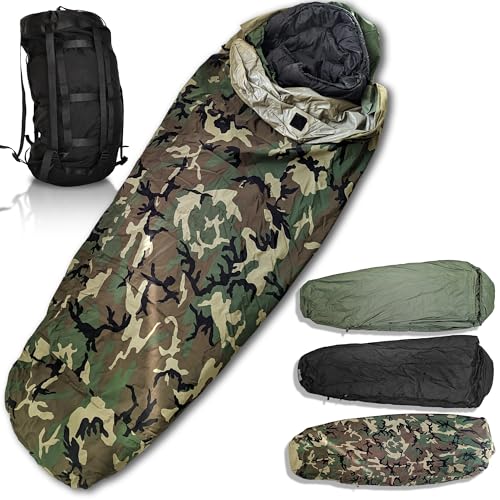
- Four-piece setup with two bags, bivy cover, and stuff sack
- Layered design rated from 50°F to -50°F
- Durable nylon ripstop construction with waterproof cover
Best For: Cold-weather camping, hunting, tactical use, and survival trips
Best Ultralight Emergency Option
Life Bivy Thermal Emergency Sack

- Ultralight 4.1-ounce emergency bivy
- Waterproof thermal polyethylene construction
- Built-in 120-decibel safety whistle
Best For: Go bags, hiking backups, and emergency shelter kits
Best Breathable Cover
Mil-Tec Trilaminate Sleeping Bag Cover

- Breathable waterproof trilaminate construction
- Generous cut for various sleeping bags
- Two-way zipper and adjustable head closure
Best For: Three-season campers protecting an existing sleeping bag
Rugged XXL Thermal Duo

- Tear- and puncture-resistant construction
- Large hooded 94.5-by-49.2-inch design
- Two-pack with emergency whistle
Best For: Preparedness kits needing two roomy, durable bivy bags
Ultra-Compact Tactical Pick
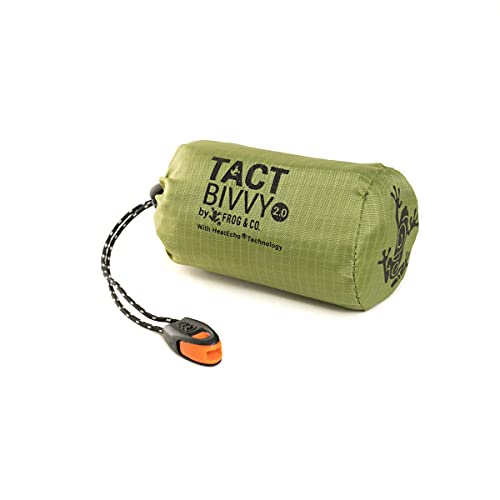
- Only 4.8 ounces and highly packable
- Waterproof, windproof, and heat-reflective
- Includes whistle, carabiner, and para-tinder drawstring
Best For: Lightweight backpack, car, and emergency kits
Simple Two-Pack Readiness

- 84-by-36-inch full-body coverage
- Waterproof and wind-resistant Mylar
- Two compact bags for shared readiness
Best For: Families and travelers stocking multiple emergency kits
Best Overall – AquaQuest Pharaoh Bivy Sack
The AquaQuest Pharaoh is a strong all-weather bivy sack choice for campers who want a waterproof, breathable shell without setting up a tent. Its 70D nylon construction, 10,000 mm waterproof rating, and elasticated hood provide practical coverage for sleeping bags and pads in unsettled conditions.
Best For: Minimalist backpacking and camping where compact, comprehensive weather protection matters.
Pros:
- Waterproof-breathable shell with 10,000 mm ratings for waterproofing and moisture vapor transmission
- Ultralight 1.1-pound design with an integrated stuff sack
- Long, roomy fit accommodates users up to 6’6″ and includes dual zipper access
- Lifetime warranty included
Cons:
- Listed temperature rating is 3-season rather than winter-specific
- Provides a shell only, with no insulation or fill
The Pharaoh balances weather protection, packability, and ease of use particularly well. It is a practical pick when you want an all-weather bivy sack that adds shelter around existing sleep gear rather than replacing it.
Best Emergency Value – Four-Pack Mylar Bivy Sleeping Bags
This four-pack is designed for emergency kits, vehicles, and backup shelter rather than regular overnight comfort. The waterproof, windproof Mylar construction reflects up to 90% of body heat, while each bag weighs about 2.8 ounces and packs into a compact carry bag.
Best For: Emergency preparedness, roadside kits, and carrying multiple lightweight backup shelters.
Pros:
- Four individual emergency bivy bags included
- Very light and compact for storage in cars, packs, or emergency kits
- Waterproof, windproof, tear-resistant, and puncture-resistant Mylar construction
- Can also serve as a blanket, tarp, poncho, or sun shade
Cons:
- Emergency-focused design is less suited to extended camping comfort
- Mylar material has no conventional insulation or breathable fabric
- Drawstring closure offers less weather sealing than a full zipper
These bags offer excellent redundancy and portability at the expense of comfort and breathability. Keep them as an emergency layer or short-term shelter option, not as a feature-rich replacement for a dedicated camping bivy.
Best Ventilation – Sierra Designs Backcountry Bivy
The Sierra Designs Backcountry Bivy is a lightweight option for backpackers and bikepackers who want waterproof coverage with better airflow in favorable weather. Its waterproof-breathable top fabric, mesh window, and large U-shaped opening make it easier to ventilate and enter than many minimalist all-weather bivy sacks.
Best For: Backpacking, bikepacking, and mountaineering trips where ventilation and easy access are priorities.
Pros:
- Waterproof-breathable 20D nylon ripstop top fabric
- Mesh window panel supports ventilation in good weather
- Large U-shaped opening makes entry and exit easier
- 16-ounce weight suits lightweight trips
Cons:
- Maximum height recommendation is 77 inches, limiting taller users
- Mesh ventilation is intended for good-weather use
- Guy line loop is useful for extra peak height but requires setup
This bivy emphasizes livability without giving up a compact footprint. It is a good fit for active trips where you may want more airflow and accessibility, though taller campers should verify the stated length before buying.
Best Wind Protection – Snugpak Special Forces Bivvi Bag
Snugpak Special Forces Bivvi Bag, Emergency Survival Bivy with Half Length Center Zip, Olive
Check Price On AmazonThe Snugpak Special Forces Bivvi Bag is a compact all-weather bivy sack built around a waterproof, windproof Paratex Dry shell. Its half-length center zip, 12-ounce weight, and included stuff sack make it useful for camping, emergency situations, and carrying as a protective layer for a sleeping system.
Best For: Campers and emergency users who prioritize wind protection, durability, and compact storage.
Pros:
- Waterproof and windproof Paratex Dry outer fabric
- Lightweight 12-ounce construction packs to approximately 6 by 4 inches
- Long 90-inch design with a half-length center zipper
- Includes a stuff sack
Cons:
- Half-length zipper provides less access than a full-length opening
- One-size design may not suit every sleeper or sleep system
- One-year manufacturer warranty is shorter than some competing coverage
The Special Forces Bivvi Bag is a sensible choice when wind resistance and packability are more important than spacious entry or extensive features. Its straightforward shell design works well as a protective emergency or camping layer.
Best Extreme-Weather System – Modular Military Sleeping Bag System
For shoppers seeking all-weather bivy sacks with broader cold-weather capability, this four-part modular system combines two sleeping bags, a waterproof bivy cover, and a compression stuff sack. Its layered design supports flexible use from mild conditions through severe cold.
Best For: Winter camping, hunting, tactical use, and survival trips where a modular sleep system is more useful than a standalone cover.
Pros:
- Includes a patrol bag, intermediate cold-weather bag, waterproof bivy cover, and compression sack.
- Triple-laminated bivy cover helps defend against wind and moisture.
- Layers can be used individually or combined, with a stated range from 50°F to -50°F.
- Uses 210T nylon ripstop fabric, YKK zippers, and compression-resistant insulation.
Cons:
- At 3 pounds, it is heavier than minimalist emergency bivy options.
- The one-size, 86-by-36-inch design may not suit every sleeper.
- Its woodland camouflage and multi-piece format may be more equipment than casual campers need.
This is the most comprehensive option of the three, especially for cold-weather versatility. Choose it when insulation and modularity matter more than the lowest possible pack weight.
Best Ultralight Emergency Option – Life Bivy Thermal Emergency Sack
This Life Bivy is a lightweight choice for anyone assembling all-weather bivy sacks for a backpack, go bag, or emergency kit. The waterproof thermal polyethylene design packs down to just 4.1 ounces and includes a built-in safety whistle.
Best For: Emergency preparedness, hiking backup kits, and short-term shelter needs where minimal weight and compact storage are priorities.
Pros:
- Weighs only 4.1 ounces for easy inclusion in a backpack or go bag.
- Waterproof thermal bivy construction helps provide protection from wind and rain.
- Can function as a standalone emergency shelter or an additional liner.
- Integrated 120-decibel whistle adds a useful emergency signaling feature.
Cons:
- It is an emergency bivy rather than a fully insulated sleeping bag.
- The polyethylene and Mylar-style design is focused on emergency utility over sleeping comfort.
- Only one emergency blanket component is included.
Its standout advantage is portability: this is the practical pick for carrying backup weather protection without noticeably weighing down a kit. It is less suitable when you need extended comfort or substantial insulation.
Best Breathable Cover – Mil-Tec Trilaminate Sleeping Bag Cover
This Mil-Tec cover is a practical all-weather bivy sack alternative for protecting an existing sleeping bag. Its breathable trilaminate fabric is designed to keep rain and wind out while allowing moisture to escape, and its generous cut accommodates various sleeping bags.
Best For: Three-season campers and hikers who want a reusable waterproof cover rather than a complete insulated sleep system.
Pros:
- Breathable, waterproof three-layer laminate helps balance weather protection and moisture control.
- Generous cut fits various sleeping bags and sleepers up to the stated 89-inch height recommendation.
- Two-way side zipper, snap-fastener cover, elastic head area, and hook-and-loop closure add adjustability.
- Can serve as a standalone shelter or bivy sack.
Cons:
- Listed for three-season use rather than extreme winter conditions.
- At 1.33 kg, it is considerably heavier than the emergency Life Bivy.
- It is a sleeping bag cover and does not replace the insulation of a sleeping bag.
This cover makes sense for extending the weather resistance of gear you already own. Its breathable laminate and accommodating cut are useful for regular camping, though the weight is worth considering for long hikes.
Rugged XXL Thermal Duo – Waterproof Survival Bivy
For shoppers comparing all-weather bivy sacks, the Ironstripe emergency sleeping bag stands out as a larger, sturdier option. Its tear- and puncture-resistant PE construction, reinforced seams, waterproof design, integrated hood, and Thermo-Mylar material make it suited to emergency kits and demanding weather conditions.
Best For: Adults and families building vehicle, hiking, camping, or preparedness kits who want two roomy emergency bivy bags.
Pros:
- Extra-thick, tear- and puncture-resistant material with reinforced seams
- Thermo-Mylar is designed to retain up to 90% of body heat
- Extra-large 94.5-by-49.2-inch size with an integrated hood
- Two-pack includes an emergency whistle and reusable drawstring storage
Cons:
- Bulkier than ultra-compact single emergency bivy sacks
- Its extreme temperature rating does not provide a specific comfort temperature
This is a practical pick when durability, coverage, and a two-person household setup matter more than minimizing packed size. The hood and generous dimensions add useful coverage for emergency shelter use.
Ultra-Compact Tactical Pick – Survival Frog Tact Bivvy 2.0
Among all-weather bivy sacks, the Survival Frog Tact Bivvy 2.0 is aimed at buyers who prioritize minimal weight and easy carry. It weighs 4.8 ounces, packs into a compact stuff sack, and combines heat-reflective material with waterproof, windproof, tear-resistant construction.
Best For: Hikers, campers, and preparedness-minded users who want a lightweight emergency bivy for a backpack, car kit, or survival pack.
Pros:
- Very light 4.8-ounce design that compresses into a small stuff sack
- Reflects 90% of body heat and can be used as a sleeping bag liner
- Waterproof, windproof, tear-resistant material with reinforced taped seams
- Includes a 120-decibel whistle, carabiner, and para-tinder drawstring
Cons:
- Single-person design is narrower than the larger XXL alternative
- Its emergency-focused construction offers less room for gear or movement
This model is a strong space-saving choice for emergency readiness. The bright orange color, whistle, and attachment hardware add useful signaling and carry features without substantially increasing pack weight.
Simple Two-Pack Readiness – NovaMedic Thermal Bivy
The NovaMedic thermal bivy is a straightforward option for shoppers seeking all-weather bivy sacks in a two-pack. Each 84-by-36-inch Mylar bag is designed to help retain body heat while providing a lightweight, waterproof, and wind-resistant emergency shelter layer.
Best For: Families, travelers, and outdoor users who want two compact emergency sleeping bags for separate kits or shared preparedness supplies.
Pros:
- Full-body 84-by-36-inch coverage for adults up to 84 inches tall
- Reflective Mylar helps retain warmth during outdoor emergencies
- Lightweight, compact format fits backpacks, glove boxes, and bug-out bags
- Two individually packed bags support family or multi-location readiness
Cons:
- Notes do not specify reinforced seams, a whistle, or other built-in accessories
- No warranty is provided
NovaMedic keeps the feature set focused on basic thermal and weather protection. It makes sense when you need two uncomplicated emergency bivy bags for camping, travel, roadside situations, or disaster-preparedness storage.
How We Picked These All-Weather Bivy Sacks
We grouped the selection by real-world use rather than treating every bivy as interchangeable. The list includes waterproof sleeping-bag covers for camping, breathable minimalist shelters for backpacking, military-style bivvy covers, modular cold-weather systems, and reflective emergency bags for short-term protection.
Our comparison focuses on weather resistance, breathability, durability, packability, closure design, usable space, and included emergency features. A purpose-built camping bivy generally offers better comfort and ventilation, while a Mylar-style emergency bag is lighter, smaller, and more appropriate for a vehicle kit or backup shelter.
Quick Comparison
| Best For | Look For | Main Trade-Off |
|---|---|---|
| Backpacking and bikepacking | Low weight, waterproof/breathable fabric, compact pack size | Less interior room than a tent |
| Wet and windy camping | Sealed construction, durable shell, reliable closure | Potentially higher weight and condensation |
| Cold-weather layering | Roomy cut, sleeping-bag compatibility, reinforced fabric | Bulkier packed size |
| Emergency preparedness | Thermal reflective material, waterproofing, whistle, stuff sack | Limited durability and breathability |
Key Buying Factors for All-Weather Bivy Sacks
Weather Protection
Check whether the bivy is intended as a waterproof outer shell or only as an emergency heat-reflective layer. Waterproof ratings, taped seams, storm flaps, and a secure hood or opening matter most in sustained rain. For severe weather, pair a bivy with a tarp or shelter rather than relying on it as a complete tent replacement.
Breathability and Condensation
A waterproof bivy can still become damp inside when warm, humid air condenses against the fabric. Breathable laminates and fabrics are better for overnight camping. Emergency Mylar designs conserve heat effectively but are usually less comfortable for extended sleeping.
Fit, Entry, and Compatibility
Confirm the internal dimensions against your sleeping bag, clothing layers, and sleeping pad. A generous cut improves comfort but increases bulk. Full-length or half-length zips make entry easier, while hooded designs provide more coverage in exposed conditions.
Durability and Packability
For frequent trips, prioritize ripstop or laminated construction, reinforced seams, and a practical stuff sack. For an emergency kit, low packed volume and low cost may matter more than long-term abrasion resistance. Keep reflective bags stored where they can be accessed quickly and replace damaged or brittle material.
Who Should Buy Which All-Weather Bivy Sacks?
Backpackers and bikepackers should favor lightweight waterproof/breathable bivvies that work with a sleeping bag and pad. Campers facing frequent rain or wind should choose a tougher shell with dependable closures and enough room for their insulation system.
Mountaineers and cold-weather users should look for durable, roomy covers that accommodate thick sleeping bags and layering. Preppers, drivers, and hikers building emergency kits will usually get more value from compact thermal bivies with a whistle or storage pouch, especially when the bag is intended for short-term survival rather than repeated overnight use.
