
The best treadmills make it easier to walk, run, or train consistently without depending on weather, gym hours, or commuting. This roundup covers compact under-desk designs, space-saving walking machines, and full-size incline treadmills for home workouts.
As you compare these options, focus on the running surface, speed range, incline system, folding design, motor output, and available floor space. The right choice depends less on having the most features and more on matching the treadmill to your routine.
Best 10 Treadmills Picks for 2026
Best Smart Starter

- 10 MPH speed and 10% incline
- Foldable 55-by-20-inch cushioned deck
- iFIT automation and app syncing
Best For: Value-focused home cardio users who want guided workouts and compact storage
Best for Faster Training

- 12 MPH speed and 12% incline
- 60-by-20-inch running deck
- 7-inch LCD with device shelf
Best For: Runners and interval trainers seeking more speed and incline
Best for Connected Intervals

- 12 MPH speed and 15% incline
- QuickDial controls for rapid changes
- 20-by-60-inch cushioned deck
Best For: Interval runners who want broad app and Apple-device compatibility
Best Compact iFIT Value

- Compact folding design weighs about 166 pounds
- 10 MPH speed and 10% incline
- ProShox cushioning with Bluetooth and Wi-Fi
Best For: Space-conscious users seeking guided home cardio
Compact Incline Pick
Folding Walking Pad with Handle Bar

- 4-degree manual incline and supportive handle bar
- Quiet operation rated at 45 dB
- Folds for upright or under-furniture storage
Best For: Walkers in small homes or offices
Guided Workout Pick
NordicTrack T Series Home Treadmill

- Up to 10 mph for walking, jogging, or running
- 0–10% incline with KeyFlex cushioning
- iFIT supports guided and adaptive workouts
Best For: Home runners wanting connected training
High-Incline Capacity Pick
MERACH Foldable Incline Treadmill

- Automatic incline reaches 18%
- 350-pound recommended weight capacity
- Wide belt, shock absorption, and hydraulic folding
Best For: Incline-focused walkers and runners needing a sturdy frame
Best High-Incline Pick

- Manual incline from 0% to 18%
- Up to 7.5 MPH with 400-pound capacity
- Folds for compact storage
Best For: Incline-focused home workouts and varied walking or running
Best Under-Desk Value

- Manual 5% incline for varied walking
- 0.6–4 MPH speed range with remote control
- Lightweight, compact, and assembly-free
Best For: Walking while working at home or in the office
Best Simple Pick
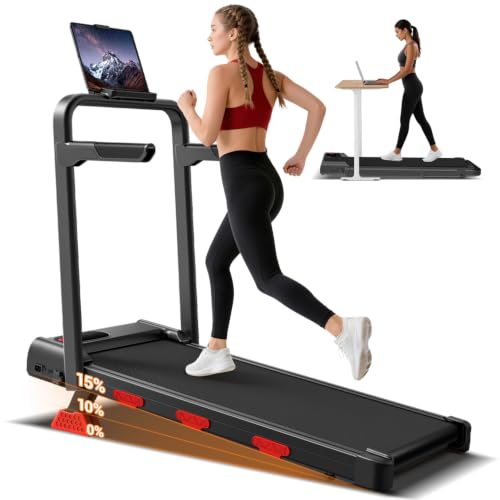
- Flat, 10%, and 15% manual incline levels
- Quiet motor with speeds up to 6.2 MPH
- Foldable design with handlebar and device holder
Best For: Incline walking and light jogging in compact spaces
Best Smart Starter – NordicTrack T Series 6.5 S
The NordicTrack T Series 6.5 S is one of the more approachable treadmills for home walking, jogging, and running. It combines a 10 MPH top speed, 10% incline, foldable frame, and iFIT-connected training features in a relatively compact design.
Best For: Home users who want guided iFIT workouts, basic incline training, and a foldable treadmill for everyday cardio.
Pros:
- 0–10 MPH speed range and 0–10% digital incline controls
- 55-by-20-inch deck with KeyFlex cushioning
- Foldable frame with assisted lowering and rolling storage
- Supports iFIT features, Bluetooth heart-rate control, and fitness-app syncing with membership
Cons:
- Its 5-inch LCD is smaller than the displays on the other featured models
- iFIT-powered automation and several connected features require a membership
- Its 10 MPH maximum is lower than the 12 MPH options in this roundup
Choose this treadmill if compact storage and guided workouts matter more than maximum speed. Its 300-pound weight recommendation and cushioned 20-inch deck also make it a practical option for general home use.
Best for Faster Training – ProForm Carbon Treadmill
This ProForm Carbon treadmill gives home runners more headroom than entry-level treadmills, with speeds up to 12 MPH, a 12% incline, and a 60-by-20-inch running deck. Its folding design and 7-inch LCD help balance training capability with home convenience.
Best For: Runners and interval trainers who want a 12 MPH treadmill with incline variety and iFIT-guided workouts.
Pros:
- 12 MPH maximum speed supports running and faster intervals
- 0–12% incline adds more intensity and terrain variety
- 60-by-20-inch deck provides a longer running surface
- ProShox cushioning, folding frame, and 7-inch LCD add comfort and convenience
Cons:
- iFIT trainer automation, SmartAdjust, and connected coaching require a Train Membership
- At 221 pounds, it may be less convenient to move than lighter folding treadmills
- The supplied details do not list a built-in workout screen beyond the LCD display
The higher speed, incline, and longer deck make this a stronger fit for users progressing beyond casual walking. It is especially appealing when interval sessions and guided training are priorities.
Best for Connected Intervals – Horizon Fitness 7.0 AT
The Horizon Fitness 7.0 AT is built for varied training, offering speeds from 0.5 to 12 MPH, up to 15% incline, and QuickDial controls for fast adjustments. Its 20-by-60-inch cushioned deck and broad fitness-app compatibility make it a versatile choice among these treadmills.
Best For: Users who switch between walking, running, and intervals and want compatibility with Apple devices, Peloton, Strava, or Zwift.
Pros:
- 0.5–12 MPH range supports slow walking through fast running
- 15% maximum incline is the highest listed in this roundup
- QuickDial controls and Rapid Sync Technology support fast speed and incline changes
- 20-by-60-inch deck, 325-pound weight recommendation, and app compatibility suit varied training
Cons:
- Its 257-pound weight and 76-inch depth make it less compact than the lighter options
- The folded dimensions remain relatively tall at 68 inches
- App connectivity and device compatibility may require separate devices or subscriptions
This is the most training-oriented option for shoppers who value quick adjustments and a higher incline ceiling. Its extended deck and sturdy specifications favor regular running and interval work over occasional use.
Best Compact iFIT Value – ProForm Carbon Treadmill
This compact ProForm Carbon treadmill is designed for everyday home walking, jogging, and running. It offers a 10 MPH top speed, 10% incline, ProShox cushioning, and a folding frame while weighing about 166 pounds.
Best For: Space-conscious users who want a lighter, foldable treadmill with iFIT training and basic incline capability.
Pros:
- Compact 68.6-inch depth and folding frame suit smaller workout areas
- 0–10 MPH speed and 0–10% incline cover common home cardio routines
- ProShox cushioning helps make walking and running more comfortable
- Bluetooth and Wi-Fi support iFIT features and fitness-app syncing with membership
Cons:
- The 18-inch deck is narrower than the 20-inch decks on the other listed models
- A 10 MPH maximum is less suitable for faster interval running
- The 5-inch display is relatively small, and iFIT features require a Train Membership
Consider this model when storage space and easier repositioning are important. Its lighter build and compact footprint make it a practical everyday treadmill, while the 10% incline adds useful workout variety.
Compact Incline Pick – Folding Walking Pad with Handle Bar
This compact treadmill is designed for walking at home, in a home office, or anywhere storage space is limited. Its sturdy handle bar, manual incline, quiet motor, and upright-or-under-furniture storage make it a practical choice for low-impact daily movement.
Best For: Walkers and small-space households that want extra support and a compact treadmill for steady, low-speed exercise.
Pros:
- Adjustable 4-degree manual incline can add intensity to walking workouts.
- Handle bar provides additional support and safety while exercising.
- Folds for upright or under-bed storage and operates at a stated 45 dB.
- LED display tracks time, distance, speed, and calories, with speeds from 0.6 to 3.8 mph.
Cons:
- Maximum speed of 3.8 mph is intended for walking rather than running.
- Its plastic frame and 265-pound recommended weight limit may not suit every user.
Choose this walking pad if compact storage, quiet operation, and supportive handles matter more than running capability. The one-year motor warranty and local customer service add reassurance for everyday home use.
Guided Workout Pick – NordicTrack T Series Home Treadmill
The NordicTrack T Series is a home treadmill for users who want to walk, jog, or run with guided training options. It combines speeds up to 10 mph, a 0–10% incline range, a cushioned deck, and Bluetooth-connected iFIT features for more structured workouts.
Best For: Home exercisers who want running capability, incline training, and app-guided workouts with automatic adjustments.
Pros:
- Supports walking, jogging, and running at speeds up to 10 mph.
- 0–10% incline range adds variety and can increase workout intensity.
- KeyFlex cushioning is designed to reduce joint impact during strides.
- Compatible iFIT features can automatically adjust speed and incline when a membership is used.
Cons:
- Many connected features, including guided workouts and automatic adjustments, require an iFIT membership.
- At 68.3 inches long and 130 pounds, it requires more dedicated space than a walking pad.
- The 5-inch LCD display is relatively compact.
This model is a stronger fit than a walking pad for users who plan to run or follow progressive training. Consider the available floor space and ongoing iFIT membership requirement before buying.
High-Incline Capacity Pick – MERACH Foldable Incline Treadmill
The MERACH is a full-size incline treadmill built for users who want challenging hill-style workouts at home. It offers up to 18% automatic incline, a 3.5 HP brushless motor, a wide non-slip belt, shock absorption, and a 350-pound recommended weight capacity.
Best For: Walkers and runners who prioritize steep incline training, a stable running surface, and higher user capacity.
Pros:
- Automatic incline reaches 18% for demanding hill-style workouts.
- Heavy-duty steel construction supports up to 350 pounds.
- Wide 18-by-47-inch belt and multi-layer shock absorption support a more comfortable stride.
- Folds hydraulically in about 30 seconds and includes LED metrics, app control, and heart-rate tracking.
Cons:
- Its 57.1-by-35-inch footprint is substantial for smaller rooms.
- Maximum speed is 8.7 mph, below the NordicTrack T Series maximum.
- The treadmill weighs about 143 pounds, so moving it may require planning.
This is the most capable choice here for steep incline work and heavier-duty home training. Its folding design helps with storage, but the wide, substantial frame still needs a dedicated workout area.
Best High-Incline Pick – 18% Incline Folding Treadmill
If you want a versatile treadmill for home workouts, this LONTEK model combines manual incline adjustment with speeds from 0.6 to 7.5 MPH. Its compact folding design, handlebar, and multiple workout metrics make it practical for walking, climbing, jogging, and running.
Best For: Home users who want higher incline options, a supportive handlebar, and a treadmill that can be stored in small spaces.
Pros:
- Manual incline settings from 0% to 18% using the included attachments
- 3.0HP brushless motor, 400-pound capacity, and speeds up to 7.5 MPH
- Seven-layer belt, cushioning pads, and shock-absorbing handles
- Folds to approximately 44.3 x 21.8 x 4.1 inches and arrives 90% pre-assembled
Cons:
- The incline is manual rather than automatically adjusted
- The 15 x 37.5-inch belt may feel compact for longer running strides
- Only a one-year warranty is listed
This is one of the more adaptable treadmills in the group, especially if incline training matters. Its relatively quiet operation and under-bed storage add convenience, while the manual incline process is the main trade-off.
Best Under-Desk Value – 5% Incline Walking Pad
This compact walking pad is designed for everyday movement at home or in the office. It offers a manually adjustable 5% incline, speeds from 0.6 to 4 MPH, and remote-controlled operation for walking while working or exercising indoors.
Best For: Office workers, apartment dwellers, and anyone seeking a lightweight treadmill for routine walking rather than running.
Pros:
- Manual 5% incline adds variety to regular walking sessions
- Remote control adjusts speed, pauses, or stops the workout
- Five-layer non-slip belt with a 15 x 35.4-inch walking area
- Lightweight 35.8-pound design requires no assembly
Cons:
- Top speed is limited to 4 MPH, so it is intended primarily for walking
- The incline must be adjusted manually
- Its compact walking surface may not suit users wanting a wider or longer belt
For straightforward desk-side activity, this walking pad keeps setup and storage simple. Its limited speed range is a drawback for jogging, but it is a sensible fit for light daily exercise and walking while working.
Best Simple Pick – 15% Incline Walking Pad
This LONTEK walking pad gives home users three manually selectable levels: flat, 10%, or 15% incline. With a handlebar, speeds up to 6.2 MPH, and a quiet brushless motor, it supports everyday walking, light jogging, and interval pacing without taking up much floor space.
Best For: Compact home workout areas where users want incline walking, extra stability from a handrail, and easy storage.
Pros:
- Three manual levels: flat, 10%, and 15% incline
- Quiet 3.0HP brushless motor rated below 45 dB
- Supports up to 350 pounds and reaches 6.2 MPH
- Compact, foldable design includes a removable phone or tablet holder
Cons:
- Incline changes require manual repositioning
- The 37.4 x 15-inch belt is relatively narrow
- It is better suited to walking and light jogging than faster running
This model balances incline capability and portability well. The handrail and 350-pound capacity provide useful support, while the narrow belt and manual incline setup make it less suitable for runners seeking a full-size treadmill experience.
How We Picked These Treadmills
We selected this group to represent the main ways people use Treadmills at home: desk walking, casual walking, jogging, running, and incline training. The lineup includes compact walking pads, models with handles for added stability, and larger machines with broader belts and higher speed ranges. We also considered practical details such as portability, storage, control layout, incline adjustment, noise, and the space required around the machine.
Because specifications and availability can vary by configuration, check the current product listing before buying. Pay particular attention to the exact belt dimensions, maximum speed, incline type, weight capacity, warranty, and whether the listed price includes a subscription or additional accessories.
Quick Comparison
| Best For | What to Prioritize | Models to Consider |
|---|---|---|
| Under-desk walking | Low profile, quiet operation, remote control | Walking Pad models |
| Everyday walking and light jogging | Handles, folding storage, comfortable belt | LONTEK and Horizon options |
| Running at home | Long belt, stable frame, stronger motor | NordicTrack and ProForm options |
| Incline workouts | Automatic incline range and responsive controls | MERACH and LONTEK incline models |
Key Buying Factors for Treadmills
Running Surface and User Fit
A longer and wider belt feels safer for running and benefits users with a longer stride. Compact walking pads can work well in offices and small rooms, but their shorter decks may feel restrictive for jogging. Measure the available area and leave clearance around the machine for safe access and maintenance.
Speed, Incline, and Motor Performance
Choose a speed range that exceeds your normal workout pace rather than matching it exactly. Walkers may not need a high top speed, while runners should look for a stable frame and a deck designed for repeated impact. Incline capability adds intensity without requiring faster speeds; automatic incline is more convenient for intervals, while manual systems can cost less.
Storage, Noise, and Controls
Folding frames and lightweight designs are useful when a treadmill must share a room. For apartment or office use, consider operating noise, vibration, and whether the machine has quick controls or a remote. A simple console may be preferable if you do not want app features or subscriptions.
Safety and Maintenance
Look for a safety key, accessible stop controls, a non-slip belt, and a weight rating that provides a reasonable margin above the user’s weight. Follow the manufacturer’s lubrication, belt-alignment, and cleaning instructions to protect performance and reduce wear.
Who Should Buy Which Treadmills?
Choose a walking pad if you want to add movement during desk work or need the smallest possible footprint. Select a handled walking treadmill if stability, easy mounting, or a moderate incline matters more than high-speed running. A folding full-size treadmill is the better fit for households that combine walking, jogging, and occasional running.
For structured hill workouts, prioritize an automatic incline model with a stable deck and easy-to-reach controls. If you plan frequent, demanding runs, favor a longer belt, a robust frame, and dependable after-sales support over the lowest initial price. Finally, confirm delivery access, assembly requirements, return terms, and electrical needs before placing your order.
