
Compact compression recovery systems can make post-workout leg care more convenient by combining sequential air pressure, massage-style compression, and portable controls in a home-friendly design.
This roundup compares 10 options, including full-leg compression boots, cordless models, professional-style systems, and cold-therapy machines for different recovery routines and budgets.
Best 10 Compact Compression Recovery Systems Picks for 2026
Fast Full-Leg Recovery

- Four-chamber full-leg compression
- Eight pressure intensities and three modes
- Sensor-controlled fit with two-year support
Best For: Athletes seeking adjustable home recovery
Wireless Travel Recovery

- Foldable, cordless design for travel
- Four pressure levels and time settings
- Up to three hours of battery life
Best For: Runners needing portable recovery sessions
Post-Surgery Cold Therapy

- Includes ergonomic knee pad
- Quiet, high-flow cooling system
- Up to six-plus hours of cooling
Best For: Knee-focused post-operative recovery
Customizable Leg Compression
JZBRAIN FE-7221B Compression Boots

- Five independent compression chambers
- Six modes, intensities, and three timers
- Fast inflation with water-resistant materials
Best For: Active users wanting highly adjustable home compression
Cold Therapy Pick
- Continuous cooling with targeted cold compression
- Quiet, lightweight reservoir with durable handle
- Interchangeable pads support multiple body areas
Best For: Post-surgery and injury-focused cold therapy
Cordless Full-Leg Choice

- Rechargeable battery supports 3–4 hours of use
- Four zones and 12 pressure settings enable customization
- Carry bag supports home, gym, and travel use
Best For: Portable full-leg compression and athletic recovery
Value Sequential Option

- Four air chambers provide sequential full-leg compression
- Eight intensities, three modes, and three timer settings
- Compact design includes a carry bag
Best For: Corded post-workout leg massage and daily recovery
Fast-Inflating Full-Leg Recovery
- Four chambers cover the full leg
- Sensor-controlled pressure adjustment
- Three modes and eight intensity levels
Best For: Athletes wanting customizable home recovery
Portable Sequential Therapy
QUINEAR Professional Recovery Boots
- Four-chamber sequential compression
- Eight intensities and three modes
- Includes a carry bag for portability
Best For: Active users wanting adjustable gym recovery
Battery-Powered Control
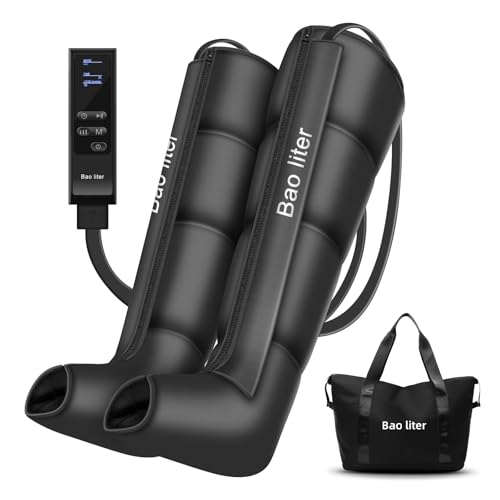
- Six modes and nine intensity levels
- Selectable four-zone leg treatment
- Rechargeable design with auto shut-off
Best For: Travelers wanting cordless, highly adjustable sessions
Fast Full-Leg Recovery – FIT KING FT-082A
The FIT KING FT-082A is a practical option for shoppers comparing compact compression recovery systems for full-leg use. Its four air chambers target the feet, calves, knees, and thighs, while sensor control, adjustable pressure, and multiple treatment settings make it easy to tailor sessions at home.
Best For: Athletes and fitness enthusiasts who want corded, full-leg compression for warm-ups, post-workout recovery, or leg fatigue.
Pros:
- Four independent air channels provide sequential compression across the full leg.
- Offers three modes, eight pressure intensities, and three time options.
- Sensor control adjusts inflation volume for different leg sizes.
- Includes a two-year worry-free support promise from FIT KING.
Cons:
- Requires a corded electrical connection, so it is less convenient for travel.
- The boots are not water resistant.
- Users must select the appropriate medium size for their legs.
Choose this model if broad adjustability and full-leg coverage matter more than wireless portability. Its zipper design and faster-inflating pump add convenience for regular home recovery sessions.
Wireless Travel Recovery – Therabody JetBoots Prime
For shoppers prioritizing compact compression recovery systems, the Therabody JetBoots Prime stand out with a wireless, foldable design. Built-in controls, four pressure levels, and a rechargeable battery make these boots convenient for use at home, after running, or while traveling.
Best For: Runners and active users who want portable full-leg compression without hoses or a wall outlet.
Pros:
- Wireless boots fold like pants and fit into the included drawstring backpack.
- Four time intervals and four pressure levels support customized sessions.
- Four overlapping chambers use TruGrade technology for size-tailored pressure.
- Provides up to three hours of battery life and can be used while charging.
Cons:
- Three-hour charging time may require advance planning.
- The regular version is intended for a specified leg-length range, so measuring is important.
- It is not water resistant.
The JetBoots Prime is the strongest fit for portability-focused buyers. Its integrated controls and cordless operation simplify setup, while the included storage bag makes transport straightforward.
Post-Surgery Cold Therapy – Ossur Cold Rush Knee System
The Ossur Cold Rush is a different kind of recovery system for buyers comparing compact compression recovery systems with post-surgical support equipment. Rather than air compression, it delivers targeted cold therapy through an included knee pad to help address pain, inflammation, and swelling after orthopedic procedures.
Best For: Post-surgery knee recovery, including rehabilitation after knee replacement, ACL repair, or other orthopedic procedures.
Pros:
- Includes an ergonomic knee pad with broad joint coverage.
- Whisper-quiet motor supports extended home or clinical use.
- High ice-to-water ratio can provide cooling for up to six-plus hours.
- Portable design includes a carry handle, insulated tubing, and a locking lid.
Cons:
- This is a cold-therapy system, not an air-compression massager.
- The included pad is designed for the knee; other pads are additional options.
- It requires ice and water for operation.
Consider the Cold Rush when targeted cooling is the priority rather than sequential leg compression. Its quiet operation, safe 12-volt design, and included knee pad make it especially suited to structured post-operative recovery.
Customizable Leg Compression – JZBRAIN FE-7221B Compression Boots
The JZBRAIN FE-7221B offers a feature-rich choice among compact compression recovery systems for home use. Five independently controlled air chambers cover the feet, calves, knees, and thighs, while six modes, six intensity levels, and three timers let users fine-tune each session.
Best For: Athletes, runners, and people who spend all day on their feet and want adjustable leg compression at home.
Pros:
- Five air chambers provide sequential compression across the full leg.
- Six intensity levels range from 80 to 130 mmHg, with six recovery modes.
- Three timer choices support 15-, 20-, or 25-minute sessions.
- High-speed inflation reaches operating pressure in about 30 seconds and runs at a stated 50–55 dB.
Cons:
- The stated 33–37-inch inseam and up-to-28-inch thigh fit should be checked before ordering.
- It is corded, limiting use away from an outlet.
- High-pressure massage may not suit users sensitive to intense compression.
This model makes sense for buyers who value extensive control and clearly specified pressure settings. Its timer, auto shut-off, water-resistant materials, and one-year warranty add practical home-use features.
Cold Therapy Pick – Cold Rush Cryotherapy System
For shoppers comparing compact compression recovery systems, the Ossur Cold Rush is a focused option for cold therapy after surgery or injury. Its quiet pump, portable reservoir, and interchangeable pads provide continuous cooling with targeted cold compression for several body areas.
Best For: Post-surgery recovery and targeted relief for the knee, shoulder, hip, back, ankle, or foot.
Pros:
- Maintains continuous cooling for extended relief.
- Combines cryotherapy with targeted compression.
- Compact, lightweight reservoir weighs 4.6 pounds and includes a handle.
- Compatible with a range of ergonomic body-part pads.
Cons:
- This listing includes a left hip pad, so another pad may be needed for different treatment areas.
- At 16 x 12 x 10 inches, it is portable but not especially small for storage.
The Cold Rush stands out when steady cold therapy is more important than cordless operation. Its interchangeable-pad design makes the base unit adaptable, while the quiet motor suits home or clinical recovery.
Cordless Full-Leg Choice – FIT KING Recovery Boots
Among compact compression recovery systems, the cordless FIT KING boots emphasize portability and customization. Four air chambers deliver sequential 360-degree compression, while the rechargeable battery and carry bag make the system practical for home, gym, travel, or outdoor use.
Best For: Athletes, active users, and people seeking adjustable full-leg compression for recovery, circulation support, or daily relaxation.
Pros:
- Cordless design provides 3–4 hours of use per charge.
- Offers 12 pressure settings, four zone controls, three modes, and adjustable session times.
- Four chambers cover the foot, calves, and thigh for full-leg treatment.
- Includes a carry bag and a 24-month warranty.
Cons:
- The battery requires about two hours to charge.
- It is not water resistant.
- The full-leg boot format may be more equipment than users wanting treatment for one small area.
The FIT KING is the most travel-friendly choice in this group. Its broad pressure and zone controls offer strong personalization, while the battery removes the need to stay near an outlet.
Value Sequential Option – QUINEAR Leg Recovery System
The QUINEAR is a straightforward choice among compact compression recovery systems for users who want sequential leg massage without a battery-powered setup. Its four chambers inflate and deflate in order, with adjustable intensity, three modes, and timed sessions controlled from a digital unit.
Best For: Athletes and everyday users seeking corded full-leg compression for post-workout soreness, fatigue, or relaxation.
Pros:
- Four-chamber sequence moves from the foot toward the thigh.
- Provides eight intensities from 50–120 mmHg and three massage modes.
- Offers 20-, 25-, and 30-minute timer settings.
- Compact size and included carry bag support gym use.
Cons:
- It is corded rather than rechargeable or cordless.
- The system has no heat controls or settings.
- The supplied medium-size boots may not suit every leg size.
The QUINEAR keeps the controls relatively focused while still offering useful intensity and mode adjustments. It is a practical fit for shoppers who prioritize sequential full-leg compression and a compact carry format over cordless convenience.
Fast-Inflating Full-Leg Recovery – FIT KING FT-082A
For shoppers comparing compact compression recovery systems, the FIT KING FT-082A combines full-leg coverage with four independent air channels. Its sensor-controlled pressure, faster-inflating pump, and digital controls make it a practical home option for post-workout relaxation and recovery.
Best For: Athletes and fitness enthusiasts who want adjustable full-leg compression with relatively quiet, faster inflation.
Pros:
- Four airbag chambers cover the feet, calves, knees, and thighs.
- Sensor control adjusts inflation volume for different leg sizes.
- Offers three modes, eight pressure intensities, and three timer settings.
- Includes a 24-month worry-free support commitment.
Cons:
- It is corded electric, so use is tied to a power outlet.
- The large model may not suit users needing a smaller fit.
- It is not water resistant.
The FIT KING stands out when complete leg coverage and straightforward customization matter most. Its 3.1 kg system is reasonably portable, but the corded design is better suited to a fixed home recovery area than untethered travel.
Portable Sequential Therapy – QUINEAR Professional Recovery Boots
The QUINEAR system is a strong choice among compact compression recovery systems for users who want sequential massage and a carry-friendly setup. Four chambers, pressure sensing, and three treatment modes support adjustable leg sessions after exercise or during everyday relaxation.
Best For: Athletes, cyclists, runners, and active users seeking portable sequential compression with broad session controls.
Pros:
- Four chambers provide compression across the foot, calf, and thigh.
- Eight intensities range from 50 to 120 mmHg.
- Three modes and 20-, 25-, or 30-minute timers allow tailored sessions.
- Compact sizing and a carry bag support gym or travel use.
Cons:
- It requires corded electric power.
- The large size may not provide an ideal fit for every user.
- It is not water resistant and does not offer heat settings.
QUINEAR offers a balanced feature set for buyers prioritizing sequential operation and portability. The carry bag improves convenience, while the corded controller makes it most practical near an outlet.
Battery-Powered Control – FE-7204B Full-Leg Massager
For buyers seeking compact compression recovery systems with extensive adjustment, the FE-7204B offers six modes and nine intensity levels. Its rechargeable design, four-zone coverage, and remembered settings make it especially convenient for home, office, or travel sessions.
Best For: Users who want cordless convenience, detailed pressure control, and the option to treat individual leg zones.
Pros:
- Six modes and nine intensity levels provide extensive customization.
- Four zones can be used together or selected individually.
- Rechargeable battery and compact carry-oriented design support portability.
- Backlit controller includes memory, timer, and automatic shut-off features.
Cons:
- The supplied charging-time detail is listed as 358, without a clear unit.
- Battery operation requires recharging between uses.
- The product is described for temporary relief and increased circulation in healthy users, not as a substitute for medical care.
The FE-7204B is the most flexible option here for users who value cordless operation and granular control. Its individual-zone selection adds versatility, while the rechargeable format makes it easier to use away from a dedicated outlet.
How We Picked These Compact Compression Recovery Systems
We focused on the features that matter most in everyday recovery: coverage area, compression control, portability, power requirements, fit options, operating simplicity, and intended use. The selection includes air-compression boots for legs and feet as well as cold-therapy systems designed for targeted post-surgery or injury care.
Because comfort and fit vary significantly, we also considered sizing information, boot length, wireless operation, control layouts, and whether a system is better suited to athletes, general circulation support, or clinical-style recovery. These products are recovery aids, not substitutes for medical diagnosis or treatment.
Quick Comparison
| System Type | Best For | What to Check |
|---|---|---|
| Full-leg compression boots | Post-workout recovery and broad leg coverage | Size, pressure settings, and boot length |
| Cordless compression systems | Travel, mobility, and convenient home use | Battery runtime, charging, and portability |
| Professional sequential systems | More structured massage and pressure control | Program options, chamber sequence, and controls |
| Cold-therapy machines | Targeted cooling after surgery or injury | Pad compatibility, water or ice requirements, and medical guidance |
Key Buying Factors for Compact Compression Recovery Systems
Coverage and Fit
Choose a boot that matches your leg length and circumference. Full-leg models may cover the foot, calf, knee, and thigh, while shorter designs can be easier to put on and store. A poor fit can reduce comfort and make pressure feel uneven.
Pressure and Treatment Programs
Look for adjustable intensity and sequential chamber control. Lower settings may suit first-time users or sensitive legs, while athletes may prefer broader program flexibility. More settings are useful only if the controls are clear and easy to operate.
Portability and Power
For use away from a sofa or treatment room, consider cordless designs, battery life, charging time, system weight, and storage requirements. Plug-in units can be suitable for regular home use but may be less convenient to transport.
Compression Versus Cold Therapy
Air compression and cold therapy address different recovery preferences and use cases. Compression boots are designed for cycling pressure and massage-like relief, while cold-therapy machines circulate chilled water through a dedicated pad. Follow clinician instructions after surgery or injury.
Who Should Buy Which Compact Compression Recovery Systems?
Choose a full-leg compression boot if you want broad coverage after training or prolonged standing. A cordless FIT KING or similar portable design is a practical choice for users who value mobility and simple setup. Therabody JetBoots Prime is worth considering when wireless operation and a premium, streamlined experience are priorities.
Those seeking structured pressure programs for frequent athletic use may prefer a QUINEAR professional-style system. If your main need is localized cooling after knee surgery, an Ossur Cold Rush system is more appropriate than an air-compression boot. Buyers with specific medical conditions, recent surgery, swelling, or circulation concerns should consult a healthcare professional before using any recovery device.
