
Choosing your first solar generator kit can feel complicated, especially when product listings combine battery capacity, inverter output, solar input, and charging speeds.
This roundup compares 10 options across compact backup power stations, educational kits, RV systems, and larger off-grid setups so you can match the equipment to your experience, space, and power needs.
Best 10 Solar Generator Kits for Beginners Picks for 2026
Best Compact Starter Kit

- Includes a 60W foldable solar panel
- 300W pure-sine-wave AC output
- Compact option for small electronics
Best For: Camping, hiking, and emergency charging
Best Hands-On Learning Kit

- Four solar, wind, and motor projects
- No welding required
- Designed for ages 8–12
Best For: Family learning and classroom STEM activities
Best High-Power Starter Kit

- 1,024Wh LiFePO4 battery
- 2,000W output with 4,500W surge
- Expandable to 5,120Wh
Best For: RV travel, outages, and higher-demand devices
Best Physics Exploration Kit
Delinx Fun Physics Generator Kit

- Uses solar, wind, and hand-crank generation
- Teaches circuits and energy conversion
- Recommended for ages 12 and up
Best For: Physics projects and hands-on STEM learning
Best Fast-Charging Starter Kit
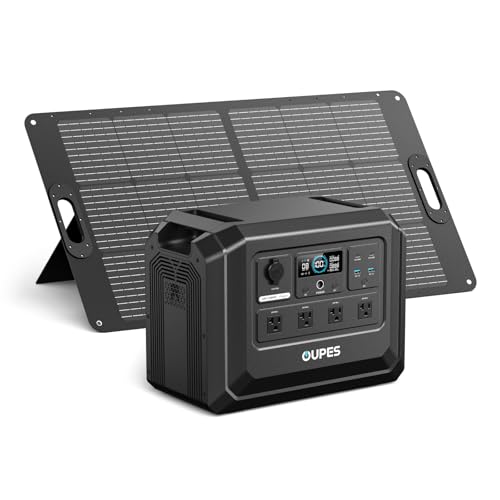
- 1,024Wh battery with 2,000W rated output
- Includes foldable 100W solar panel
- 46-minute AC recharge and app control
Best For: Campers wanting high output and quick wall charging
Best RV Installation Kit
1.92kWh Complete Solar Panel System

- Four 120W rigid panels provide 480W total
- Includes 100Ah LiFePO4 battery and 1,000W inverter
- MPPT controller, cables, connectors, and brackets included
Best For: RV, camper, trailer, and off-grid installations
Best Lightweight Emergency Kit

- 155Wh station weighs 3.7 pounds
- Includes foldable 30W solar panel and converter
- Built-in flashlight with steady, SOS, and strobe modes
Best For: Small devices, camping, and emergency lighting
Powerful Home Backup
1800W LiFePO4 Solar Generator Kit
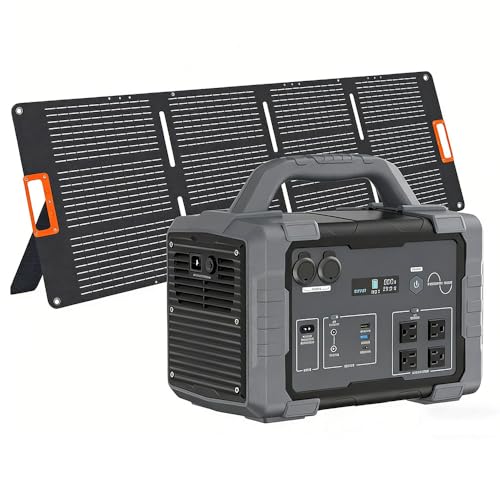
- 1,800W continuous output with 3,600W surge capacity
- Includes 1,024Wh battery and 200W foldable solar panel
- LiFePO4 battery rated for 3,500+ cycles
Best For: Home backup, RVs, camping, and larger appliances
Lightweight Starter Pick
MARBERO 111Wh Solar Generator Kit

- Compact 111Wh power station with 30W folding panel
- Weighs about 3.5 pounds
- Includes USB, DC, and low-wattage AC outputs
Best For: Small electronics, camping, road trips, and basic backup
Off-Grid System Builder

- Combines six 120W panels with a 400W wind turbine
- Includes two 100Ah lithium batteries
- Comes with charge controller and 3,000W inverter
Best For: Off-grid cabins, mobile projects, and hands-on installations
Best Compact Starter Kit – MARBERO 237Wh Solar Generator
For shoppers comparing solar generator kits for beginners, the MARBERO M823 is a straightforward, compact option with a 60W foldable solar panel included. Its 237Wh battery and 300W pure-sine-wave inverter are suited to smaller electronics rather than high-wattage appliances.
Best For: Camping, hiking, fishing, emergency lighting, and charging phones, tablets, laptops, and headphones.
Pros:
- Includes a 60W foldable solar panel and connection cable.
- Multiple outputs include AC, USB-A, USB-C, and DC ports.
- Built-in flashlight offers flashlight, strobe, and SOS modes.
- Pure sine-wave AC output is rated at 300W, with 375W peak power.
Cons:
- The 237Wh capacity is limited for extended or high-demand use.
- Devices exceeding 300W may damage the generator, especially heating appliances.
- The included 60W panel is modest for faster recharging.
The M823 is a practical entry point when portability and basic device charging matter most. Beginners should treat it as a small-electronics power source, not a substitute for a larger backup generator.
Best Hands-On Learning Kit – Solar Power STEM Kit for Kids
This children’s STEM set is an educational introduction to solar power rather than a household backup system. For families exploring solar generator kits for beginners, it offers simple, hands-on model building with solar, wind, and electric-motor activities.
Best For: Kids ages 8–12, family projects, classroom activities, and science-fair preparation.
Pros:
- Includes four projects: a solar car, solar fan, wind-powered car, and wooden plane.
- No welding is required, making circuit assembly approachable for children.
- Includes a magnetized screwdriver and detailed instructions.
- Encourages practical exploration of circuits and renewable energy.
Cons:
- This is a toy and learning kit, not a device-charging solar generator.
- It is recommended for children ages 8 and up, so younger children may need more supervision.
The kit is a good choice when “beginner” means learning how solar-powered circuits work. Choose a portable power station instead if your goal is emergency or camping power.
Best High-Power Starter Kit – OUPES Mega 1 Solar Generator
The OUPES Mega 1 is a more capable choice among solar generator kits for beginners who want substantial home, RV, or emergency power. It combines a 1,024Wh LiFePO4 battery, a 100W solar panel, and a 2,000W pure-sine-wave inverter in a portable package.
Best For: RV travel, camping, power outages, emergency preparation, and appliances or tools requiring more output.
Pros:
- 2,000W AC output and 4,500W surge capacity support demanding startup loads.
- LiFePO4 battery is rated for more than 3,500 cycles.
- Capacity can expand from 1,024Wh to 5,120Wh with two extra batteries.
- Offers app control, 13 ports, and under-20ms UPS functionality.
Cons:
- At 27.8 pounds, it is less effortless to carry than a small power station.
- The included 100W panel is far below the unit’s maximum 800W solar-input capability.
- The larger feature set may be more than beginners need for basic phone charging.
The Mega 1 provides room to grow, especially for buyers who may later add batteries or more solar input. Its higher output and expandable design make it a stronger all-purpose backup option than compact beginner units.
Best Physics Exploration Kit – Delinx Fun Physics Generator Kit
The Delinx kit takes a learning-first approach to solar generator kits for beginners, demonstrating how different forms of energy become electricity. It combines solar power, a hand-cranked generator, and a windmill generator for basic circuit and energy-conversion experiments.
Best For: Students ages 12 and up, family science projects, and primary or secondary school demonstrations.
Pros:
- Demonstrates three generation methods: solar, hand-cranked, and wind-powered.
- Explores energy conversion along with sound, light, and electricity.
- Supports hands-on learning in physics, circuitry, and problem solving.
- Compact kit weighs about 0.18 kg.
Cons:
- It is an educational experiment kit, not a practical power station.
- The product notes indicate that paper instructions are not included and must be downloaded.
- Its recommended age of 12 and up limits suitability for younger children.
This is a strong option for understanding the principles behind renewable generation before investing in a full-size power station. It is best evaluated as a physics project, not as camping or emergency equipment.
Best Fast-Charging Starter Kit – OUPES Mega 1 Lite
For beginners comparing solar generator kits for beginners, the OUPES Mega 1 Lite is a straightforward package with a 1,024Wh power station and a foldable 100W solar panel. Its 2,000W rated output, app control, and multiple ports make it suitable for camping, road trips, and backup power without gasoline or fumes.
Best For: Campers and first-time buyers who want a high-output, portable kit with fast AC recharging.
Pros:
- Includes the power station and a foldable 100W monocrystalline solar panel.
- Recharges from 0 to 100% by AC power in about 46 minutes.
- 2,000W rated output with 4,500W surge capacity can handle appliances such as coffee makers and hair dryers.
- LiFePO4 battery, nine output ports, 140W USB-C charging, and app monitoring add convenience.
Cons:
- At 26.7 pounds, it is less convenient to carry than smaller portable stations.
- The included 100W panel is compact but slower for solar replenishment than a larger panel setup.
The Mega 1 Lite is a strong beginner-friendly choice when appliance support and rapid wall charging matter more than minimum weight. Its included panel enables solar charging, while the large inverter and LiFePO4 battery provide room for broader use.
Best RV Installation Kit – 1.92kWh Complete Solar Panel System
Among solar generator kits for beginners, this RV-oriented package is best viewed as a component-based off-grid system rather than a grab-and-go power station. It combines four 120W rigid panels, a 100Ah LiFePO4 battery, a 1,000W pure sine wave inverter, and a 40A MPPT controller for camper, trailer, marine, or shed installations.
Best For: Beginners building a permanent or semi-permanent solar setup for an RV, camper, trailer, or off-grid space.
Pros:
- Complete package includes four rigid monocrystalline panels, battery, inverter, controller, cables, connectors, and mounting brackets.
- Panels provide 480W total maximum power and are rated at up to 25.7% conversion efficiency.
- 100Ah LiFePO4 battery includes a built-in BMS and is designed for extended service life.
- Pure sine wave inverter delivers 1,000W continuously with up to 2,000W surge capacity.
Cons:
- Rigid panels and mounting hardware require installation space and more setup than a portable generator.
- The 12.8V system and separate components may require basic wiring and solar-system familiarity.
This kit makes sense for buyers who want to learn and build an RV or off-grid electrical system instead of simply plugging into a portable power station. Its MPPT controller and included hardware reduce the need to source major components separately, but installation planning remains part of the purchase.
Best Lightweight Emergency Kit – MARBERO 155Wh Solar Generator
For shoppers seeking approachable solar generator kits for beginners, the MARBERO 155Wh kit keeps the setup small and simple. It includes a compact power station, 30W foldable panel, and power converter, making it useful for phones, lights, small electronics, camping, and short-term emergency needs.
Best For: Beginners who prioritize low weight, basic device charging, and built-in emergency lighting.
Pros:
- Lightweight 3.7-pound power station includes a 30W solar panel and charging accessories.
- Offers AC, USB, USB-C, DC, and car-port outputs for a range of small devices.
- Built-in flashlight has steady, SOS, and strobe modes.
- Panel is rated at 23% conversion efficiency, IP65 water resistance, and approximately 6–7 hours of solar charging.
Cons:
- The 155Wh capacity and 100W output are intended for smaller electronics, not high-wattage appliances.
- A 30W panel provides a slower recharge than the larger panels in the other kits.
The MARBERO is the easiest option here to carry and understand, especially for emergency lighting and personal electronics. Its modest capacity limits runtime, but the included accessories and multiple output types make it a practical entry point for small-scale solar power.
Powerful Home Backup – 1800W LiFePO4 Solar Generator Kit
For beginners comparing solar generator kits for beginners, this kit offers a straightforward path to higher-output backup power. It combines a 1,024Wh LiFePO4 power station with a 200W foldable solar panel, fast AC charging, and multiple output ports.
Best For: Home backup, RV trips, camping, and users who need to run larger appliances or power tools.
Pros:
- Provides 1,800W of continuous output with 3,600W surge capacity.
- Includes a 200W foldable panel with claimed conversion efficiency of up to 23.5%.
- LiFePO4 battery is rated for 3,500+ cycles to 80% capacity.
- Supports 1.5-hour AC charging and includes four AC outlets plus 100W USB-C PD.
Cons:
- Its higher output and larger battery make it less compact than small personal power stations.
- The included 200W panel may require extended sunlight to fully recharge the 1,024Wh battery.
This is the most capable option here for beginners who want substantial appliance support and a long-life battery. The five-year warranty and included panel add convenience for home and outdoor backup use.
Lightweight Starter Pick – MARBERO 111Wh Solar Generator Kit
Beginners seeking compact solar generator kits for beginners may prefer this portable MARBERO bundle. It pairs a 111Wh power station with a 30W folding panel and provides USB, DC, and limited AC outputs for small electronics.
Best For: Phone charging, lights, small devices, camping, road trips, and compact emergency backup.
Pros:
- Lightweight design weighs about 3.5 pounds for easy transport.
- Includes a 30W folding solar panel, wall adapter, and car-charging capability.
- Offers four USB-A ports, one USB-C port, two AC ports, and one DC port.
- Built-in protection includes overcharge, overload, over-voltage, and short-circuit safeguards.
Cons:
- The 111Wh capacity is intended for small electronics rather than major appliances.
- AC output is limited to 80W, with a 120W peak.
- The 30W panel is suited to compact charging needs, not rapid full-battery replenishment.
This is an approachable entry point for users who value portability over high output. Its broad selection of small-device ports makes it practical for basic outdoor charging and short outages.
Off-Grid System Builder – 1120W Solar Wind Power Kit
For beginners looking beyond a portable power station, this system provides a broader introduction to off-grid energy equipment. The kit combines six 120W monocrystalline panels, a 400W wind turbine, two 100Ah lithium batteries, a charge controller, and a 3,000W inverter.
Best For: Off-grid installations, cabins, mobile solar projects, and hands-on users building a larger renewable-energy system.
Pros:
- Combines solar and wind generation, allowing wind production when sunlight is limited.
- Includes six 120W monocrystalline solar panels and a 400W wind turbine.
- Supplies two 100Ah lithium batteries with BMS protection and more than 3,000 claimed recharge cycles.
- Includes a 3,000W inverter and charge controller for a more complete system build.
Cons:
- This is a multi-component installation rather than a simple plug-and-play portable kit.
- Performance depends on suitable sunlight, wind conditions, installation, and system setup.
- The supplied notes do not specify the inverter’s continuous-versus-surge output ratings.
This kit is best suited to beginners who want to learn system design and have space for a fixed or semi-permanent setup. Its hybrid solar-and-wind approach offers more generation flexibility, but it requires more planning than a portable station.
How We Picked These Solar Generator Kits for Beginners
We selected products that represent the main ways beginners use solar power: portable emergency backup, camping and RV electricity, small household loads, hands-on learning, and more permanent off-grid installations. We compared stated battery capacity, inverter output, solar-panel inclusion, battery chemistry, portability, charging options, and the equipment required for setup.
Because these products vary widely, a higher wattage or larger battery is not automatically better. The right choice depends on what you need to run, how long you need it to operate, and whether you want a simple plug-and-play system or a more involved installation.
Quick Comparison
| Kit type | Best suited for | Main advantage | What to check |
|---|---|---|---|
| Compact 111Wh–237Wh power station | Phones, lights, small electronics | Lightweight and easy to carry | Limited runtime and output |
| 1,024Wh portable power station | Emergency backup, camping, and RV use | Useful balance of capacity and portability | Panel input and recharge time |
| 1,920Wh RV solar kit | Extended off-grid and RV power | Large battery and multiple rigid panels | Installation space, wiring, and safety |
| Educational science kit | Children and classroom learning | Demonstrates solar, wind, and circuits | Not intended for household backup |
| Wind-and-solar off-grid system | Advanced home or remote installations | Multiple renewable charging sources | Controller, mounting, and electrical expertise |
Key Buying Factors for Solar Generator Kits for Beginners
Battery Capacity and Usable Energy
Capacity is usually listed in watt-hours (Wh). Divide the battery’s watt-hours by the device’s approximate wattage to estimate runtime, then allow for inverter and charging losses. A 1,024Wh unit may run a 100W device for less than 10 hours in real use, while a compact 111Wh model is better for brief phone, lighting, or small-device backup.
Inverter Output
Continuous wattage determines which appliances can run. Surge rating matters for motors and compressors that briefly draw extra power when starting. Pure sine wave output is preferable for sensitive electronics and many medical or communications devices.
Panel Size and Charging Options
A larger solar panel can recharge a battery faster in favorable sunlight, but actual performance depends on weather, orientation, shading, and the power station’s solar-input limit. Confirm that the included panel uses the correct connectors and that the kit also supports wall or vehicle charging when sunlight is unreliable.
Portability, Safety, and Expansion
Compact units are easiest for beginners, while larger LiFePO4 systems generally offer longer cycle life but weigh more. Look for clear displays, temperature protection, overload protection, covered outlets, and a realistic warranty. For permanent systems, verify battery voltage, charge-controller compatibility, fusing, grounding, and local installation requirements.
Who Should Buy Which Solar Generator Kits for Beginners?
Choose a compact MARBERO-style kit if you mainly need emergency phone charging, lights, a router, or other low-power devices. Choose a 1,024Wh portable station if you want a more versatile option for camping, short outages, or RV equipment. Choose the larger RV solar kit when you need longer off-grid runtime and have room for fixed panels and a substantial battery.
Choose an educational solar or physics kit for children, classroom demonstrations, or basic experimentation—not as a backup power source. Consider the wind-and-solar system only if you are comfortable with electrical planning or intend to work with a qualified installer. Beginners should start with clearly matched components and avoid connecting batteries, panels, or inverters that are not designed to work together.
