
Heavy-duty bike GPS computers are built for riders who need dependable navigation, durable hardware, accurate ride data, and enough battery life for long days outside. The right model can simplify route finding while helping you track training, climbing, performance, and safety metrics.
We selected 10 capable options from Garmin, Wahoo, and iGPSPORT, covering compact training computers, large-screen navigators, solar-assisted models, and rugged mountain-bike units.
Best 10 Heavy-Duty Bike GPS Computers Picks for 2026
Premium Performance Pick

- 3.5-inch color touchscreen with course and road-surface mapping
- Advanced training, ClimbPro, power guidance, and adaptive coaching
- Built-in speaker, group features, road alerts, and up to 60-hour saver mode
Best For: Serious cyclists seeking premium navigation and training tools
Long-Battery Value Pick

- Up to 40 hours of battery life for long-distance rides
- 3-inch anti-glare display with automatic start/stop recording
- Bluetooth sensor support, 38+ data fields, and IPX7 rating
Best For: Riders wanting long runtime and essential ride tracking
Compact Training Pick
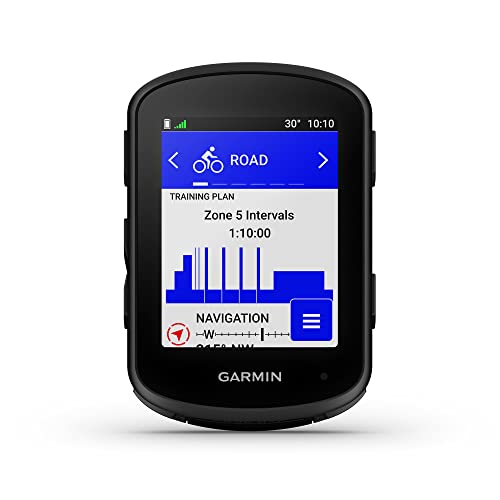
- Multi-band GNSS for enhanced positioning accuracy
- Touchscreen and button controls with advanced training tools
- Up to 26 hours of demanding-use battery life
Best For: Structured-training riders who prefer a compact Garmin computer
Navigation Flexibility Pick
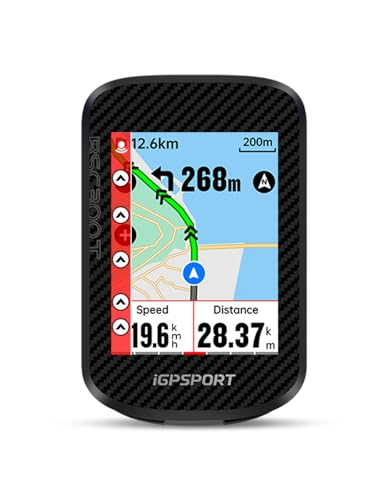
- Worldwide offline maps with route prompts and off-course warnings
- Supports road, MTB, e-bike use, ANT+, and Bluetooth accessories
- 130+ data fields with real-time tracking and app sharing
Best For: Mixed-surface and e-bike riders who want offline navigation
Best All-Arounder
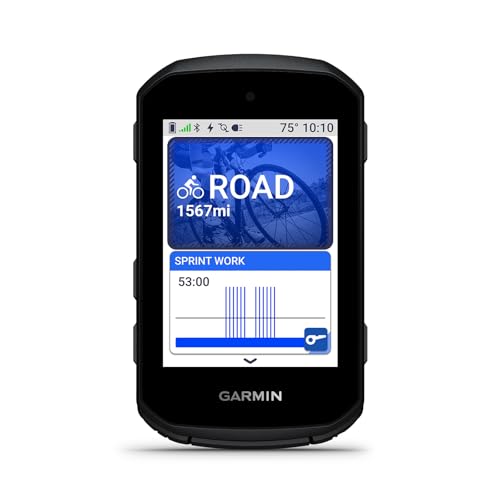
- Multi-band GPS with 5 Hz recording
- Touchscreen and button controls
- Maps, fueling alerts, and safety tools
Best For: Feature-focused riders who want compact navigation and training capabilities
Best for Simple Route Guidance

- Up to 20 hours of battery life
- Turn-by-turn navigation with LED cues
- IPX7 protection and radar integration
Best For: Riders seeking compact, button-based navigation with connected route services
Best for Long-Distance Touring
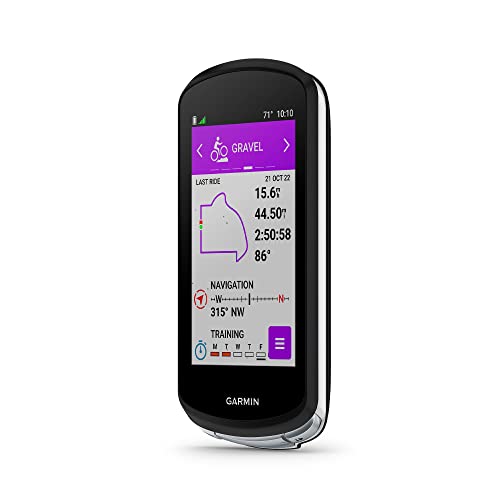
- Up to 100 hours in battery-saver mode
- Solar-assisted Power Glass charging
- Large 3.5-inch display and multi-band GNSS
Best For: Endurance riders and tourers who need extended battery life and detailed navigation
All-Round Navigation Pick

- Dual-band GPS for obstructed environments
- Up to 25 hours of battery life
- On-demand turn-by-turn route generation
Best For: Exploration and long-distance riders
Trail-Tough MTB Pick

- Rugged, scratch-resistant Gorilla Glass display
- Preloaded Trailforks and TopoActive maps
- Enduro, downhill, and jump metrics
Best For: Mountain biking and technical trails
Training-Focused Endurance Pick

- Up to 26 hours, or 42 in battery-saver mode
- Multi-band GNSS and ClimbPro ascent planning
- Adaptive workouts with compatible sensors
Best For: Structured training and long rides
Premium Performance Pick – Garmin Edge 1050
The Garmin Edge 1050 is a top-tier choice among heavy-duty bike GPS computers for riders who want advanced navigation, training tools, and smart connectivity in one durable cycling computer. Its vivid 3.5-inch touchscreen, built-in speaker, and up to 20 hours of demanding-use battery life make it well suited to serious rides and long training days.
Best For: Serious cyclists who want premium navigation, detailed performance features, and connected ride safety tools.
Pros:
- Large, responsive color touchscreen with course creation and road-surface mapping.
- Advanced training features include ClimbPro, power guidance, stamina insights, and adaptive coaching.
- Built-in speaker supports navigation prompts, a bike bell, and connected alerts.
- Offers up to 60 hours in battery-saver mode, plus Garmin Pay and group-ride features.
Cons:
- Premium features may be more than casual riders need.
- Some connected functions require a compatible smartphone, sensors, or supported bank.
- Demanding-use battery life is up to 20 hours rather than the battery-saver maximum.
Choose the Edge 1050 when you want the broadest feature set in this roundup. It combines a large display and strong navigation with training analysis, road-hazard reporting, group connectivity, and useful on-bike audio.
Long-Battery Value Pick – iGPSPORT BSC100MAX
The iGPSPORT BSC100MAX is a practical option for riders shopping for heavy-duty bike GPS computers with straightforward tracking and extended battery life. Its 3-inch anti-glare display, automatic recording, IPX7 rating, and up to 40 hours of battery life focus on the essentials for long-distance riding.
Best For: Budget-conscious riders who prioritize long battery life, readable data, and simple wireless sensor connectivity.
Pros:
- Up to 40 hours of battery life supports extended rides and touring.
- 3-inch anti-glare screen is designed for clear viewing while riding.
- Auto start/stop recording helps keep ride data accurate during pauses.
- Supports Bluetooth sensors, more than 38 data fields, and sharing through the iGPSPORT app.
Cons:
- Navigation and mapping features are not listed in the supplied specifications.
- Uses button controls rather than a touchscreen.
- Some features, including data sharing and incoming-call reminders, rely on app or phone connectivity.
The BSC100MAX keeps operation simple while covering core ride metrics. Its standout advantage is endurance: riders who need long recording time and basic sensor support may find it a more practical fit than a feature-heavy premium computer.
Compact Training Pick – Garmin Edge 840
The Garmin Edge 840 is a compact choice among heavy-duty bike GPS computers, combining touchscreen and button controls with advanced navigation and training analysis. Multi-band GNSS, ClimbPro, personalized workout guidance, and up to 26 hours of demanding-use battery life make it a strong fit for structured riding.
Best For: Training-focused cyclists who want detailed performance guidance in a compact, versatile computer.
Pros:
- Multi-band GNSS is designed to improve positioning accuracy in challenging environments.
- Touchscreen and button controls offer flexible operation on the bike.
- Provides ClimbPro, daily suggested workouts, stamina insights, and power guidance with compatible sensors.
- Battery life reaches up to 26 hours in demanding use or 32 hours in battery-saver mode.
Cons:
- The 2.6-inch screen is smaller than the Edge 1050’s display.
- Several advanced training features require a compatible power meter and heart-rate monitor.
- It offers less demanding-use battery life than the longest-running option in this roundup.
The Edge 840 strikes a useful balance between size and capability. It is especially compelling for riders who want Garmin’s training ecosystem and accurate positioning without moving to a larger cycling computer.
Navigation Flexibility Pick – iGPSPORT BSC300T
The iGPSPORT BSC300T brings offline maps, route guidance, and off-course warnings to the heavy-duty bike GPS computers category. With a 2.4-inch touchscreen, six buttons, worldwide offline map support, and compatibility with ANT+ and Bluetooth accessories, it is designed for riders who want navigation flexibility across road, mountain, and e-bike use.
Best For: Riders who want offline navigation, broad sensor compatibility, and support for multiple bicycle types.
Pros:
- Supports worldwide offline map downloads, route previews, turn prompts, and off-course warnings.
- Works with road bikes, mountain bikes, and e-bikes, including power-level display support.
- Offers more than 130 riding data fields and connects to ANT+ and Bluetooth sensors.
- Includes real-time group tracking and app-based sharing with services such as Strava and Komoot.
Cons:
- Listed battery life is up to 20 hours, shorter than some alternatives here.
- A Type-C charging cable is not included according to the supplied details.
- The 2.4-inch display is smaller than the screens on the other iGPSPORT and Garmin options listed.
The BSC300T is the iGPSPORT model to consider when route navigation matters most. Its combination of offline maps, rerouting awareness, e-bike support, and dual-protocol sensor connectivity gives it broad utility for varied riding.
Best All-Arounder – Garmin Edge 850
The Garmin Edge 850 is a versatile choice among heavy-duty bike GPS computers, combining a vivid 2.7-inch color touchscreen with button controls, detailed maps, performance tracking, and cycling awareness features. Its multi-band GPS and automatic 5 Hz recording are especially useful for demanding rides, including downhill and enduro profiles.
Best For: Riders who want advanced navigation, training features, connectivity, and a compact interface with both touchscreen and physical controls.
Pros:
- Multi-band GPS with automatic 5 Hz recording for enhanced position tracking
- Preloaded road, gravel, trail, and Trailforks maps with Forksight mode
- Smart fueling alerts, weather overlays, incident detection, and group-ride connectivity
- Built-in speaker supports workout prompts and an on-device bike bell
Cons:
- Battery life is up to 12 hours in demanding use, or 36 hours in battery-saver mode
- Some connected features require a compatible smartphone and Garmin Connect app
The Edge 850 is a strong fit for cyclists who want a feature-rich computer without moving to a larger display. Its combination of mapping, training guidance, safety tools, and dual-control operation makes it well suited to varied riding.
Best for Simple Route Guidance – Wahoo ELEMNT BOLT V3
The Wahoo ELEMNT BOLT V3 is a practical option among heavy-duty bike GPS computers for riders who prioritize straightforward navigation and long battery life. Its 2.3-inch button-controlled display provides turn-by-turn prompts, route syncing, LED cues, and audible alerts, while its IPX7 rating adds water protection for wet rides.
Best For: Road, gravel, and adventure cyclists who want reliable route guidance, automatic integrations, and physical-button control.
Pros:
- Up to 20 hours of battery life
- Supports turn-by-turn routes from GPX, TCX, Strava, Ride With GPS, and Komoot
- Automatic route downloads and workout uploads through compatible services
- ANT+ radar integration displays approaching vehicles and provides LED alerts
Cons:
- Smart notifications and LiveTrack require riding with a compatible smartphone
- Its 2.3-inch LCD is smaller than the displays on the Garmin models in this roundup
The BOLT V3 emphasizes efficient operation rather than an extensive touchscreen interface. It is a sensible pick for riders who want dependable navigation prompts, broad route-service compatibility, and a long-lasting battery in a compact unit.
Best for Long-Distance Touring – Garmin Edge 1040 Solar
The Garmin Edge 1040 Solar stands out among heavy-duty bike GPS computers for extended rides and touring. Its 3.5-inch display, multi-band GNSS, and Power Glass solar lens support detailed navigation and long battery performance, with up to 45 hours in demanding use and up to 100 hours in battery-saver mode.
Best For: Endurance cyclists, bikepackers, and tourers who value a large screen, extensive training tools, and maximum battery flexibility.
Pros:
- Solar charging capability can extend battery life during daytime rides
- Up to 45 hours in demanding use or 100 hours in battery-saver mode
- Multi-band GNSS supports enhanced positioning accuracy
- Includes road and trail maps plus power guide, stamina, and training-plan features
Cons:
- Solar charging gains depend on continuous daytime conditions and riding mode
- Larger and heavier than the Edge 850, at 4.7 ounces
- Compatible sensors are required for several advanced training insights
The Edge 1040 Solar is the strongest choice here for riders who spend long hours away from charging points. Its large display and solar-assisted battery are particularly appealing for endurance use, while the navigation and training tools support more structured riding.
All-Round Navigation Pick – Wahoo ELEMNT ROAM V3
The Wahoo ELEMNT ROAM V3 is a practical choice for riders who want a heavy-duty bike GPS computer with dependable navigation and long battery life. Its dual-band GPS is designed to improve positioning in thick forests and dense urban areas, while turn-by-turn routing supports GPX, TCX, Strava, Ride With GPS, Komoot, and other route sources.
Best For: Riders who prioritize versatile route planning, accurate positioning, and extended rides.
Pros:
- Dual-band GPS supports multiple satellite systems for challenging environments.
- Up to 25 hours of battery life.
- Generates routes on demand from the device or companion app.
- IPX7 water-resistance rating and included handlebar and stem mounts.
Cons:
- The 2.8-inch LCD is smaller than many smartphone displays.
- Some connected route and sharing features rely on the companion app or compatible services.
With its combination of dual-band positioning, broad route compatibility, and 25-hour endurance, the ROAM V3 is a well-rounded heavy-duty bike GPS computer for exploration and everyday distance riding.
Trail-Tough MTB Pick – Garmin Edge MTB
The Garmin Edge MTB is built specifically for mountain biking and stands out among heavy-duty bike GPS computers with its rugged design, seven-button control layout, and trail-focused mapping. It combines multi-band GPS with automatic 5 Hz recording for positioning during enduro and downhill rides.
Best For: Mountain bikers who need trail maps, downhill metrics, and controls suited to demanding terrain.
Pros:
- Rugged design with scratch-resistant Corning Gorilla Glass.
- Preloaded Trailforks and TopoActive maps with Forksight trail information.
- Tracks Grit, Flow, jump speed, hang time, and other MTB dynamics.
- Up to 14 hours in demanding use or 26 hours in battery-saver mode.
Cons:
- Battery life is shorter than some general-purpose cycling computers in demanding use.
- Several safety and connected features require a compatible smartphone.
For riders focused on technical trails, enduro, or downhill sessions, the Edge MTB offers purpose-built metrics and mapping that general road-oriented computers may not provide.
Training-Focused Endurance Pick – Garmin Edge 540
The Garmin Edge 540 is a compact heavy-duty bike GPS computer for cyclists who want detailed training guidance alongside navigation. Its button controls, multi-band GNSS, ClimbPro ascent planning, and battery life of up to 26 hours make it suitable for structured training and long rides.
Best For: Performance-oriented cyclists who want adaptive training features and long battery endurance.
Pros:
- Up to 26 hours of battery life, or up to 42 hours in battery-saver mode.
- Multi-band GNSS improves positioning in challenging environments.
- ClimbPro shows remaining ascent and grade, even when riding without a course.
- Offers suggested workouts, training prompts, stamina insights, and power guidance with compatible sensors.
Cons:
- Many advanced training features require a compatible power meter and heart rate monitor.
- Button controls may be less convenient for riders who prefer touchscreen operation.
The Edge 540 is a strong fit for cyclists who value training depth and battery life as much as navigation. Its compact format and button operation also suit riders who want straightforward control while moving.
How We Picked These Heavy-Duty Bike GPS Computers
We focused on the features that matter most when a bike computer must handle frequent use, changing weather, rough roads, and long rides. Our comparison considers GPS reliability, mapping and navigation, display usability, battery capacity, water resistance, wireless connectivity, training tools, mounting practicality, and overall riding style.
We also included a range of price and feature levels. Some riders need a compact computer for structured training, while others prioritize expansive maps, solar charging, touchscreen controls, or mountain-bike-specific metrics.
Quick Comparison
| Best For | Look For | Notable Options |
|---|---|---|
| Premium all-around riding | Large display, advanced training, navigation | Garmin Edge 1050, Edge 850 |
| Long-distance touring | Extended battery life and route guidance | Garmin Edge 1040 Solar, Wahoo ELEMNT ROAM V3 |
| Compact training | Small form factor and performance data | Garmin Edge 840, Edge 540, Wahoo ELEMNT BOLT V3 |
| Budget-conscious navigation | Essential GPS tracking and large readable screen | iGPSPORT BSC100MAX, BSC300T |
| Mountain biking | Rugged construction and trail-specific metrics | Garmin Edge MTB |
Key Buying Factors for Heavy-Duty Bike GPS Computers
Navigation and Mapping
Turn-by-turn guidance, rerouting, offline maps, elevation information, and off-course alerts are especially useful when riding unfamiliar roads or trails. Check whether maps are preloaded, downloadable, or dependent on a connected phone.
Battery Life and Charging
Match battery capacity to your longest typical ride, not just your average commute. Solar-assisted charging can extend endurance in suitable conditions, while fast charging and USB compatibility are valuable for touring and multi-day use.
Display and Controls
Large screens improve map readability, but compact computers are lighter and easier to position on crowded handlebars. Touchscreens are convenient for maps and menus; physical buttons can be more dependable with gloves, rain, or muddy trail conditions.
Durability and Connectivity
Look for water resistance, a secure mount, and a design suited to road, gravel, or trail impacts. ANT+, Bluetooth, Wi-Fi, power-meter support, heart-rate connectivity, smartphone notifications, and action-camera compatibility can make the computer more useful within your existing setup.
Who Should Buy Which Heavy-Duty Bike GPS Computers?
Choose a premium Garmin Edge model if you want deep training analysis, robust navigation, and broad sensor support. The Edge 1050 and Edge 850 suit riders seeking the newest high-end experience, while the Edge 840 and Edge 540 offer strong performance in more compact formats.
Pick the Edge 1040 Solar or Wahoo ELEMNT ROAM V3 for endurance-focused riding and touring. The Wahoo ELEMNT BOLT V3 is a sensible choice for riders who prefer a streamlined, performance-oriented computer. iGPSPORT models are worth considering when you want core GPS and mapping features at a potentially lower cost. Mountain bikers should prioritize the Garmin Edge MTB for trail-focused durability and metrics.
